Rebel Ospreys Speed Recovery by Nesting 12 Miles Apart
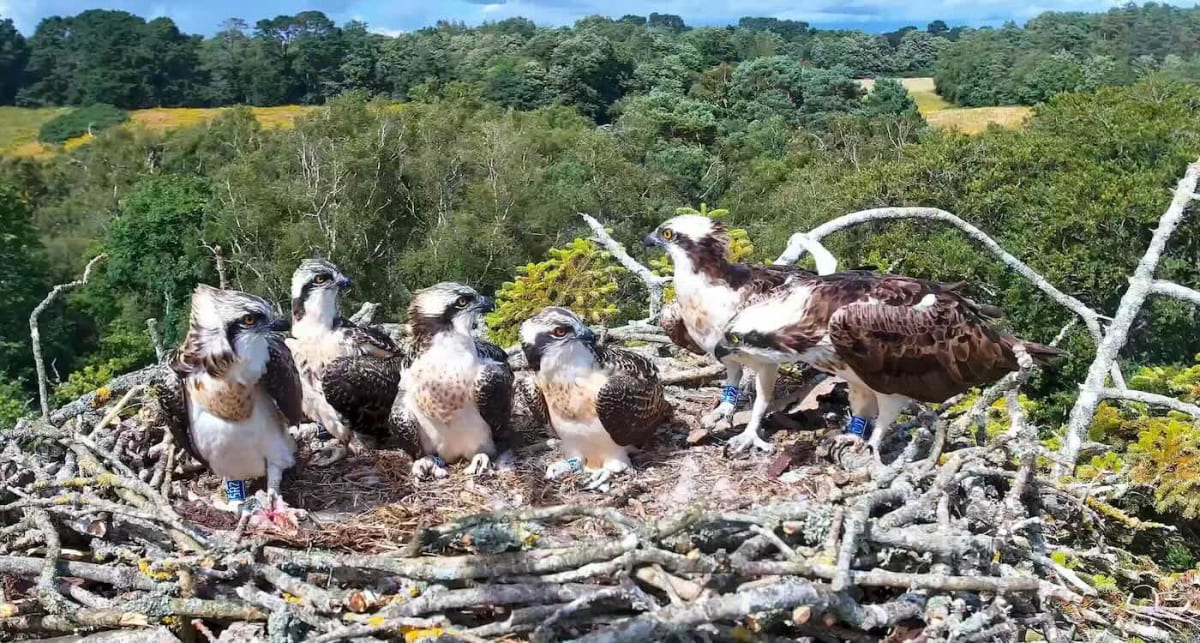
A small group of adventurous ospreys are helping their species recover faster by ditching crowded nesting sites and striking out on their own. Scientists studying 54 years of data in Scotland discovered these "pioneering pairs" are the secret to bringing the majestic birds back to places they haven't nested in nearly 200 years.
Ospreys are making an unlikely comeback in Britain, and it's all thanks to a few renegade birds who refuse to follow the crowd.
Most ospreys prefer nesting near their birthplace, close to other osprey families. This cautious approach meant the species was recovering at a snail's pace after going extinct in Britain in 1916.
But researchers at Bournemouth University noticed something surprising. A handful of pairs were choosing to settle more than 12 miles away from the main group, claiming territory with zero competition.
"We call these 'pioneering pairs' as they recolonize new areas, and in doing so create separate subpopulations and increase the speed of recovery for the species," said PhD researcher Brittany Maxted. The study, published in the Journal of Animal Ecology, analyzed 54 years of nesting data from northern Scotland.
These brave explorers gave conservationists an idea. Instead of waiting decades for ospreys to naturally spread, why not help create more pioneers?
Starting in 2017, the Roy Dennis Wildlife Foundation launched an ambitious project in Poole Harbour, Dorset. They carefully moved young osprey chicks from Scotland to southern England, giving them a new home to imprint on.
The results have been stunning. In 2022, an osprey pair hatched two chicks in Poole Harbour, the first breeding ospreys in Southern England since 1847. That's 175 years.
"If it wasn't for the translocation project, we may have had to wait another 60 years for breeding ospreys to reach Dorset naturally," Maxted explained. The original Poole Harbour pair has now returned every year since, hatching four chicks each summer.
The Ripple Effect
The success keeps multiplying. A second pair has already started nesting away from the main harbor, and the first wild-born Poole Harbour chick is now breeding in the East Midlands, slowly connecting isolated populations.
Conservationists are building artificial nests in Devon and Hampshire to welcome more pioneering birds. Dr. Tim Mackrill from the Roy Dennis Wildlife Foundation believes this approach could work across Europe, where ospreys are still missing from much of their historical range.
The technique transforms what we know about species recovery. By studying and mimicking the behavior of these bold individual birds, scientists can accelerate natural processes that would otherwise take generations.
Ospreys are teaching us that sometimes progress needs a few brave souls willing to venture into the unknown.
More Images
Based on reporting by Good News Network
This story was written by BrightWire based on verified news reports.
Spread the positivity!
Share this good news with someone who needs it


%2Fhttps%3A%2F%2Ftf-cmsv2-smithsonianmag-media.s3.amazonaws.com%2Faccounts%2Fheadshot%2FSarahKuta.png)