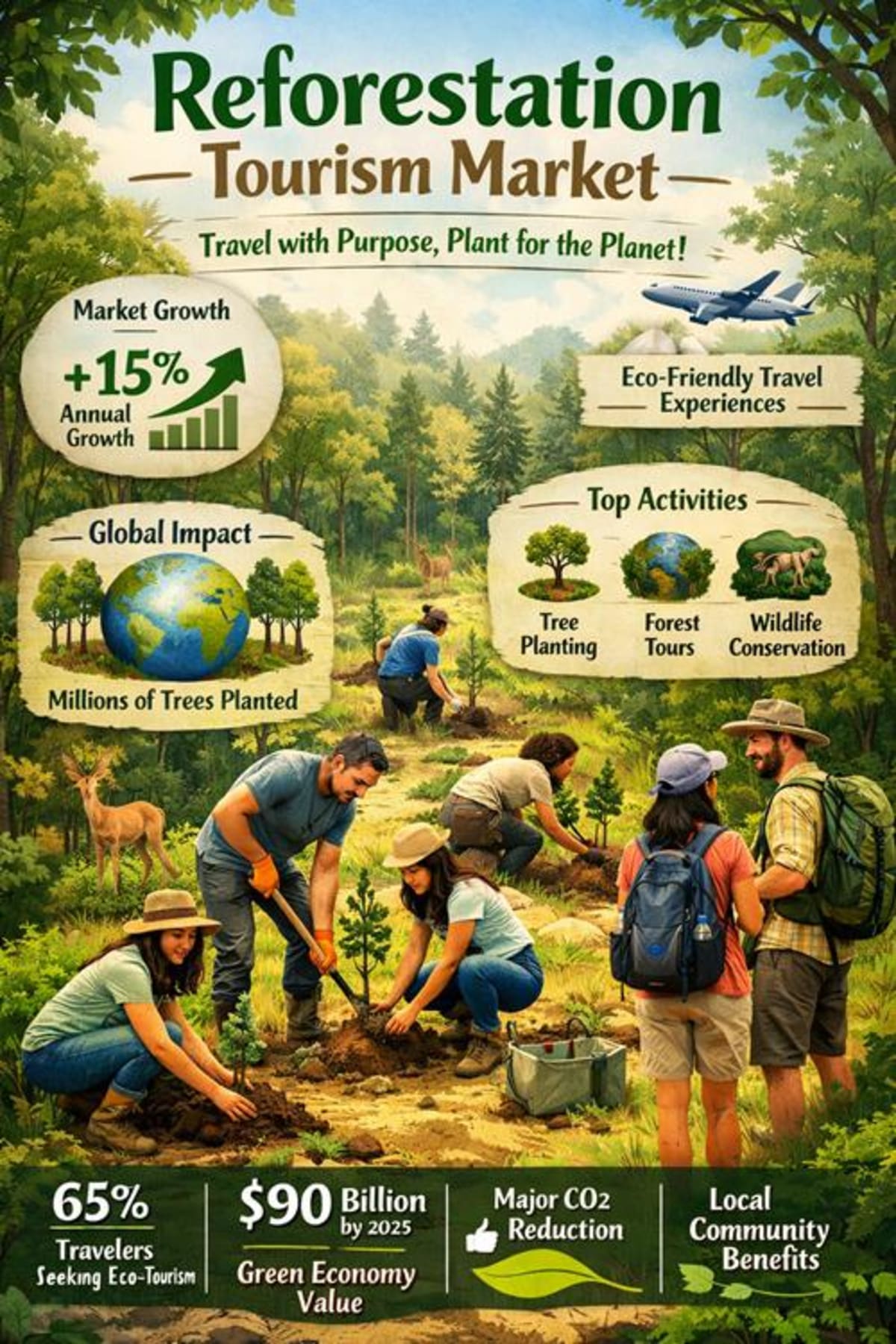
Reforestation Tourism to Triple by 2032, Hits $6.8B
Travelers worldwide are ditching beach chairs for tree planting adventures, creating a booming $2.3 billion industry expected to triple in seven years. From volunteer vacations to corporate retreats, tourists are choosing trips that help restore forests while exploring the planet.
Imagine spending your vacation planting trees in a rainforest instead of lounging by a pool. Millions of travelers are making exactly that choice, fueling an industry that experts predict will grow from $2.3 billion in 2025 to $6.8 billion by 2032.
Reforestation tourism lets travelers get their hands dirty while seeing the world. Visitors participate in tree planting projects, conservation programs, and environmental restoration activities organized by groups like WWF Travel, Intrepid Travel, and One Tree Planted.
The market is expanding at 14.6% annually, driven by travelers seeking meaningful experiences that combat climate change. Europe currently leads the movement, while Asia Pacific shows the fastest growth as awareness spreads across developing regions.
These aren't just feel-good getaways. Companies are sending employees on conservation retreats as part of sustainability programs, schools are organizing educational trips focused on environmental restoration, and eco-conscious tourists are choosing carbon offset vacations over traditional tours.
The programs range from week-long volunteer expeditions to day trips where travelers plant a few trees as part of broader tours. Conservation groups partner with tour operators to create experiences that fund real environmental projects while giving visitors unforgettable memories.
The Ripple Effect
Every tree planted by tourists creates cascading benefits beyond the immediate environmental impact. Local communities gain employment as guides and program coordinators, creating sustainable income in rural areas that might otherwise struggle economically.
These tourism dollars directly fund conservation projects that might not otherwise exist. When travelers pay to participate in reforestation programs, their fees support ongoing forest monitoring, community education, and expanded planting initiatives long after they return home.
The model proves especially powerful in developing regions where conservation competes with economic pressures. Tourism revenue gives communities financial reasons to protect forests rather than clear them, creating alignment between environmental and economic goals.
Digital platforms now make these experiences accessible to anyone with internet access. Travelers can browse conservation projects worldwide, read reviews from previous volunteers, and book experiences that match their interests and fitness levels.
Corporate participation adds another dimension to the impact. When companies send teams on reforestation retreats, they fund large-scale projects while building employee engagement around sustainability values that carry back to the workplace.
Despite challenges like seasonal weather patterns and higher costs compared to traditional tourism, the industry continues rapid growth. More travelers every year choose vacations where they plant forests instead of just taking photos, turning holidays into climate action.
Based on reporting by Google News - Reforestation
This story was written by BrightWire based on verified news reports.
Spread the positivity!
Share this good news with someone who needs it