Refugee Son Wins Nobel Prize for Climate-Saving Tech
A Palestinian refugee who grew up getting fresh water once a week just won the 2025 Nobel Prize in Chemistry for inventing materials that could help solve the climate crisis. Dr. Omar Yaghi turned childhood hardship into breakthrough science that pulls water from desert air and captures carbon.
Growing up in a Palestinian refugee family in Amman, Jordan, Omar Yaghi remembers the struggle of getting fresh water just once a week. That scarcity didn't limit him. It fueled his imagination.
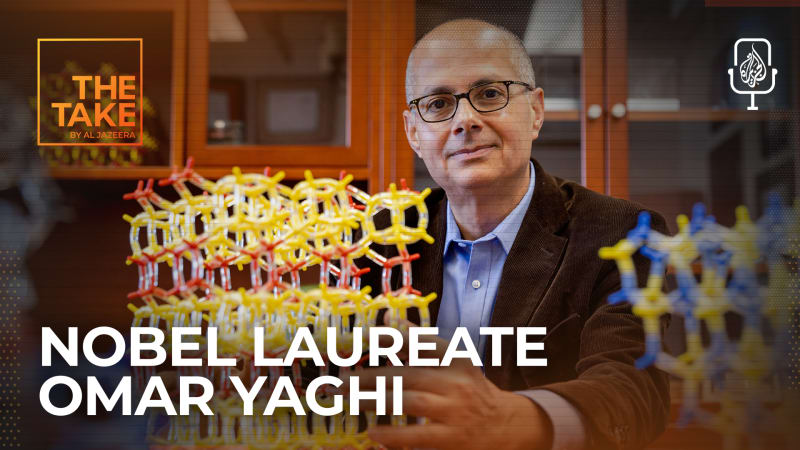
Today, Dr. Yaghi is a Nobel Laureate. He won the 2025 Nobel Prize in Chemistry for developing metal-organic frameworks, or MOFs, revolutionary materials that could transform how we fight climate change.
MOFs are microscopic structures that can capture carbon from the air and store hydrogen for clean energy. But perhaps most remarkably, Yaghi's invention can pull drinking water straight from desert air, even in the driest conditions.
The professor at the University of California, Berkeley, credits his humble beginnings for shaping his scientific vision. When water is precious, you learn to think differently about resources. When you experience hardship, you understand what problems truly matter.
His journey from refugee family to world-changing scientist proves that circumstances don't define potential. Yaghi didn't just overcome his challenges. He transformed them into solutions that could help millions facing similar water scarcity today.
The Ripple Effect
Yaghi's work extends far beyond personal achievement. His MOF technology addresses three of humanity's most urgent challenges: access to clean water, carbon emissions, and renewable energy storage.
Communities in water-scarce regions could soon harvest drinking water from thin air using his technology. The same materials can trap carbon dioxide before it reaches the atmosphere, helping slow global warming. And by storing hydrogen efficiently, MOFs could make clean energy more practical worldwide.
The scientist founded Atoco to bring these innovations from the lab to real-world applications. What started as one refugee child's observation about water scarcity is becoming technology that could serve millions.
His story also reshapes assumptions about where breakthrough science comes from. The next generation of problem solvers isn't limited to those born with privilege. Sometimes the biggest innovations come from those who understand shortage, struggle, and the urgent need for solutions.
Young scientists from refugee backgrounds and underserved communities worldwide now have proof that their experiences aren't obstacles but assets.
Why This Inspires
Yaghi's Nobel Prize celebrates more than scientific achievement. It honors the power of perspective shaped by hardship.
His childhood in a refugee family gave him something textbooks couldn't teach: an intimate understanding of what people actually need. While others saw chemistry problems, he saw his neighbors carrying water. While others theorized about climate change, he remembered thirst.
That human-centered approach drove him to create technology with immediate, practical applications. His MOFs aren't just elegant science. They're solutions born from empathy and lived experience.
The recognition sends a powerful message about whose voices matter in science. Refugee communities often face barriers to education and opportunity, yet their insights into resource scarcity, adaptation, and resilience are exactly what our warming planet needs.
From weekly water deliveries in Amman to pulling moisture from desert air, Yaghi proved that the deepest understanding of problems often comes from those who've lived them.
Based on reporting by Al Jazeera English
This story was written by BrightWire based on verified news reports.
Spread the positivity!
Share this good news with someone who needs it