Rice-Sized Chip Creates "Rainbow" to Power Future 6G
Scientists built a microchip the size of a rice grain that generates a stable rainbow of light, paving the way for ultra-fast 6G networks and precision quantum technologies. The breakthrough solves a major hurdle in creating the stable, high-frequency signals needed for next-generation communications.
A breakthrough the size of a single grain of rice could help bring lightning-fast 6G networks and incredibly precise quantum technologies into reality.
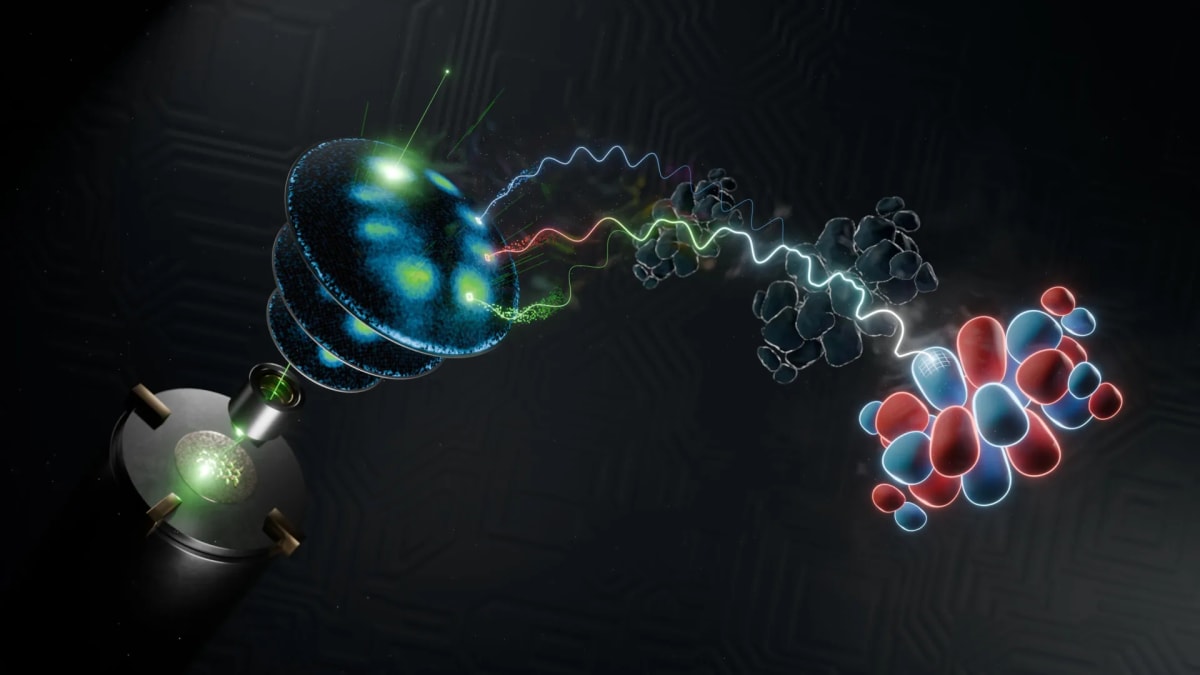
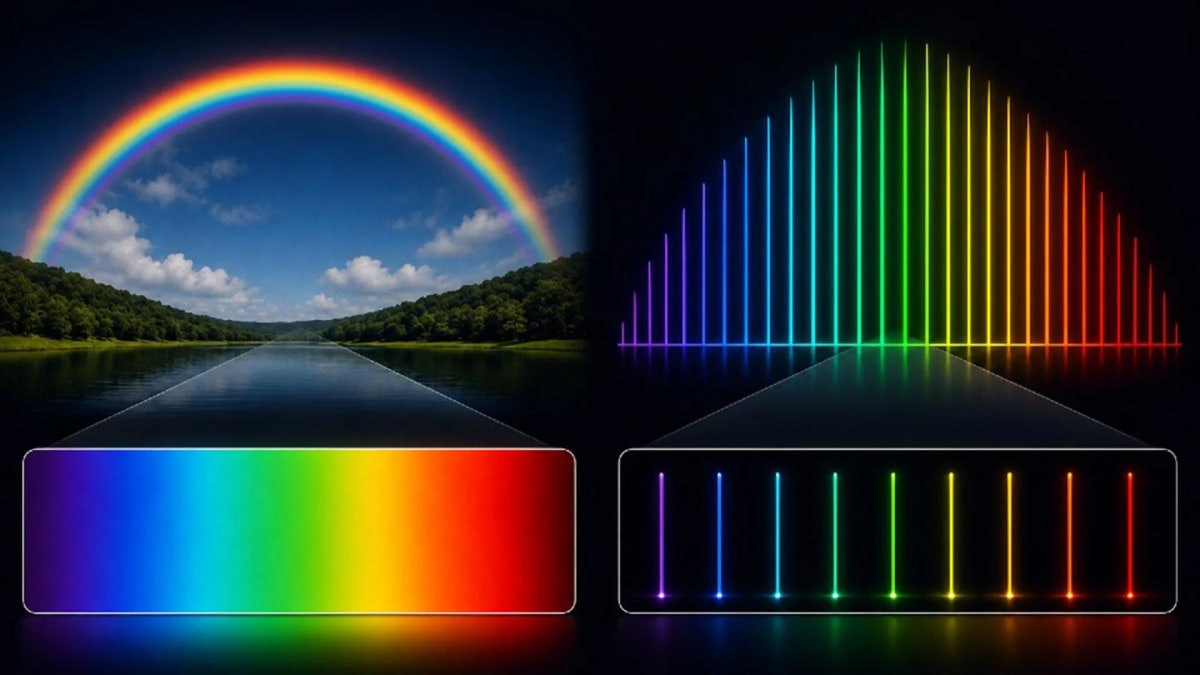
Physicists at Loughborough University created a tiny microchip that produces what they call a "rainbow on a chip." The device generates an organized spectrum of light frequencies that can be converted into multiple high-frequency signals simultaneously.
Dr. Luke Peters from Loughborough's Emergent Photonics Research Centre explained why this matters. "The world is becoming increasingly data hungry. We want to send and receive more information, faster and in higher resolution."
The key lies in millimeter waves, which offer far more bandwidth than current networks. That extra capacity means more room to transmit data, but producing these signals with enough precision and stability has been a major roadblock until now.
The chip uses something called a microcomb, which creates precisely spaced light frequencies like teeth on a comb. Previous versions could only produce one millimeter wave frequency at a time, but this new system generates several simultaneously, each potentially serving as a separate communication channel.
What makes this version special is its design. The researchers connected the tiny chip to a larger loop of optical fiber that continuously feeds laser light through the system. This setup helps the desired light patterns form and stay stable even when disturbed.
"We've even had people jumping up and down next to the system and the microcomb remains stable," Peters said. That robustness could prove crucial for real-world applications.
The team also demonstrated they can adjust individual frequencies, making them stronger or weaker depending on what's needed. Different applications require different frequency combinations, so this control opens doors across multiple fields.
The Ripple Effect
The applications stretch far beyond faster phone networks. The same precision that could power 6G communications also makes this technology valuable for quantum timing, where extreme accuracy is essential.
Scientists could use these frequencies in advanced radar systems, spectroscopy equipment, and astronomical instruments. These tools would help researchers study materials at the molecular level and make incredibly precise measurements of the universe.
The technology is also remarkably energy efficient compared to existing methods. While the current laboratory setup takes up an entire tabletop, researchers believe future versions could shrink significantly while using even less power.
The precision of the optical microcomb carries through perfectly when converted to millimeter waves. That means scientists get a whole set of highly controlled signals ready for applications where accuracy and stability can't be compromised.
The team is now working on transforming their laboratory experiment into practical technology that could eventually fit into everyday devices. The central innovation is already tiny, but packaging the entire system into something compact enough for real-world use remains the next challenge.
For now, this rice-sized rainbow represents a major step toward a future where data flows faster, measurements grow more precise, and technologies we're only beginning to imagine become possible.
Based on reporting by Science Daily
This story was written by BrightWire based on verified news reports.
Spread the positivity!
Share this good news with someone who needs it