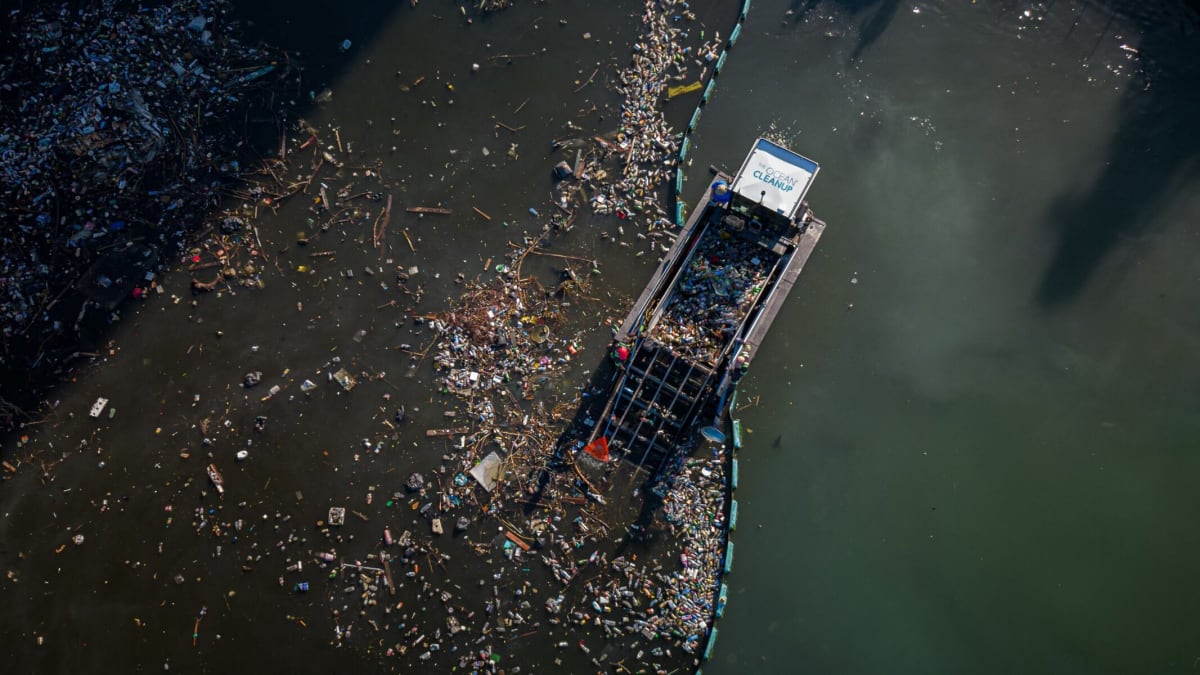
Robot Fleet Removes 66,000 Tons of Ocean Plastic
Autonomous "interceptor" robots deployed in 11 countries have pulled over 66,000 tons of plastic from rivers and oceans since 2013. The Dutch nonprofit aims to remove 90% of floating ocean plastic by 2040.
Plastic-eating robots are patrolling waterways in Los Angeles, Mumbai, and Kuala Lumpur, pulling trash from rivers before it reaches the ocean. These autonomous machines have already removed enough plastic to fill thousands of garbage trucks.
The Ocean Cleanup, a Dutch nonprofit founded in 2013, has deployed dozens of these "interceptors" across 11 countries. In 2025 alone, they extracted over 27,000 metric tons of plastic waste from aquatic environments.
The interceptors use GPS trackers, drones, and remote cameras to hunt down floating garbage. They work around the clock, monitored by a team of 200 people who analyze data and optimize collection routes.
Founder Boyan Slat launched the project at just 18 years old while studying aerospace engineering. His vision attracted tens of millions in funding from companies like JP Morgan and Kia, plus backing from the Dutch government.
The scale of the problem is staggering. Every day, the equivalent of 2,000 garbage trucks worth of plastic gets dumped into the world's waters. Annual plastic production has exploded from 1.5 million metric tons in 1950 to 430 million tons today.
The Ripple Effect
The project's success extends beyond the trash itself. Their TikTok account has gained 2.6 million followers, with videos showing mountains of extracted waste reaching 50 million views. This visibility is inspiring a generation to care about ocean health.
Scientists agree that reducing plastic production remains the top priority. Richard Thompson, a marine biology professor at the University of Plymouth, says prevention must come first. But experts also acknowledge that cleanup plays an important role.
Plastic takes 20 to 500 years to decompose, breaking down into harmful microplastics that enter the food chain. The robots are tackling pollution that's already there while the world works on turning off the tap.
The Ocean Cleanup has set an ambitious target: removing 90% of floating ocean plastic by 2040. With interceptors now operational and proven technology scaling up, that moonshot goal is starting to look achievable.
Based on reporting by Google News - Ocean Cleanup
This story was written by BrightWire based on verified news reports.
Spread the positivity!
Share this good news with someone who needs it