Robot Learns to Play Tennis Using Imperfect Human Data
A humanoid robot has learned to play tennis by watching fragmentary human movements, not perfect demonstrations. The breakthrough could help robots master complex tasks even when training data is messy or incomplete.
A white humanoid robot just rallied with a human player on a tennis court, and the secret to its success wasn't perfect training.
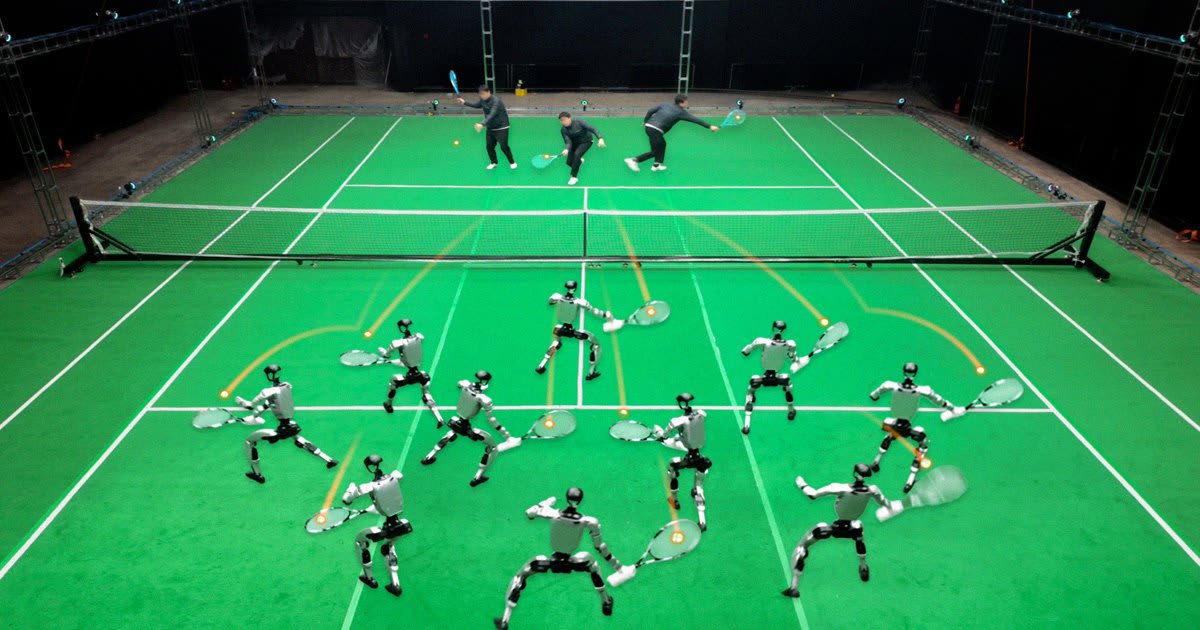
Chinese AI robotics company Galbot taught a Unitree G1 robot to play tennis using only snippets of human motion. No complete game footage, no flawless demonstrations. Just fragments of basic tennis movements like swings and steps.
The robot shuffles across the court holding an ordinary tennis racket, timing its returns with millisecond precision. In a video shared on social media, it keeps pace with human engineers in a friendly volley, moving with surprisingly natural fluidity.
What makes this impressive isn't just the tennis skills. It's how the robot learned them.
Most robotics systems need perfect, complete sequences of human motion to copy. Galbot's team built software called LATENT that works differently. It takes imperfect motion fragments and figures out how to combine them into skilled performance.
"Despite being imperfect, such quasi-realistic data still provide priors about human primitive skills," the engineers explained in their research paper. The system corrects and combines these fragments to create consistent, natural-looking movements.
The robot can now return balls under varied conditions and aim for target locations. It doesn't just mimic movements mechanically. It makes real-time decisions about where to move and when to swing.
The Ripple Effect
This approach could transform how robots learn any complex physical task. Most real-world activities don't have perfect training datasets available.
Construction sites, warehouses, disaster zones, and homes all present unpredictable situations where robots need to adapt. If machines can learn from imperfect, fragmentary human examples, they become far more practical for everyday use.
The research team believes their framework can extend beyond tennis to "a broader range of tasks where complete and high-quality human motion data are unavailable." That includes most of the physical work humans do.
Other humanoid robots are already assembling cars, sorting packages, and performing demonstrations. But they typically need extensive, carefully controlled training. This breakthrough suggests a faster path forward.
The robot isn't ready to challenge professional tennis players yet. But watching it learn from messy, incomplete data feels like watching the future figure itself out one imperfect step at a time.
More Images

Based on reporting by Futurism
This story was written by BrightWire based on verified news reports.
Spread the positivity!
Share this good news with someone who needs it