Robot Successfully Performs Delicate Eye Surgery on Pig Eyes
Johns Hopkins researchers built an AI-powered robot that can thread needles thinner than human hair into retinal veins, succeeding 90% of the time in lab tests. The breakthrough could help save vision for thousands who suffer from blocked veins in their eyes.
A robot just mastered one of the most delicate surgeries in medicine, threading a needle into blood vessels thinner than a human hair to treat a condition that causes blindness.
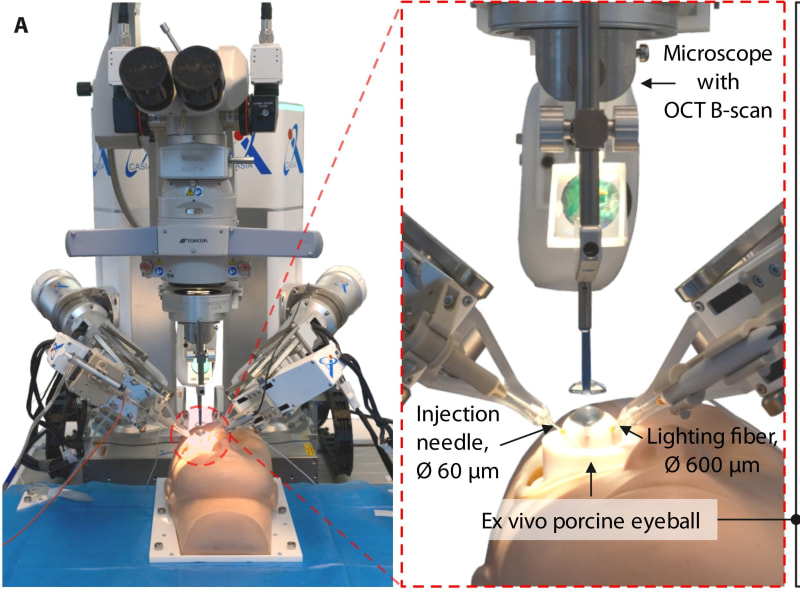
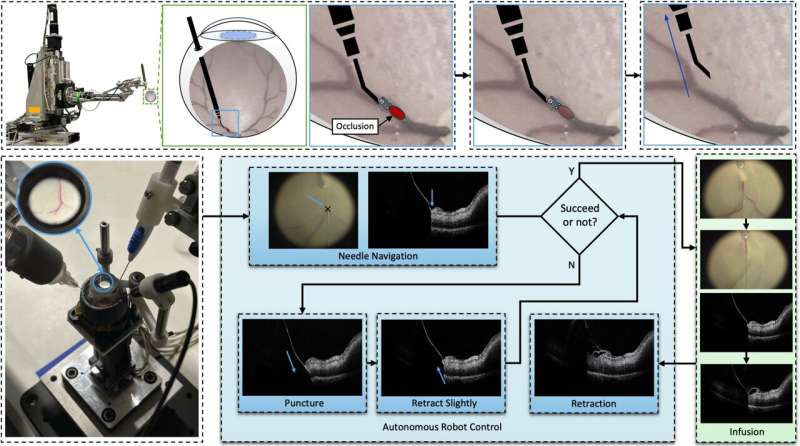
Researchers at Johns Hopkins University developed a robotic system that can perform retinal vein cannulation, a procedure so precise it exceeds what human hands can reliably achieve. The surgery treats retinal vein occlusion, which happens when a vein in the back of the eye gets blocked and causes vision loss.
The challenge is extreme. Surgeons need to insert a tiny needle into veins similar in thickness to a single human hair, then deliver clot-dissolving drugs without damaging the delicate retina. Even the slightest tremor can cause serious harm.
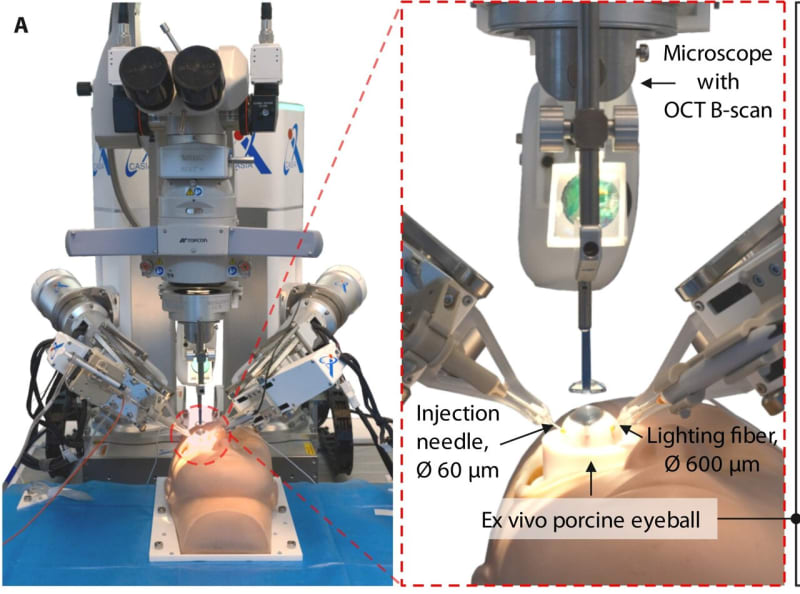
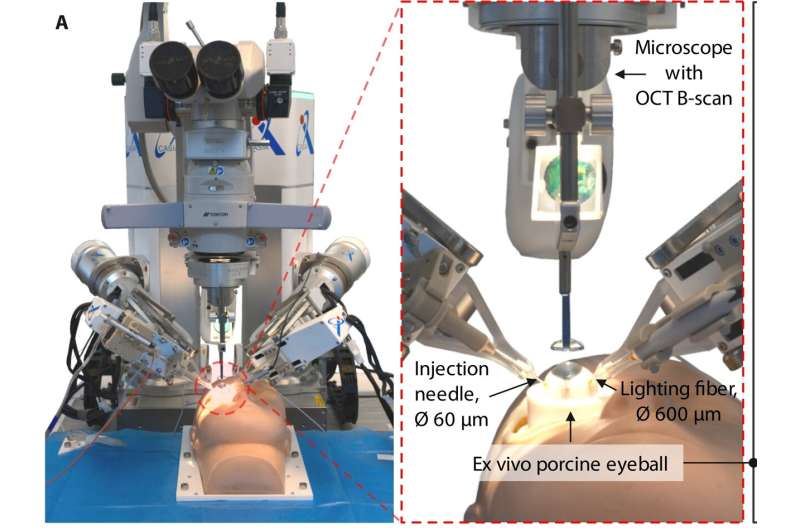
The new system combines two specialized surgical robots with deep learning algorithms that analyze microscope images and eye scans in real time. The AI tracks the needle's position and guides the robots to insert it correctly into the blocked vein.
Lead researcher Peiyao Zhang and his team tested the system on pig eyes, both still and moving to simulate breathing motion. The results were impressive: 90% success rate on stationary eyes and 83% on moving eyes. The robot could even detect the exact moment when the needle touched and entered a vein.
"Expert surgical knowledge can be embedded into deep learning models," Zhang explained. "This enables clinicians without specialized training to achieve outcomes comparable to experienced surgeons."
The Ripple Effect
This breakthrough could transform eye care beyond just treating blocked veins. The same technology could assist with other microsurgeries where human precision falls short, reducing surgeon workload and improving consistency across procedures.
The system still needs testing in live animals and eventually human clinical trials before reaching operating rooms. But the foundation is solid, showing that robots guided by artificial intelligence can handle procedures once thought too delicate for automation.
For people facing vision loss from retinal vein occlusion, this robot represents hope for a more reliable treatment option that doesn't depend solely on finding a surgeon with years of specialized training.
The future of eye surgery is looking brighter, one microscopic stitch at a time.
More Images

Based on reporting by Medical Xpress
This story was written by BrightWire based on verified news reports.
Spread the positivity!
Share this good news with someone who needs it