Roboticist Builds Machines That Give Back to Nature
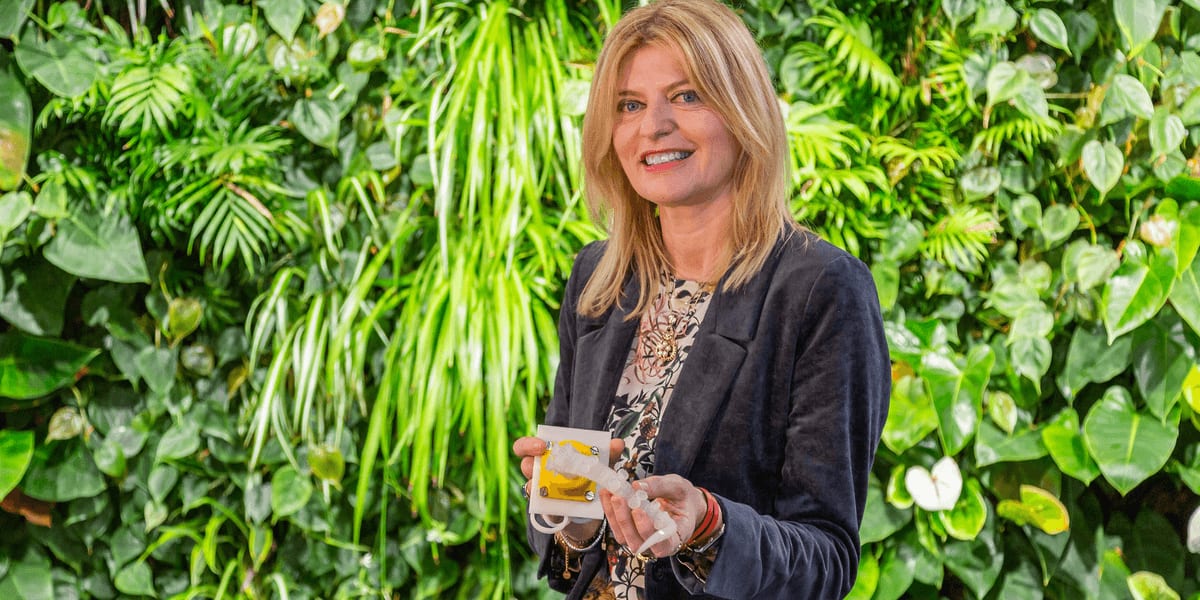
A biologist turned roboticist is designing robots inspired by octopuses and plant roots that actually help the environment instead of harming it. Barbara Mazzolai is launching a new field called "sustainability robotics" to transform how we build machines.
A roboticist who learned engineering by studying octopuses and plant roots now wants to make sure her creations help the planet they're inspired by.
Barbara Mazzolai started her career as a biologist exploring the forests of Italy's Tuscan coast with her mycologist father. That childhood wonder led her to study marine biology, then environmental monitoring, and eventually to an unexpected career switch that would reshape robotics.
In 1999, Mazzolai joined a team building robots to monitor air, water, and soil. She brought her biology background to the engineering lab and became a pioneer in bioinspired robotics, creating machines modeled after living creatures.
Her breakthrough came in 2004 when she helped design a soft robot based on octopus tentacles. The project proved that robots could be flexible yet powerful, launching the field of soft robotics.
But Mazzolai didn't stop with animals. She turned to plants, particularly fascinated by how roots explore underground environments with remarkable efficiency. When colleagues doubted robots based on "static" organisms, she showed them plants actually move constantly through growth and adaptation.
Now as associate director for robotics at the Italian Institute of Technology in Genoa, Mazzolai is tackling a bigger challenge. She's advocating for "sustainability robotics," a new approach outlined in her July manifesto published in Nature Machine Intelligence.
The Ripple Effect
This isn't just about copying nature anymore. Mazzolai wants engineers to consider their technology's environmental footprint from the very first sketch.
Her vision transforms how robots are designed, built, and deployed. Instead of just taking inspiration from nature, sustainability robotics gives back by reducing harm and actively improving our relationship with the natural world.
The field could reshape everything from environmental monitoring to precision agriculture. Imagine robots that explore soil health without damaging ecosystems, or machines that help restore habitats instead of consuming resources.
Mazzolai sees this as opening entirely new possibilities for both robotics and society. Her work proves that the same evolutionary solutions that help octopuses thrive and roots navigate complex terrain can teach us to build technology that heals rather than harms.
The girl who once explored Tuscan forests learning about fungi is now ensuring future generations inherit robots that protect those same wild places.
Based on reporting by IEEE Spectrum
This story was written by BrightWire based on verified news reports.
Spread the positivity!
Share this good news with someone who needs it