Rochester Becomes $31M National Laser Innovation Hub
The National Science Foundation just awarded Rochester, New York $15 million to become America's laser technology hub, with New York State matching $16 million more. The investment aims to bring laser manufacturing back to the US and create thousands of skilled jobs in a region already home to 150 optics companies.
America is reclaiming its leadership in laser technology, and Rochester, New York just became ground zero for the revolution.
The National Science Foundation announced $15 million in funding to establish the NSF STELLAR Engine in Rochester and the Finger Lakes region, with New York State adding another $16 million over six years. Led by the University of Rochester, this new innovation hub will focus on laser research, manufacturing, and workforce development in a technology that powers a $16 trillion global marketplace.
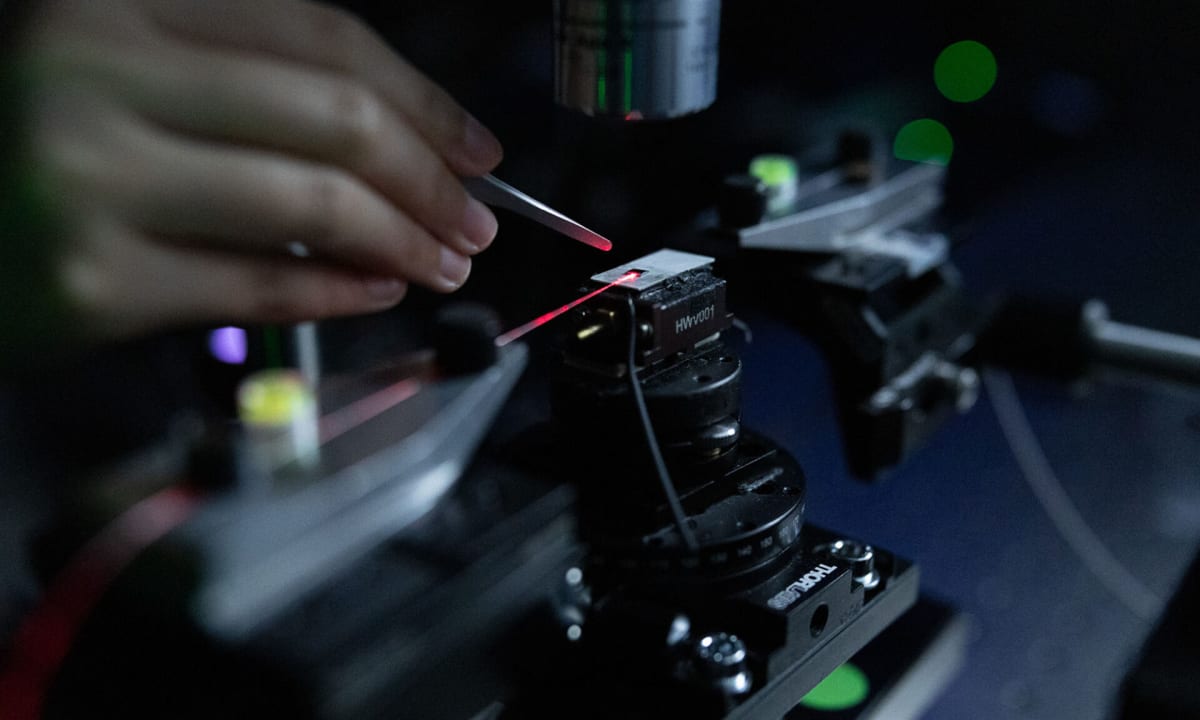
Lasers aren't just for science fiction anymore. They're inside your smartphone, powering high-speed internet, cutting precision parts in factories, and defending national security. But here's the problem: while American scientists invented the laser, most production has moved overseas to China and Europe.
Rochester is uniquely positioned to change that. The region already hosts more than 150 optics and laser companies, plus world-class research facilities like the University of Rochester's Institute of Optics, founded nearly 100 years ago, and the Laboratory for Laser Energetics, home to some of the world's most powerful academic lasers.
The STELLAR coalition brings together universities, community colleges, startups, manufacturers, and local government. Partners include Rochester Institute of Technology, Monroe Community College, and major companies like L3Harris and Corning. Over 90 organizations have signed on to support the initiative.
The investment tackles two critical needs at once. First, it will scale up American laser research and manufacturing to compete globally. Second, it addresses the shortage of skilled workers in optics and photonics by expanding education programs from community college through advanced degrees.
Monroe Community College runs the nation's first community college optical systems technology program. Now that expertise will help train the next generation of laser technicians and engineers across the region.
The Ripple Effect
This isn't just about lasers. The STELLAR Engine will transform an entire regional economy while strengthening American competitiveness in critical technologies. Manufacturing jobs will return. Students will graduate into careers that didn't exist in their communities before. Local startups will have the support to scale up.
The Rochester region led previous revolutions in photography, xerography, and precision optics. Now it's positioned to lead the future of laser technology, proving that American innovation hubs can thrive outside traditional coastal tech centers.
The investment also demonstrates how federal and state governments can partner with universities and industry to rebuild domestic manufacturing capabilities. STELLAR is one of just 12 teams nationwide selected for the NSF Regional Innovation Engines program, which aims to transform America's innovation infrastructure for decades to come.
For workers in the region, this means real opportunities in growing fields like advanced manufacturing, defense technology, medical devices, and telecommunications, all powered by laser innovation.
A region that helped invent modern imaging technology is about to light up America's laser future.
More Images

Based on reporting by Google News - Innovation Technology
This story was written by BrightWire based on verified news reports.
Spread the positivity!
Share this good news with someone who needs it