Rocky Planet 49 Light-Years Away May Support Life
Scientists have detected signs of an atmosphere on a rocky planet in the habitable zone of a distant star, marking a potential breakthrough in the search for extraterrestrial life. The discovery on planet LHS 1140b makes it the best candidate yet for finding life beyond our solar system.
For the first time ever, scientists may have found a rocky planet with an atmosphere in the perfect zone for supporting life. The discovery could change how we think about our place in the universe.
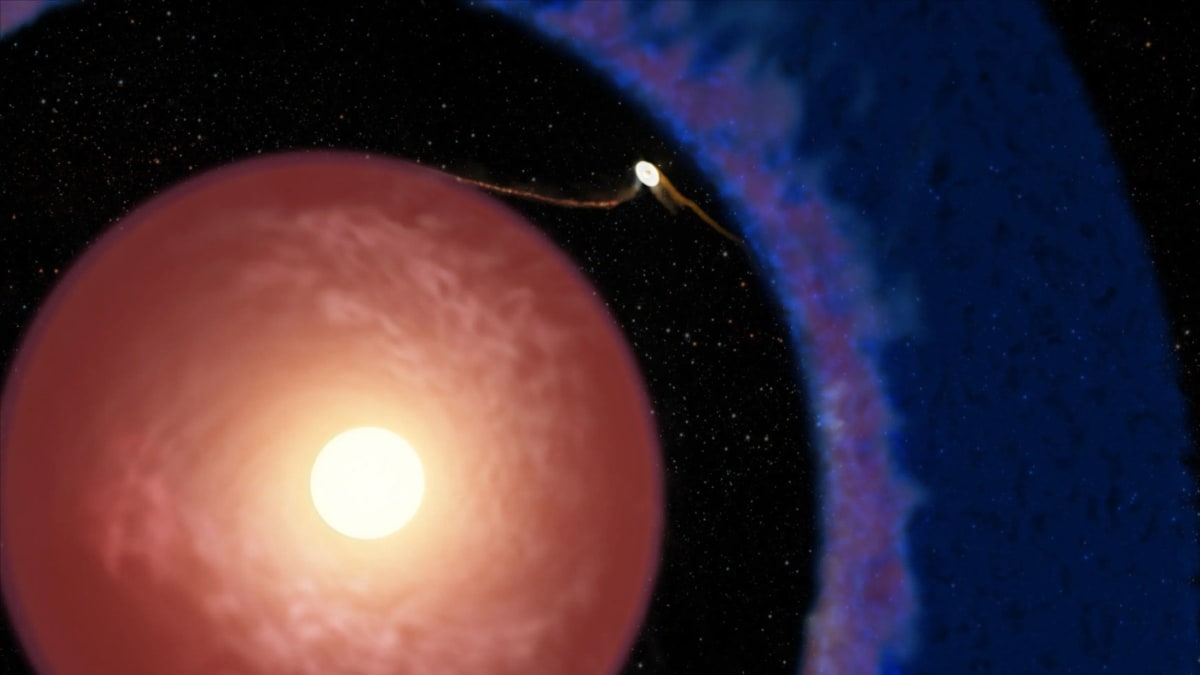
The planet, called LHS 1140b, sits 49 light-years from Earth and orbits its star in what astronomers call the "Goldilocks zone." That means it's not too hot or too cold for liquid water to exist on its surface.
"I think it's the best place to look for life outside the solar system at this point," said lead researcher Collin Cherubim, a planetary scientist at the University of Chicago. The planet is about five times the mass of Earth and appears to have an iron core similar to our own planet.
What makes this discovery special is that astronomers detected helium escaping from the planet's atmosphere. While more than 6,200 planets have been discovered outside our solar system since the 1990s, finding an atmosphere on a rocky planet in a habitable zone has remained elusive until now.
Cherubim used a telescope in Chile to spot the telltale helium signature in September 2024. The presence of helium suggests the planet once had a thick atmosphere of hydrogen and helium, but as it evolved into a rocky world, it lost most of the hydrogen while keeping the heavier helium.
The planet orbits a red dwarf star, the most common type of star in the universe. These stars are typically hostile to planetary atmospheres because they emit intense radiation that can strip away protective gases.
Why This Inspires
This finding answers a question that has puzzled astronomers for years: can rocky planets maintain atmospheres around red dwarf stars? The answer appears to be yes, opening up countless possibilities for finding habitable worlds.
Since red dwarfs make up the majority of stars in the universe, confirming that planets around them can hold atmospheres dramatically expands the potential locations where life might exist. What seemed like a limitation in our search for habitable worlds has transformed into an opportunity.
While there's no evidence of life on LHS 1140b yet, Cherubim remains optimistic about finding other gases like oxygen that could support living organisms. The team plans new observations this fall using even more sensitive instruments.
The discovery also shows that rocky planets can survive and thrive in conditions once thought impossible. LHS 1140b has three key ingredients scientists look for: it's mostly rocky, it's at the right temperature for liquid water, and it has an atmosphere.
Finding this atmosphere means we're one step closer to answering humanity's oldest question: are we alone in the universe?
More Images

Based on reporting by Google News - Science
This story was written by BrightWire based on verified news reports.
Spread the positivity!
Share this good news with someone who needs it