Salk Scientists Find New Way to Target ALS Cells
Researchers at the Salk Institute discovered how immune cells identify diseased neurons in ALS patients, opening doors to new treatments for Lou Gehrig's disease, cancer, and autoimmune disorders. The breakthrough could help the body target and eliminate harmful cells while leaving healthy tissue intact.
Scientists just took a major step toward understanding how to fight ALS by discovering the body's own cleanup system might be turned into a powerful treatment tool.
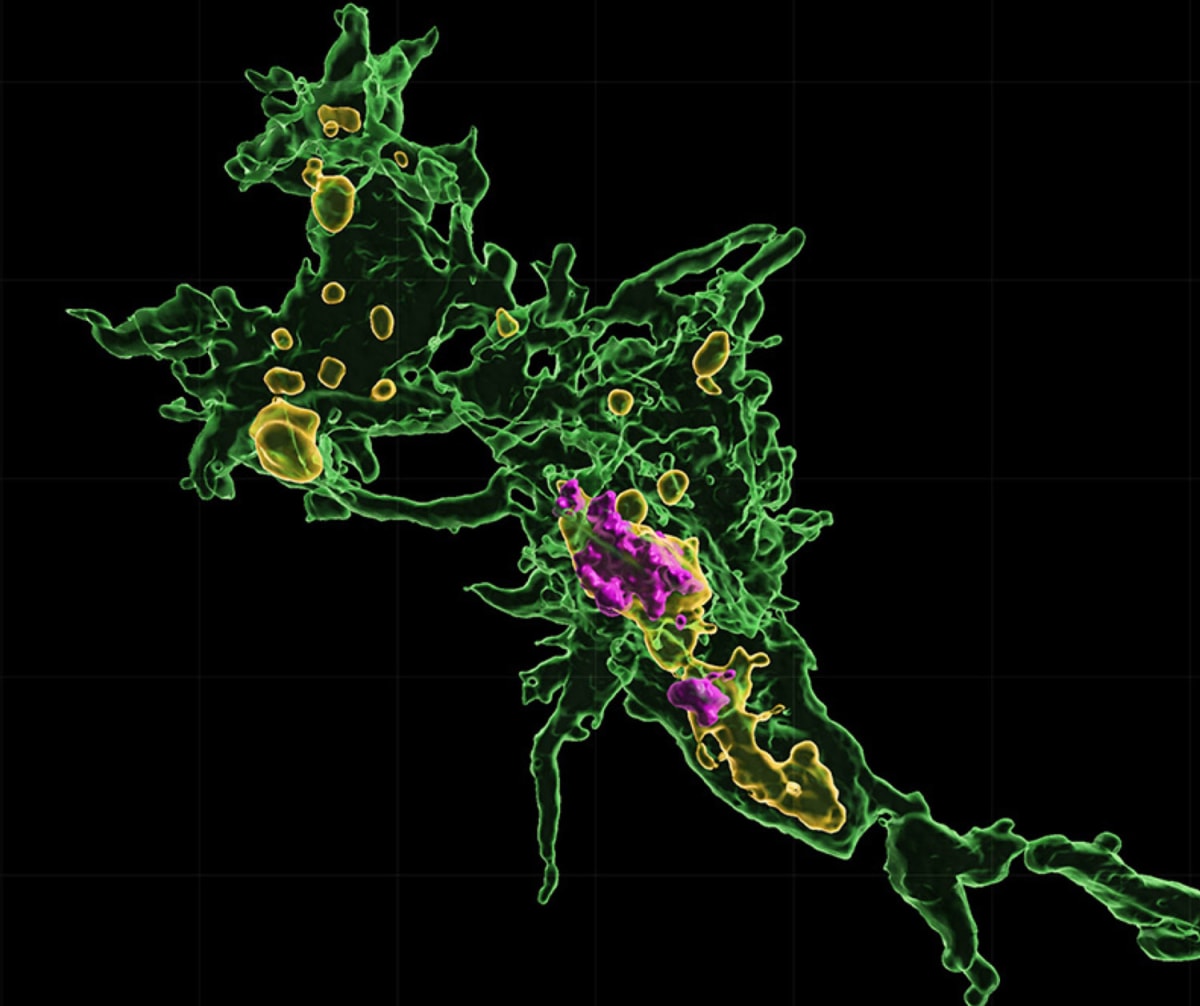
Researchers at San Diego's Salk Institute found that immune cells called microglia use special proteins to locate and destroy damaged motor neurons in mice with late-stage ALS. The discovery shifts focus from just studying dying neurons to understanding why the body attacks them.
Dr. Greg Lemke, a neuroscientist at Salk, explained the finding in remarkably hopeful terms. Your body already removes about one million dead cells every second through a natural cleaning system. His team identified exactly how that system works.
Here's where it gets exciting. Scientists believe they can modify this cleanup system to target cells that shouldn't be there, like diseased neurons in ALS patients or tumor cells in cancer patients. It's like reprogramming your body's natural housekeeping crew to take out the trash more selectively.
ALS currently affects 35,000 Americans, with 5,000 new cases diagnosed yearly. The disease typically strikes people between 55 and 75, causing muscle failure, paralysis, and death. Current treatments only slow progression without stopping or reversing the damage.
The research, published in Nature Communications, identified TAM receptors as the key proteins microglia use to find their targets. Scientists have already started modifying these receptor systems through genetic engineering, though Lemke acknowledges the work is complex.
The Ripple Effect
This discovery reaches far beyond ALS. The same mechanism could potentially be adapted to treat multiple autoimmune diseases and various cancers. By understanding how the body naturally identifies and removes unwanted cells, researchers are essentially learning to speak the immune system's language.
Lemke points out that current drug therapies only delay disease progression without addressing root causes. This research tackles the fundamental molecular mechanisms, which is exactly what's needed to move from management to actual treatment.
The team is now working to understand what triggers autoimmune diseases in the first place. While genetic engineering therapy might one day extend patients' lives significantly, scientists need to unravel the initial causes before achieving a complete cure.
This breakthrough represents hope not just for ALS patients, but for millions suffering from conditions where the body's cleanup system goes wrong. Sometimes the biggest medical advances come from understanding what our bodies already know how to do.
More Images

Based on reporting by Google News - Disease Cure
This story was written by BrightWire based on verified news reports.
Spread the positivity!
Share this good news with someone who needs it