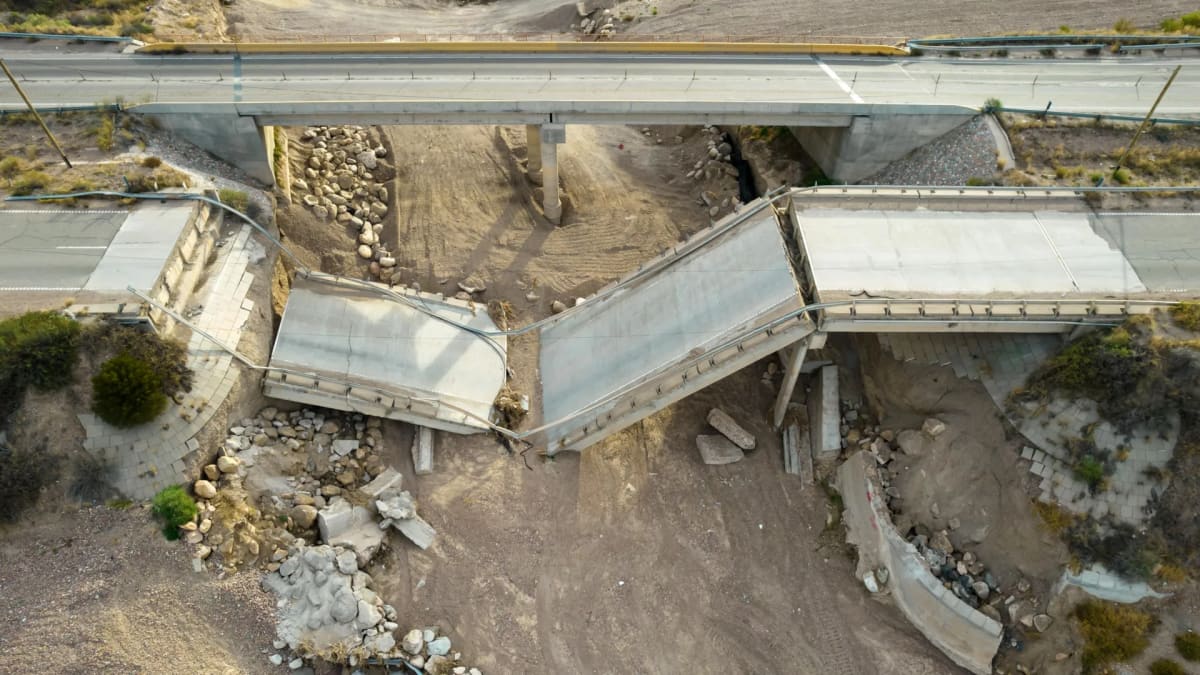
Satellites Now Catch Bridge Problems Before They Collapse
Scientists can now use satellites to detect tiny movements in bridges that signal danger long before traditional inspections would notice. The breakthrough could prevent disasters and save lives, especially in areas where bridges rarely get checked.
Imagine if we could spot a bridge failure weeks or months before it happens, just by looking down from space.
Scientists at the University of Houston have figured out how to do exactly that. Using satellite radar imaging, researchers can now detect movements as small as a few millimeters in bridges around the world. These tiny shifts often signal structural problems long before human inspectors would notice them.
The global study examined 744 bridges across every continent. The findings paint a concerning picture for North America, where most bridges were built during the 1960s construction boom. Many of these structures are now decades past their original design life and showing their age.
Pietro Milillo, the lead researcher, explains that satellites can now monitor more than 60 percent of the world's long-span bridges. The technology works by capturing radar images frequently and comparing them over time to spot unusual movement patterns. Traditional inspections happen only twice a year and rely on visual checks that can miss early warning signs.
The current system leaves gaps everywhere. Fewer than 20 percent of long-span bridges worldwide have continuous monitoring sensors installed. Those sensors typically only go on new bridges or structures already known to have problems. That leaves thousands of aging bridges with no real oversight between infrequent inspections.
The satellite approach changes everything. By adding space-based monitoring to existing inspection programs, researchers found they could reduce the number of high-risk bridges by about one third. Of the bridges still classified as high risk, roughly half would benefit from ongoing satellite observations.
The Ripple Effect spreads farthest in Africa and Oceania, where bridge monitoring barely exists today. These regions could leapfrog expensive ground-based sensor systems and jump straight to satellite oversight. The technology costs less than installing traditional sensors and covers entire infrastructure networks at once.
The system tracks persistent scatterers, which are stable radar reflection points on bridge surfaces. By analyzing how these points move over time, engineers can prioritize which bridges need urgent maintenance and which ones are stable. This removes much of the guesswork from inspection schedules.
While academics have used this technology for years, transportation authorities have been slow to adopt it. This global study provides the evidence that satellite monitoring works at scale and can be deployed immediately with existing satellites already in orbit.
Bridges represent some of the most vulnerable parts of our transportation systems. Now we finally have eyes in the sky watching over them continuously, catching problems before they become catastrophes.
Based on reporting by Science Daily
This story was written by BrightWire based on verified news reports.
Spread the positivity!
Share this good news with someone who needs it