Saturn's Rings Are Feeding the Planet, Scientists Discover
Saturn's iconic rings aren't just beautiful decoration. They're actively feeding the planet with water, ice, and complex molecules in a cosmic connection that's rewriting what we know about our solar system.
Saturn's rings are doing something extraordinary that scientists never expected: they're slowly raining down onto the planet itself, feeding it with water ice, dust, and organic molecules in a beautiful cosmic exchange.
For decades, astronomers treated Saturn's stunning rings as a separate feature, spectacular but disconnected from the planet they circle. The Cassini spacecraft and now the James Webb Space Telescope have revealed something far more wonderful: Saturn and its rings work together as one living system.
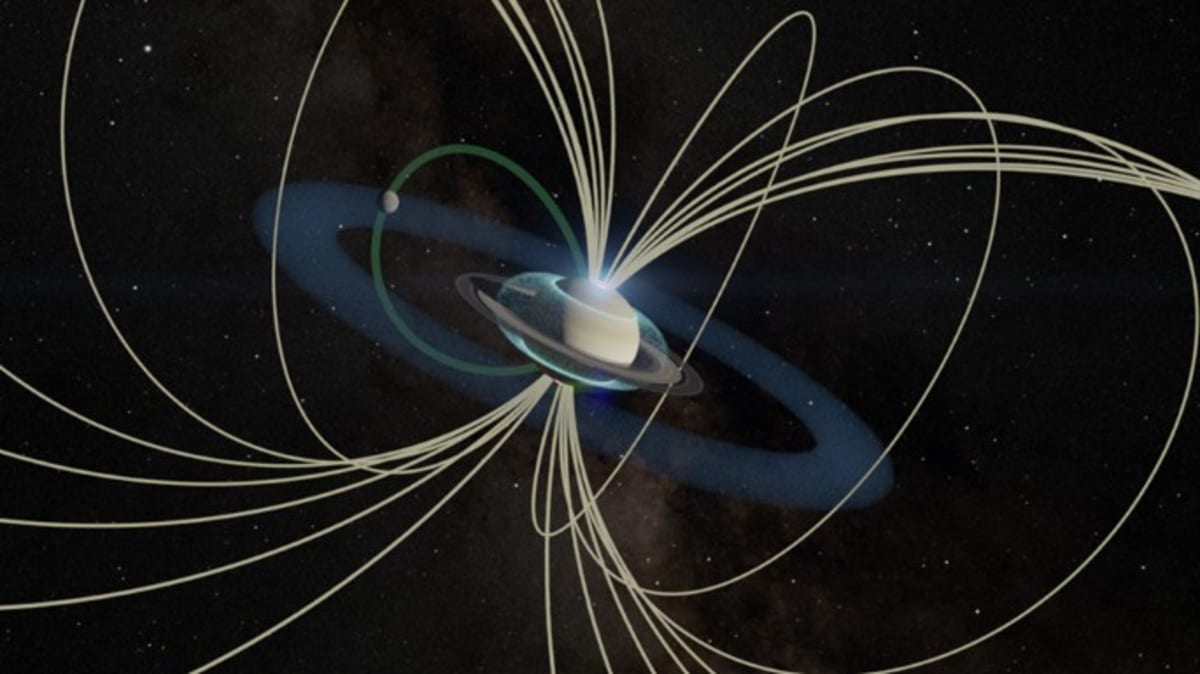
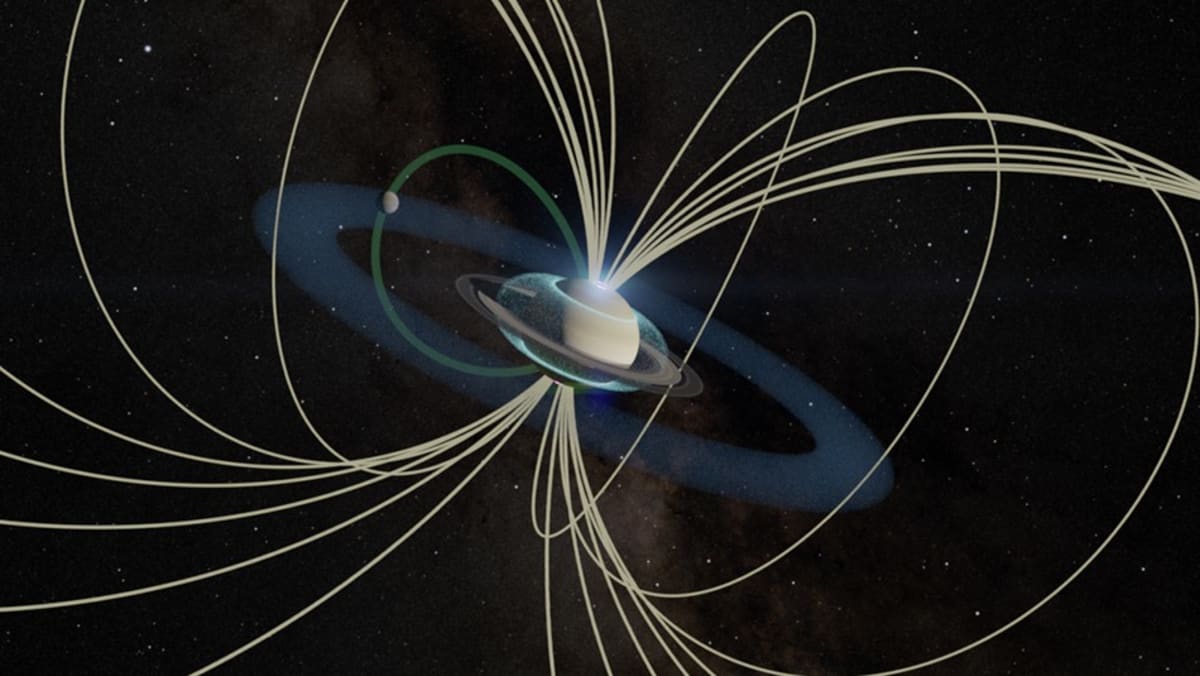
Two distinct flows connect the rings to Saturn's atmosphere. At the planet's mid-latitudes, charged particles follow magnetic field lines down like lightning in reverse, a process called "ring rain." At the equator, tiny grains of ice and dust spiral inward, dragged by atmospheric friction as they interact with Saturn's upper atmosphere.
Cassini's final orbits before its 2017 mission end detected methane, water, ammonia, and complex organic molecules flowing from the rings into Saturn. These materials change the planet's atmospheric chemistry and temperature in ways that ripple through its entire weather system.
Even the shadows cast by the rings matter. Saturn's opaque outer rings block ultraviolet sunlight like seasonal shutters, creating sharp contrasts in how different parts of the atmosphere heat and cool throughout Saturn's 29-year orbit around the sun.
The Bright Side
This discovery transforms how we understand planetary systems everywhere. Saturn isn't a planet with rings. It's a connected world where rings, moons, atmosphere, and magnetic fields all shape each other in an elegant dance.
The rings themselves are likely debris from a disrupted icy moon, and they won't last forever. As material continues flowing into Saturn, scientists estimate the rings may only have 100 million years left. That might sound like forever, but in cosmic terms, it means we're living at exactly the right moment to witness one of the solar system's most beautiful features.
The James Webb Space Telescope is now sharpening the picture further, revealing chemical details that Cassini could only hint at. Each new observation shows how Saturn's parts communicate, how they feed each other, how they're genuinely connected.
What seemed like separate pieces turns out to be one magnificent whole, and we're just beginning to understand how it all works together.
More Images
Based on reporting by Google: James Webb telescope
This story was written by BrightWire based on verified news reports.
Spread the positivity!
Share this good news with someone who needs it