Saudi Arabia Finds 7 Mummified Cheetahs in Ancient Caves
Scientists exploring caves in Saudi Arabia discovered seven naturally mummified cheetahs preserved for up to 1,900 years, and their DNA reveals a surprising path to bring these cats back to Arabia. The find could save a critically endangered cheetah subspecies while restoring a lost predator to its ancient home.
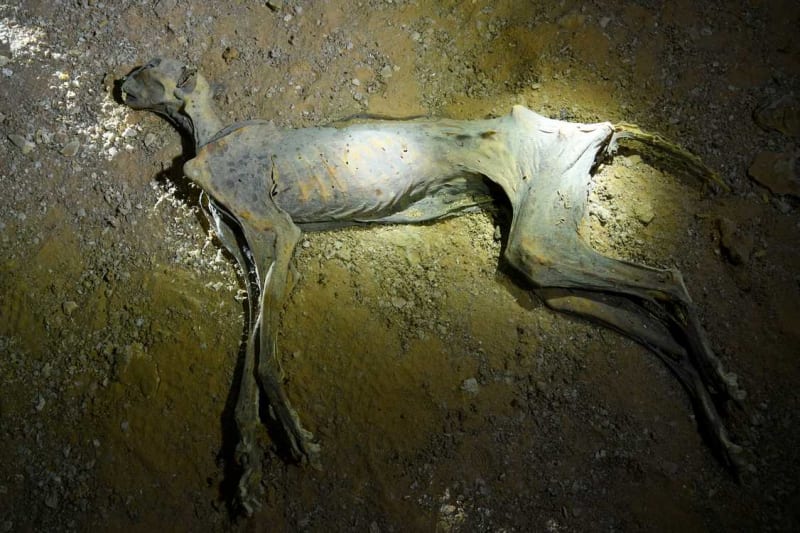
Deep in Saudi Arabian caves, scientists stumbled upon seven cheetah mummies so perfectly preserved that their DNA still tells stories from nearly two thousand years ago.
Between 2022 and 2023, researchers surveyed over 1,000 caves hoping to find ancient animal remains that could guide modern wildlife restoration. They found something extraordinary: naturally mummified cheetahs whose bodies had been preserved in remarkable detail by the dry cave air, along with skeletal remains of 54 additional cats.
The discovery near the city of Arar in northern Saudi Arabia reveals something unexpected. While everyone assumed only Asiatic cheetahs once lived on the Arabian Peninsula, DNA analysis showed the oldest specimens actually belonged to the Northwest African cheetah subspecies. This critically endangered cat now survives only in Niger, Algeria, and tiny pockets of the Sahel region.
Dr. Ahmed Boug and his team extracted complete genome sequences from three mummies, the first time scientists have successfully done this with naturally mummified big cats. The specimens ranged from 130 to 1,900 years old, with the skeletal remains dating back 4,000 years.
This genetic detective work solves a conservation puzzle. Bringing back the endangered Asiatic cheetah from Iran would be nearly impossible after Iranian authorities arrested wildlife biologists in 2020 for studying cheetahs with camera traps. Northwest African cheetahs offer a more promising path forward.
The Ripple Effect
Saudi Arabia has already proven it can restore lost wildlife. In recent decades, the country successfully reintroduced Arabian oryx, Arabian gazelles, Sand gazelles, and Nubian ibex to landscapes where they had vanished.
With abundant prey species now thriving and vast empty spaces, the timing seems right to bring back the predators that once balanced these ecosystems. Only about 250 Northwest African cheetahs remain in the wild, living in areas stalked by terrorist groups who also poach wildlife.
Saudi Arabia could offer these cheetahs a lifeline. The governments of Mali, Niger, Benin, and Burkina Faso might welcome collaboration that would establish a well-funded, secure backup population in Arabia. These cats could one day help replenish struggling West African populations.
Cheetahs once roamed across Africa and Western and Southern Asia but now occupy just 9% of their historic range. In Asia, their territory has shrunk by 98%, and they disappeared from the Arabian Peninsula in the 1970s.
Conservation of large carnivores is never simple, but this remarkable discovery offers both crucial genetic science and a roadmap that could save a distinct cheetah subspecies while returning the world's fastest land animal to a home it lost decades ago.
More Images


Based on reporting by Good News Network
This story was written by BrightWire based on verified news reports.
Spread the positivity! 🌟
Share this good news with someone who needs it