Australia Scientists Push for Native Pollinator Protection
While the Australian government spends millions protecting honeybees from mites, scientists are calling for urgent support for 2,000 native bee species that actually need the help. A new conservation strategy could protect the pollinators that kept Australia's ecosystems thriving for thousands of years.
Australia is home to 2,000 native bee species that most people have never heard of, and scientists say it's time that changed.
The New South Wales government recently announced $9.5 million in new funding to protect European honeybees from Varroa mites, adding to $58 million already spent. But researchers Graham Pyke, Amy-Marie Gilpin, and Kit Prendergast point out that native pollinators, which include thousands of bee, beetle, fly, butterfly, and bird species, receive almost no government support despite being critical to Australia's ecosystems.
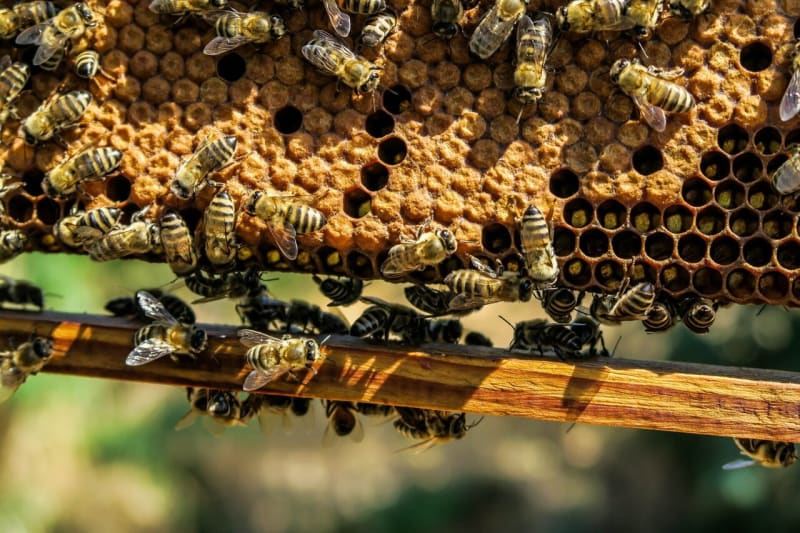
The irony runs deep. Honeybees aren't native to Australia at all. They're an introduced species that has gone feral across the continent, now reaching some of the highest densities anywhere in the world.
These European imports compete with native pollinators for food and may be causing real harm. Recent studies show that native bees exposed to high honeybee populations produce fewer offspring and more males than females, a pattern that leads to population decline.
Here's where the story takes a hopeful turn. The arrival of Varroa mites, while devastating for honeybee populations, creates a unique research opportunity. As feral honeybee numbers temporarily drop, scientists have a narrow window to study how native pollinator systems respond and recover.
The Bright Side
Scientists across Australia are taking action without waiting for government funding. They're developing the country's first Native Bee and Pollinator Conservation Strategy, a comprehensive plan to protect species that have been overlooked for decades.
Just recently, researcher Kit Prendergast discovered and named a new native bee species that pollinates a critically endangered plant. She did this work entirely without government funding, proving that passion and dedication can drive discovery even when resources are scarce.
The researchers point out something important: honeybees have never gone extinct anywhere in the world, even in countries with far fewer resources than Australia. Native pollinators, however, face real threats from habitat loss, climate change, and competition.
Several hundred Australian native bee species haven't even been named yet. Once scientists identify and study them, conservation efforts can begin in earnest. These pollinators maintained Australia's unique ecosystems long before European settlement, and they can do it again with proper support.
The conservation strategy will provide evidence-based approaches to protect pollinators that have been working for millennia. It represents a shift from managing introduced species to celebrating and protecting the insects, birds, and mammals that belong here.
This moment offers Australia a chance to lead the world in native pollinator conservation while there's still time to make a difference.
More Images



Based on reporting by Phys.org
This story was written by BrightWire based on verified news reports.
Spread the positivity! 🌟
Share this good news with someone who needs it