Ancient Cheetah DNA Opens Door for Arabian Rewilding
Scientists discovered seven naturally mummified cheetahs in Saudi Arabian caves, revealing that two subspecies once roamed the peninsula. This breakthrough could make reintroducing cheetahs to their former Arabian home far more achievable.
Cheetahs could soon race across Arabian deserts again, thanks to an extraordinary discovery hiding in caves near the Saudi city of Arar.
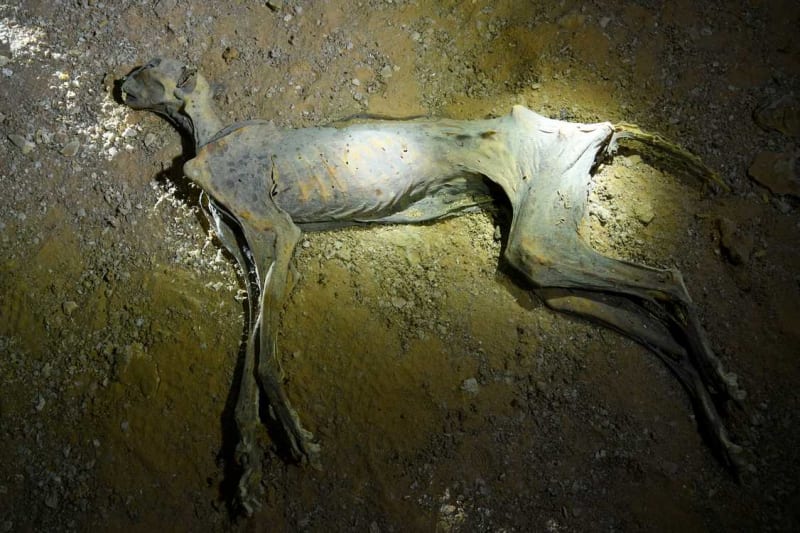
Researchers found seven naturally mummified cheetahs dating back as far as 4,000 years, perfectly preserved by the dry cave conditions. The team also uncovered skeletal remains from 54 additional cats, creating an unprecedented window into the region's lost wildlife.
The real breakthrough came when scientists extracted complete DNA from three mummified specimens. This marks the first time anyone has successfully sequenced full genomes from naturally mummified big cats, opening new possibilities for conservation worldwide.
What they found surprised everyone. While the most recent specimen matched the critically endangered Asiatic cheetah, two older cats were genetically closest to the Northwest African cheetah, a different subspecies entirely.
This discovery rewrites what conservationists thought they knew about Arabian cheetahs. For decades, experts believed only Asiatic cheetahs lived on the peninsula before vanishing in the 1970s.
The revelation changes everything for rewilding efforts. With only one small Asiatic cheetah population surviving in Iran today, reintroducing that subspecies seemed nearly impossible.
Now scientists have proof that other cheetah subspecies thrived in Saudi Arabia for thousands of years. That dramatically expands the genetic pool available for reintroduction programs.
Cheetahs once roamed across Africa and throughout Western and Southern Asia. Today they occupy just 9% of their historical range, with Asian populations down 98%.
The Ripple Effect
This research proves that ancient DNA can guide modern conservation in ways nobody imagined. Similar specimens preserved in caves worldwide could hold genetic keys to restoring other vanished species to their former homes.
The method Ahmed Boug and his colleagues developed could inform rewilding plans for countless endangered animals. What worked for Arabian cheetahs might work for tigers, leopards, or other species that disappeared from parts of their range.
Saudi Arabia has already begun preparing protected wilderness areas suitable for large predators. These mummies provide the scientific foundation conservationists needed to move forward with confidence.
The discovery also highlights how much we still don't know about species we thought we understood completely. Sometimes the answers to tomorrow's conservation challenges lie preserved in yesterday's caves.
The fastest land animals on Earth may soon sprint across Arabian sands again, guided home by the DNA of ancestors who ran there millennia ago.
More Images


Based on reporting by Phys.org
This story was written by BrightWire based on verified news reports.
Spread the positivity! 🌟
Share this good news with someone who needs it