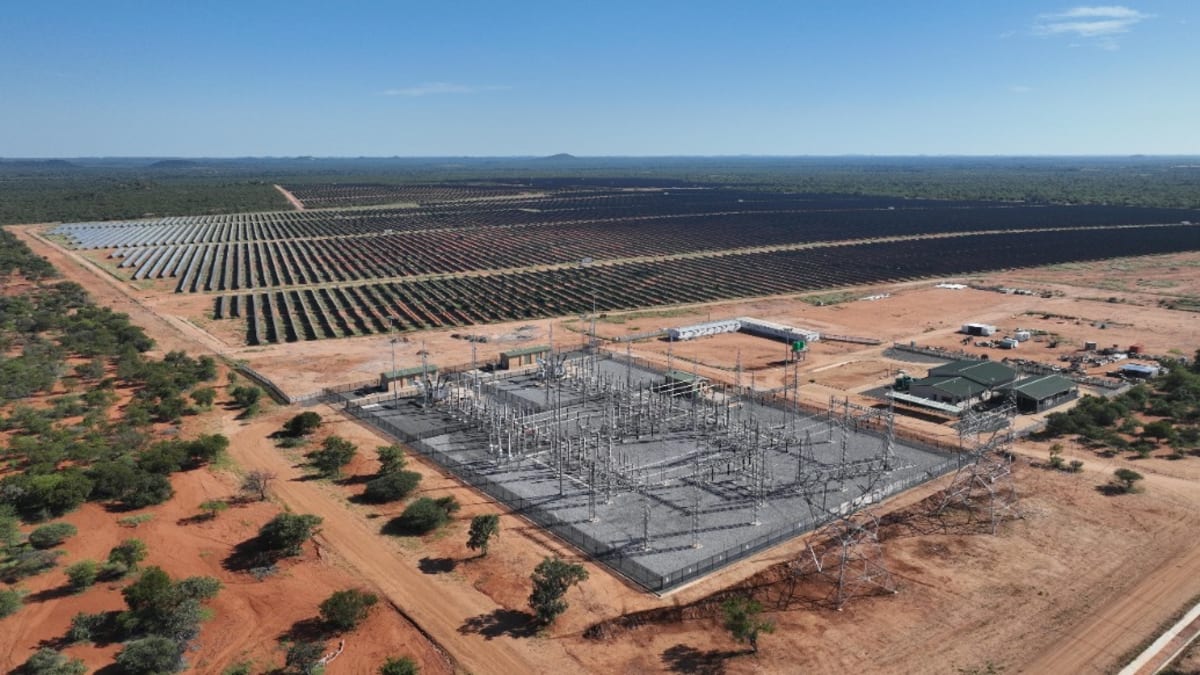
Saudi Arabia Maps Path to Net-Zero With 151 GW of Solar
New research shows Saudi Arabia could reach net-zero emissions by 2060 using just 0.16% of its land for solar power. The plan would transform one of the world's largest oil producers into a renewable energy leader.
One of the world's biggest oil producers just mapped out a surprisingly achievable path to net-zero emissions, and it relies heavily on the desert sun.
Researchers at Saudi Arabia's King Abdullah Petroleum Studies and Research Center have outlined how the kingdom could eliminate carbon emissions by 2060. The plan calls for 151 gigawatts of solar power, enough to supply tens of millions of homes, while using less than one-fifth of one percent of Saudi land.
"Around 151.3 GW of solar PV would require about 3,519 square kilometers," said lead researcher Sarah Abuouf. That's roughly the size of Rhode Island in a country nearly as large as Mexico.
The modeling shows most solar installations would concentrate in Saudi Arabia's western and eastern regions, where sunlight is abundant and consistent. Wind farms would handle the bulk of renewable capacity in the northeast, but solar plays a critical supporting role with a much smaller land footprint.
The research team analyzed multiple scenarios, including both zero-emission and net-zero pathways. All successful models included significant solar capacity paired with battery storage and hydrogen technologies to ensure reliable power around the clock.
Some natural gas generation would remain as backup, but the system would run primarily on renewable energy. The transition requires careful planning around critical minerals like copper for solar panels and batteries, especially during the 2030s and 2050s.
The Ripple Effect
This research matters beyond Saudi Arabia's borders. When major oil-producing nations chart realistic paths to renewable energy, it signals a fundamental shift in global energy markets.
The study provides a blueprint that other resource-rich countries could adapt. It shows that achieving net-zero doesn't require impossibly large land sacrifices or technological breakthroughs that don't yet exist.
The researchers emphasize these are modeling estimates, not official government commitments. Still, the analysis demonstrates technical and practical feasibility using today's technology and realistic projections for future demand.
Cost analysis shows that allowing some offset emissions through carbon removal significantly reduces transition expenses while still hitting net-zero targets. Strategic technology choices and material-efficient designs can address mineral supply constraints before they become roadblocks.
The team concludes that success requires integrating technical optimization with practical constraints around materials and land use. Proactive planning, smart technology selection, and effective land management will determine whether ambitious climate goals become reality.
Saudi Arabia's potential transformation from oil giant to solar powerhouse shows that even the most carbon-intensive economies can chart credible paths to clean energy.
More Images


Based on reporting by PV Magazine
This story was written by BrightWire based on verified news reports.
Spread the positivity!
Share this good news with someone who needs it