Scientist Says Your Brain Creates Reality Like a Dream
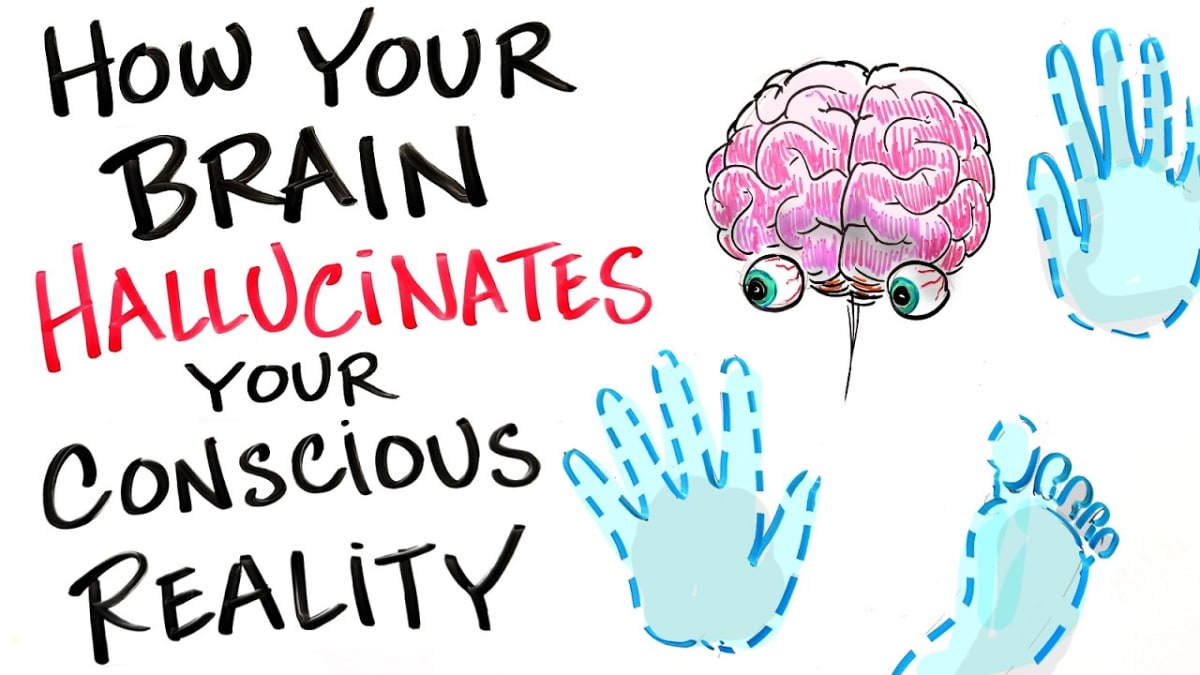
A leading neuroscientist has discovered that what we see, hear, and feel isn't the world itself—it's our brain's best guess, constantly updated like a controlled hallucination. This breakthrough could transform how we treat mental illness and understand what makes us human.
Your eyes aren't windows to reality—they're more like suggestion boxes for your brain to fill in the blanks.
Anil Seth, Professor of Cognitive and Computational Neuroscience at the University of Sussex, has spent decades unraveling one of science's greatest mysteries: how our brains create the experience of being alive. His research reveals something astonishing: we don't perceive the world directly. Instead, our brains make constant predictions about what's out there, then update those predictions based on sensory signals coming in.
Think of it like your brain is dreaming all the time, and sensory input just keeps that dream in check. When you look at a coffee cup, you're not seeing the cup itself—you're experiencing your brain's best prediction of what a coffee cup should look like based on past experience.
This isn't just fascinating neuroscience—it's a complete rewrite of how we understand consciousness. Seth directs the Sussex Centre for Consciousness Science and co-directs a major international research program on brain, mind, and consciousness. His 2021 book "Being You: A New Science of Consciousness" became a top-10 bestseller and was named Book of the Year by The Economist, The Guardian, and the Financial Times.
The implications reach far beyond the lab. If perception is prediction, then conditions like anxiety, depression, and psychosis might involve the brain making inaccurate predictions about the world or the body. This opens entirely new pathways for treatment.
Seth has been recognized as one of the top 0.1% most-cited researchers in his field from 2019 through 2025. His work doesn't just advance academic understanding—it aims to put consciousness science to work for society, technology, and medicine.
The Bright Side
Understanding that our brains actively construct reality rather than passively receive it gives us power. It means our perception isn't fixed—it can change, adapt, and heal. For people struggling with mental health conditions, this research offers hope that treatments could help recalibrate how the brain predicts and interprets the world.
The research also explains why meditation, therapy, and other interventions work: they help retrain the brain's predictive models. When you change your expectations about the world, you literally change what you experience.
This science of consciousness is moving from philosophy textbooks into practical applications that could help millions of people see, feel, and experience life differently—and better.
Based on reporting by Freethink
This story was written by BrightWire based on verified news reports.
Spread the positivity!
Share this good news with someone who needs it
%2Ffile%2Fattachments%2F2996%2FHR_898168.jpg)