Scientist Spends 27 Days Deploying Ocean Buoys in Argentina
A PhD student spent nearly a month aboard a research vessel preparing and deploying bright yellow buoys to track ocean currents along Argentina's coast. Her work helps scientists understand what's really happening beneath the ocean's surface.
Melina M. Martinez spent 27 days doing something most of us never think about: launching floating science stations into the ocean to track how water moves around our planet.
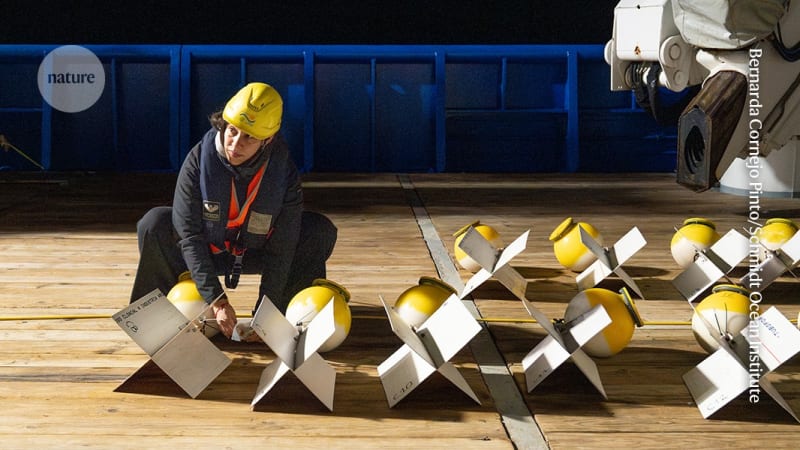
The PhD student from Buenos Aires joined a research expedition in October 2025 aboard the RV Falkor (too), exploring the Malvinas Current that flows alongside Argentina. Her main job was assembling and deploying drifting buoys that scientists use to monitor ocean currents in real time.
Each buoy contains a battery pack and GPS unit housed inside a protective tube, secured with polystyrene foam. Attached to the bottom is a drogue, an object that creates resistance in the water and ensures the buoy drifts naturally with the ocean current instead of being tossed around chaotically by wind and waves.
Martinez assembled the buoys on board because the components are too fragile to transport already built. She painted each one bright yellow for visibility, checked GPS connections and batteries, and made sure every screw cap was perfectly sealed to keep water out.
The expedition brought together biologists, geologists, and physical oceanographers like Martinez, who studies at the Sea and Atmosphere Research Center in Buenos Aires. Working together for nearly a month, the team collected data that will help scientists better understand how ocean currents behave and change.
Why This Inspires
This kind of patient, detailed work doesn't make headlines like splashy discoveries do. But it's the foundation that makes those breakthroughs possible. Martinez's careful attention to every battery connection and screw cap ensures that months of ocean data will flow back to researchers, helping them understand patterns that affect weather, marine life, and climate.
Her work represents a growing community of young scientists dedicating themselves to understanding our oceans better. Each yellow buoy bobbing in the South Atlantic is sending back information that adds to humanity's knowledge of how our planet works.
The data those buoys collect will help scientists for years to come, all because one researcher spent a month at sea making sure every detail was just right.
More Images



Based on reporting by Nature News
This story was written by BrightWire based on verified news reports.
Spread the positivity!
Share this good news with someone who needs it