Scientists Build Crystal That Bends Light in Brand New Ways
Physicists created a crystal from a newly discovered "einstein" shape that bends light differently than any material ever made. The breakthrough combines cutting-edge math with real-world science to open doors for future optical technology.
Physicists at the University of Tokyo just turned a mathematical puzzle into a crystal that bends light in ways no one has seen before.
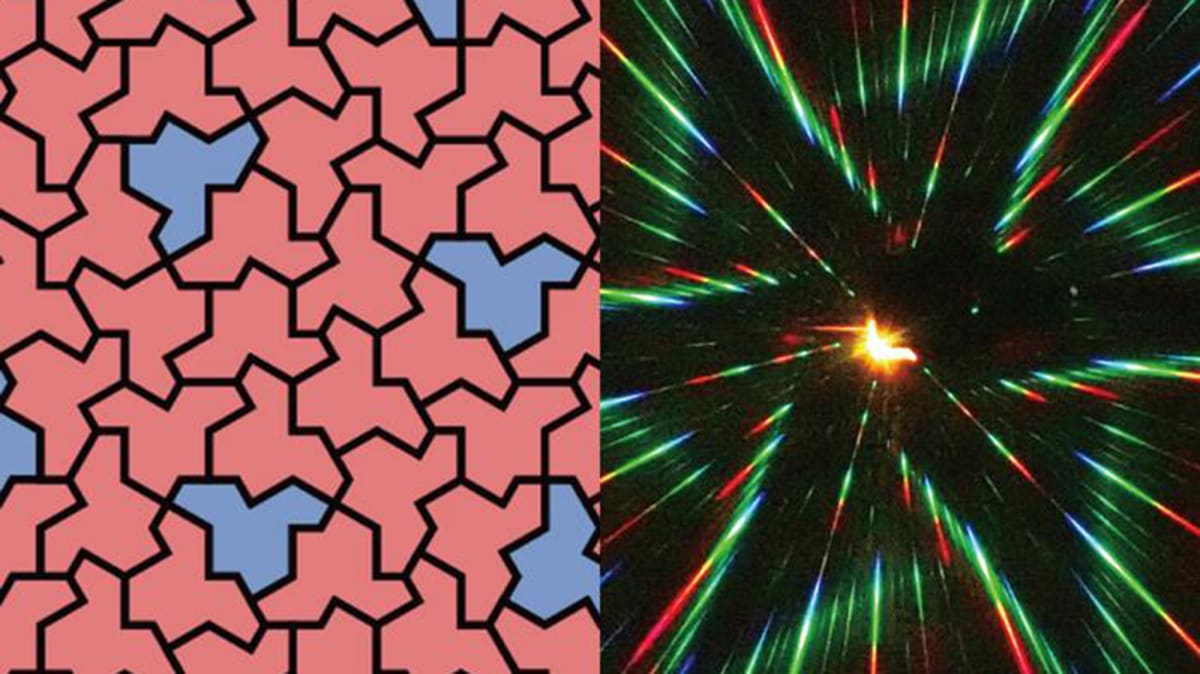
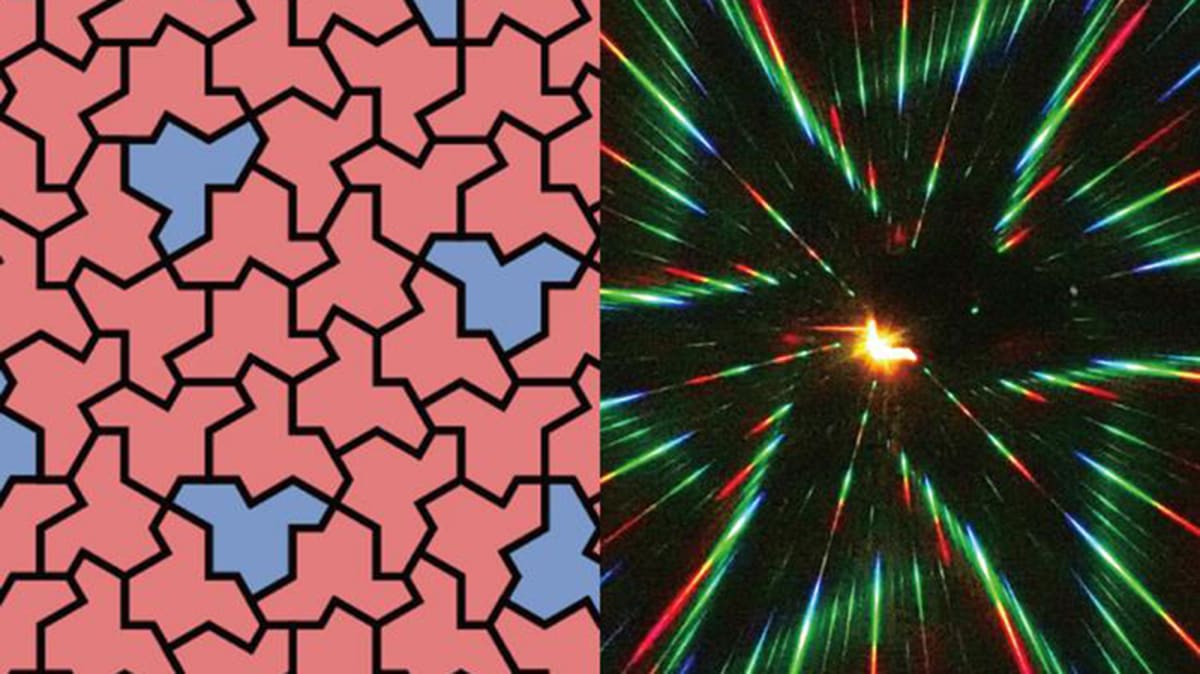
The team built their creation from a special 13-sided shape called the "hat tile" that mathematicians searched decades to find. This unusual shape can cover a surface endlessly without its pattern ever repeating, solving what experts call the "einstein problem" (a pun on the German words "ein stein," meaning "one stone").
Yuto Moritake, the experimental physicist leading the project, discovered the shape in a popular science book in 2024 and wondered if it could do something amazing. He specialized in photonic crystals, materials with tiny structures that control how light moves through them, typically using repeating patterns.
Instead of repetition, Moritake tried something nobody had attempted. His team punched hundreds of thousands of microscopic holes into a thin silicon film, each just 100 nanometers wide (about 500 times thinner than a human hair), arranging them according to the hat tile's never-repeating pattern.
When they shined a laser at the finished chip, something remarkable happened. The light scattered into a pinwheel shape with bright spots that stayed consistent no matter where the laser hit, confirming they had created a real quasicrystal.
The biggest surprise came when they tested different types of light. Because the hat shape has no mirror symmetry (like how your left hand differs from your right), the crystal responded differently to light spinning clockwise versus counterclockwise. Regular crystals with mirror symmetry cannot produce this effect.
Why This Inspires
This discovery shows how pure mathematical curiosity can lead to breakthrough materials. What started as an abstract puzzle that fascinated mathematicians for generations became a real object that manipulates light in entirely new ways.
The technology could eventually improve lasers, optical sensors, and other devices that rely on controlling light precisely. Moritake's decision to pick up that science book and ask "what if?" transformed theoretical geometry into practical innovation.
Sometimes the most powerful discoveries happen when someone bridges two different worlds, turning beautiful math into beautiful science that might change how we use light tomorrow.
More Images

Based on reporting by Live Science
This story was written by BrightWire based on verified news reports.
Spread the positivity!
Share this good news with someone who needs it