Scientists Build Living Cell From Scratch That Reproduces
Researchers at the University of Minnesota created a living cell entirely from non-living chemicals, and it successfully divided on its own. This breakthrough brings us closer to understanding how life began on Earth.
Scientists just crossed a threshold that seemed impossible: they built a living cell from scratch using only chemicals, and watched it reproduce.
Researchers at the University of Minnesota assembled SpudCell entirely from non-living components. No borrowed parts from existing cells. No mysterious spark needed. Just chemistry doing what only biology could do before.
"This is likely the most exciting project I've ever worked on," says synthetic biologist Kate Adamala. Her team proved that life's most fundamental functions can emerge from the right chemical recipe.
SpudCell contains just 90,000 base pairs of genetic code spread across nine DNA strips. That's tiny compared to even the simplest natural bacteria, which need around 580,000 base pairs. The researchers added 36 types of purified enzymes and wrapped everything inside a bubble made of lipids.
The synthetic cell behaves remarkably like the real thing. It feeds by merging with smaller bubbles, slurping up the building blocks and enzymes it needs to survive. Its genetic code directs all these processes, just like DNA does in natural cells.
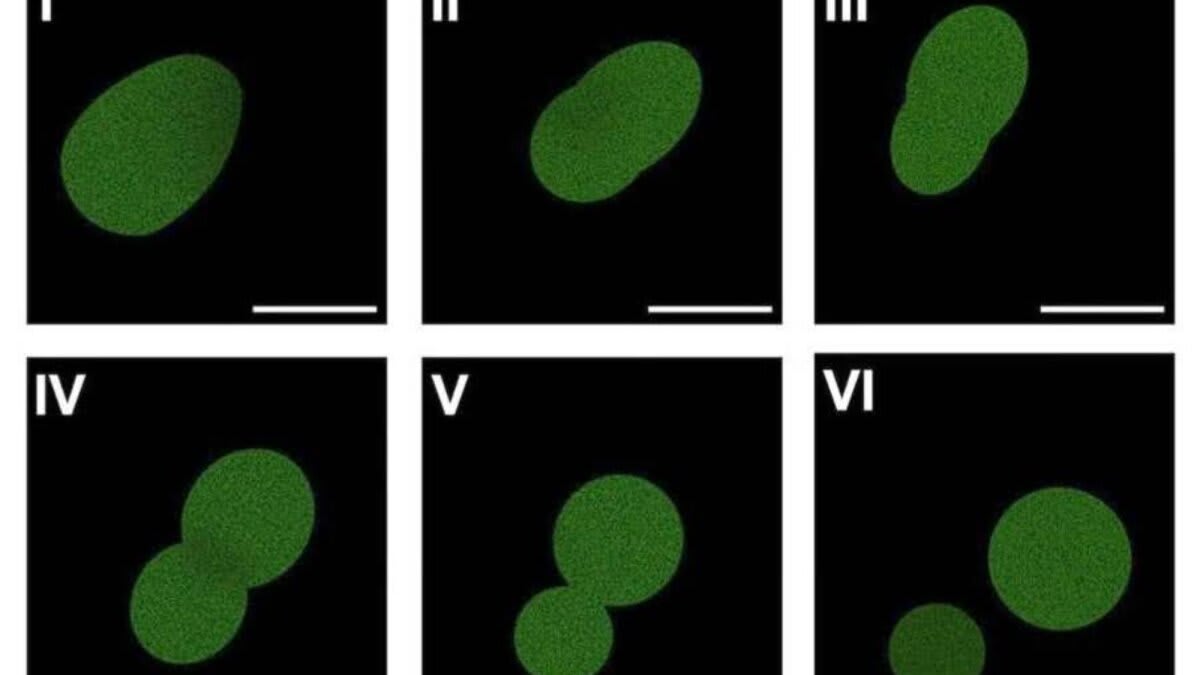
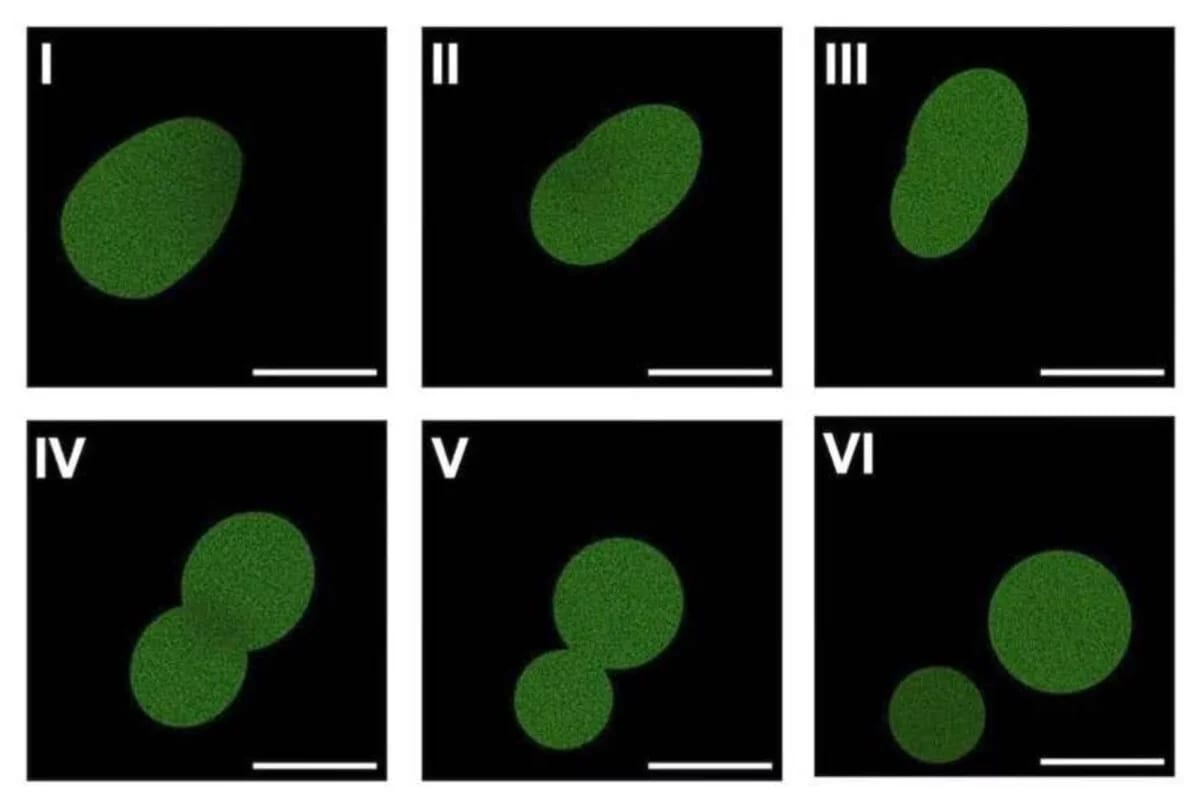
The game-changer is that SpudCell can divide. Natural cells split using a complex internal skeleton of fibrous materials, which has been incredibly difficult to replicate artificially. SpudCell found its own solution, using protein accumulations in its membrane to trigger division.
The team even demonstrated evolution in action. By tweaking a gene to boost production of feeding proteins, they created a new cell line that outgrew the original version. That's natural selection happening in real time with synthetic life.
Why This Inspires
This breakthrough does more than satisfy scientific curiosity. It opens doors to living pharmaceutical factories that could produce life-saving medicines more efficiently than ever before. Medical researchers could test new therapies in these simplified systems before moving to complex trials.
The work also gives us a window into Earth's ancient past. Four billion years ago, life somehow emerged from non-living chemistry. SpudCell proves that transition is possible without magic, just the right ingredients and conditions coming together.
Previous synthetic biology efforts used existing cells as starting points, like the 2010 project that inserted artificial DNA into a stripped-out bacterial cell. SpudCell represents something more fundamental because every component came from non-living chemicals.
The research hasn't been peer-reviewed yet, but the scientific community is already buzzing about the implications. If life's most basic functions can be engineered from scratch, what other biological mysteries can we unlock?
SpudCell may not be life exactly as we know it, but it's remarkably close. That closeness is teaching us biology's deepest secrets, one synthetic cell division at a time.
More Images


Based on reporting by New Atlas
This story was written by BrightWire based on verified news reports.
Spread the positivity!
Share this good news with someone who needs it