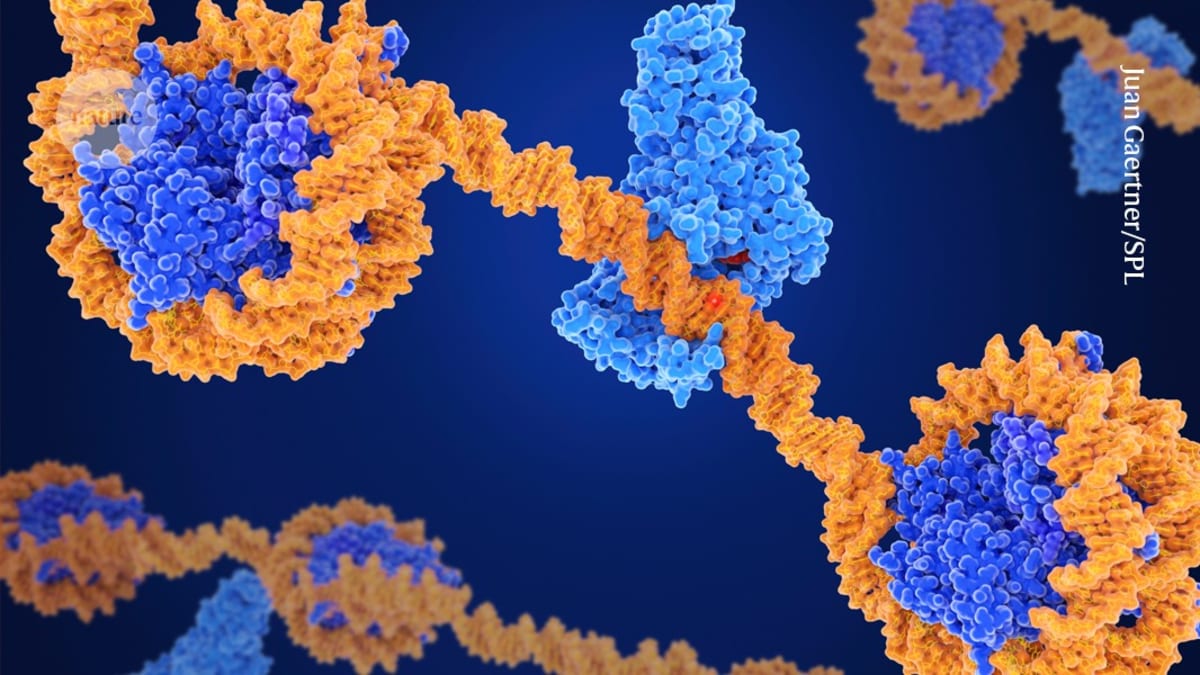
Scientists Can Now Edit Genes Without Cutting DNA
After decades of skepticism, researchers have perfected a gentler way to control genes using epigenetic editing. This breakthrough lets them dial gene expression up or down without changing DNA itself, opening doors to safer treatments and smarter crops.
Twenty years ago, scientist Marianne Rots got laughed at when she suggested we could control genes by tweaking their chemical decorations rather than cutting DNA itself. Today, her dream has become reality, and a dozen companies are racing to turn epigenetic editing into lifesaving therapies.
Unlike traditional gene editing, which uses CRISPR like molecular scissors to cut DNA apart, epigenetic editing works more like a dimmer switch. It adjusts how loudly or quietly genes play their tune without changing the underlying genetic code. The DNA stays intact, but chemical tags like methylation marks get added or removed to turn genes up, down, on, or off.
The difference matters enormously for safety and flexibility. When CRISPR cuts DNA, cells scramble to repair the damage, sometimes making mistakes. Edit multiple genes at once with traditional methods, and those broken pieces might reconnect in dangerous ways. Epigenetic editing sidesteps all of that by leaving the DNA untouched.
Charles Gersbach, a biomedical engineer at Duke University, calls epigenetic editing "much more sophisticated" than traditional gene editing. Scientists can now adjust several genes simultaneously just by adding more guide molecules to the mix. They can also choose whether changes last a few days or become permanent.
The applications stretch far beyond medicine. Plant scientists are using epigenetic editing to create crop varieties that differ not in their DNA sequence but in which genes stay active. A tomato plant could express more nutrients or resist drought without technically becoming a genetically modified organism.
Early clinical trials have already begun, with researchers testing epigenetic therapies for brain disorders and other conditions. Elizabeth Heller at the University of Pennsylvania is using the technology to understand how drug withdrawal changes the brain, editing one epigenetic mark at a time to map exactly what happens.
The challenge ahead is complexity. Human cells rely on about 900 chromatin regulators and 1,600 transcription factors to manage gene expression. Even at a single gene, multiple chemical decorations work together in ways scientists still don't fully understand. As Rots admits, "We cannot predict the final outcome of our biological experiments."
Why This Inspires
What makes this breakthrough so exciting isn't just the science, it's the vindication of persistence. Rots spent two decades fighting scientific dogma, convinced that epigenetic editing would work when others said it never could. Her stubbornness paid off, and now researchers have a whole new toolkit for treating disease and feeding the world.
The beauty of epigenetic editing lies in its reversibility and precision. If a treatment doesn't work as planned, the changes can fade naturally. If scientists need to fine-tune gene expression rather than switch it completely off, they finally have the tools to do exactly that.
In a field where breakthroughs often come with scary side effects, epigenetic editing offers something rare: genuine sophistication that makes medicine safer while expanding what's possible.
More Images



Based on reporting by Nature News
This story was written by BrightWire based on verified news reports.
Spread the positivity!
Share this good news with someone who needs it