Scientists Confirm First Cave Beneath Moon's Surface
Radar has proven that a mysterious pit on the Moon opens into an underground cave, marking the first confirmed lunar cave ever discovered. The finding could help future astronauts find natural shelter from radiation and extreme temperatures.
Scientists just confirmed what they've suspected for years: a dark pit on the Moon's surface leads to an actual cave beneath the ground.
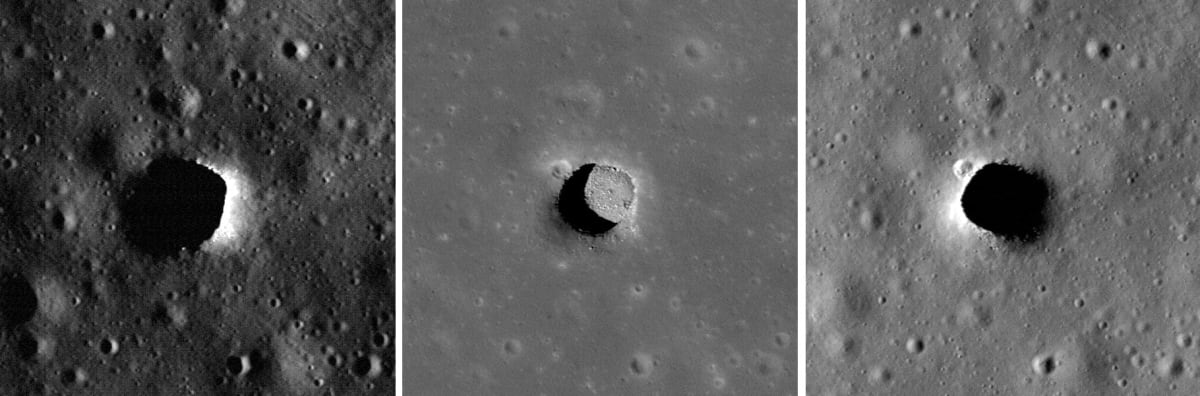
Radar technology solved a mystery that regular photographs couldn't. NASA's Lunar Reconnaissance Orbiter scanned a 100-meter wide pit in the Sea of Tranquility back in 2010, and scientists recently reanalyzed that data to find something remarkable hiding in the shadows.
The radar detected reflections from surfaces that cameras couldn't see from above. When researchers ran simulations, only one scenario matched the signal: a cave tunnel extending from the pit's base.
This cave sits about 230 miles northeast of where Apollo 11 landed in 1969. Japanese spacecraft first spotted the pit opening in 2009, but no one could tell if it was just a deep hole or an entrance to something larger.
The confirmed portion stretches at least 200 feet from the pit's base, roughly 45 feet wide in current models. Scientists tested their method on lava tube caves in Lanzarote, Spain, where they could compare radar readings to actual measurements from drones and underground mapping.
The cave likely formed billions of years ago when flowing lava cooled on top while hot lava kept moving underneath. Eventually the molten river drained away, leaving a hollow tube behind. The roof stayed intact until part of it collapsed, creating the pit that spacecraft can see today.
The Bright Side
More than 200 pits dot the Moon's surface, and many could lead to similar caves. These natural shelters maintain steady temperatures around 63 degrees Fahrenheit, unlike the surface where temperatures swing from 260 degrees in sunlight to minus 280 in shadow.
Future astronauts could use these caves as ready-made bases. The thick rock overhead blocks harmful radiation from space and protects against meteorite impacts. No construction required, just move in.
Separate research suggests lunar gravity could support lava tubes several miles wide under the right conditions. While this confirmed cave measures in feet, not miles, it proves the concept works.
The discovery opens a new chapter in lunar exploration. We're not just visiting the Moon's surface anymore; we're finding ways to live beneath it.
More Images

Based on reporting by Google News - Science
This story was written by BrightWire based on verified news reports.
Spread the positivity!
Share this good news with someone who needs it