Scientists Crack Code for Rare Cancer-Fighting Compound
Researchers at UBC Okanagan discovered how plants make mitraphylline, a promising anti-cancer compound found only in tiny amounts in tropical plants. The breakthrough could enable sustainable production of this rare molecule and similar therapeutic compounds.
Scientists just unlocked nature's secret recipe for creating a molecule that could help fight cancer.
Researchers at UBC Okanagan have figured out exactly how plants produce mitraphylline, a rare natural compound with promising anti-cancer properties. The discovery solves a puzzle that has stumped scientists for years.
Mitraphylline belongs to a special class of plant chemicals called spirooxindole alkaloids. These molecules have unusual twisted ring structures that give them powerful biological effects, including the ability to reduce inflammation and fight tumors.
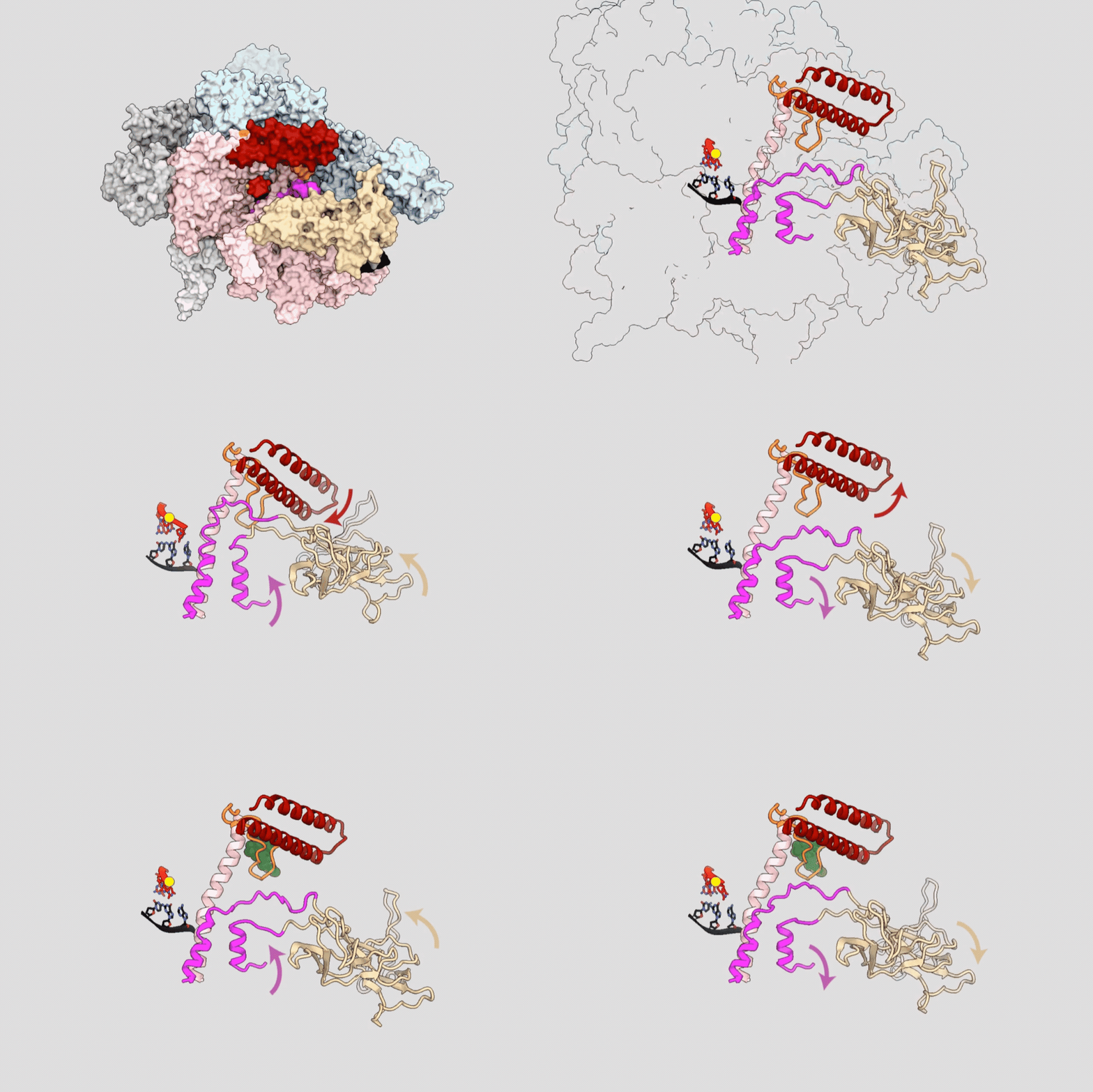
The breakthrough came when doctoral student Tuan-Anh Nguyen and his team identified two critical enzymes working together like partners on an assembly line. One enzyme twists the molecule into the correct three-dimensional shape, while the second transforms it into mitraphylline itself.
"This is similar to finding the missing links in an assembly line," says Dr. Thu-Thuy Dang, who leads the research team. "It answers a long-standing question about how nature builds these complex molecules."
The discovery matters because mitraphylline exists only in trace amounts inside tropical plants like kratom and cat's claw. These tiny quantities make the compound extremely difficult and expensive to study or produce in laboratories.
Now that scientists know which enzymes create mitraphylline, they have a roadmap for producing it sustainably. The team can potentially recreate the natural process without depleting rare plant populations.
The Ripple Effect
This breakthrough opens doors far beyond just one compound. Understanding how plants build these complex molecules gives researchers tools to create entirely new therapeutic compounds using green chemistry approaches.
The discovery came from collaboration between Dr. Dang's laboratory at UBC Okanagan and Dr. Satya Nadakuduti's research group at the University of Florida. International funding from Canadian and American research organizations supported the work.
"Plants are fantastic natural chemists," Dr. Dang says. "Our next steps will focus on adapting their molecular tools to create a wider range of therapeutic compounds."
For Nguyen, contributing to the breakthrough marked a career highlight. "Being part of the team that uncovered the enzymes behind spirooxindole compounds has been amazing," he says.
The research team's next goal is using these natural molecular tools to develop more medicines that could help patients worldwide.
Based on reporting by Health Daily
This story was written by BrightWire based on verified news reports.
Spread the positivity!
Share this good news with someone who needs it