Scientists Achieve 99% Cancer Regression With Gold Nanotech
Researchers at the National University of Singapore have developed gold nanoparticles that deliver cancer-fighting drugs directly to tumor cells, achieving near-complete tumor elimination in lab studies. The breakthrough could transform how doctors treat cancer with unprecedented precision.
Scientists just cracked one of cancer treatment's toughest puzzles: how to deliver medicine exactly where it needs to go inside tumor cells.
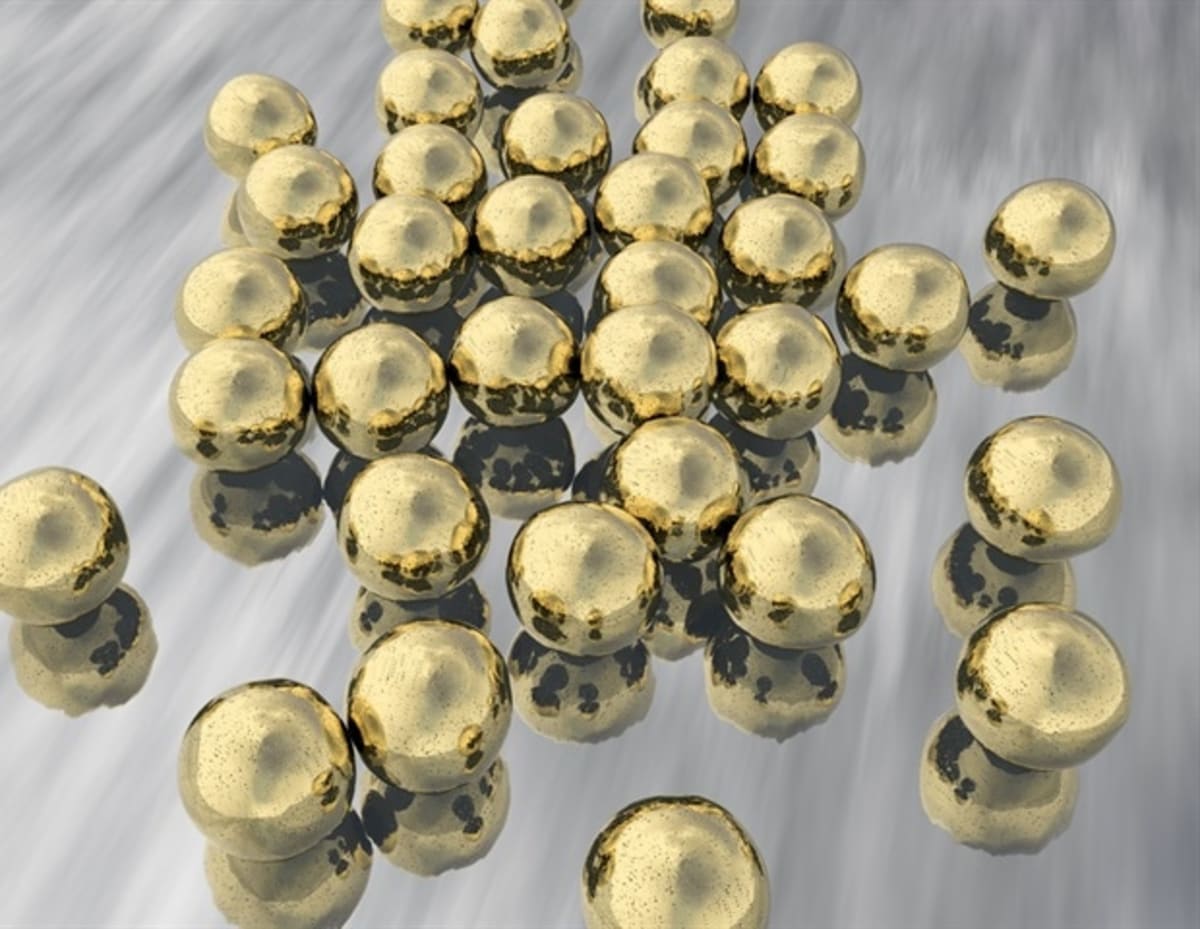
Researchers at the National University of Singapore developed tiny gold nanoparticles that act like guided missiles, traveling through the bloodstream to reach mitochondria, the energy centers that keep cancer cells alive. When they tested their best design in lab models, tumors shrank by 99 percent.
The breakthrough came from a clever tracking system. The team tagged 30 different nanoparticle designs with unique DNA "barcodes," like giving each one its own tracking number. This let them test dozens of designs at once in living systems, instead of testing them one by one over years.
Assistant Professor Andy Tay, who led the study, explains the challenge his team solved. "Getting nanoparticles to the right place inside the body involves putting them through a complicated obstacle course," he says. The particles must survive the bloodstream, enter tumors, penetrate cells, and avoid getting destroyed before reaching their target.
Two star performers emerged from the screening. Large spherical particles coated with folic acid lasted longer in the bloodstream, accumulating powerfully in tumors. Cubic-shaped particles entered cancer cells more efficiently, making them excellent at reaching mitochondria.
The cubic particles packed a one-two punch. They delivered RNA therapy that disrupts the tumor's energy production while also generating heat under infrared light to kill cancer cells. A single dose produced almost complete tumor elimination in preclinical studies.
Why This Inspires
This discovery represents more than just another cancer treatment. The DNA barcode system gives researchers a faster, smarter way to design medical nanoparticles for any disease. What once took years of trial and error now takes weeks of systematic testing.
The particles even appeared to reprogram immune cells inside tumors, shifting them from supporting cancer growth to fighting it. This suggests the therapy could help the body's own defenses join the battle.
The research, published in Advanced Materials in February 2026, used 30 times fewer lab models than traditional methods while generating over 1,000 data points. This efficiency means faster progress from lab discoveries to treatments that could help patients.
The team discovered an important pattern: nanoparticles that successfully accumulated in tumors were far more likely to reach mitochondria inside cells. This insight gives researchers a roadmap for designing even better drug delivery systems.
"Nanoparticle design is not governed by a single factor," Tay notes. Multiple properties like shape, size, and surface chemistry interact in complex ways, and high-throughput screening platforms help scientists understand these relationships without guessing.
This precision approach to nanomedicine could accelerate development of targeted treatments for cancer and other diseases where getting drugs to the right location makes all the difference.
More Images

Based on reporting by Google News - Researchers Find
This story was written by BrightWire based on verified news reports.
Spread the positivity!
Share this good news with someone who needs it