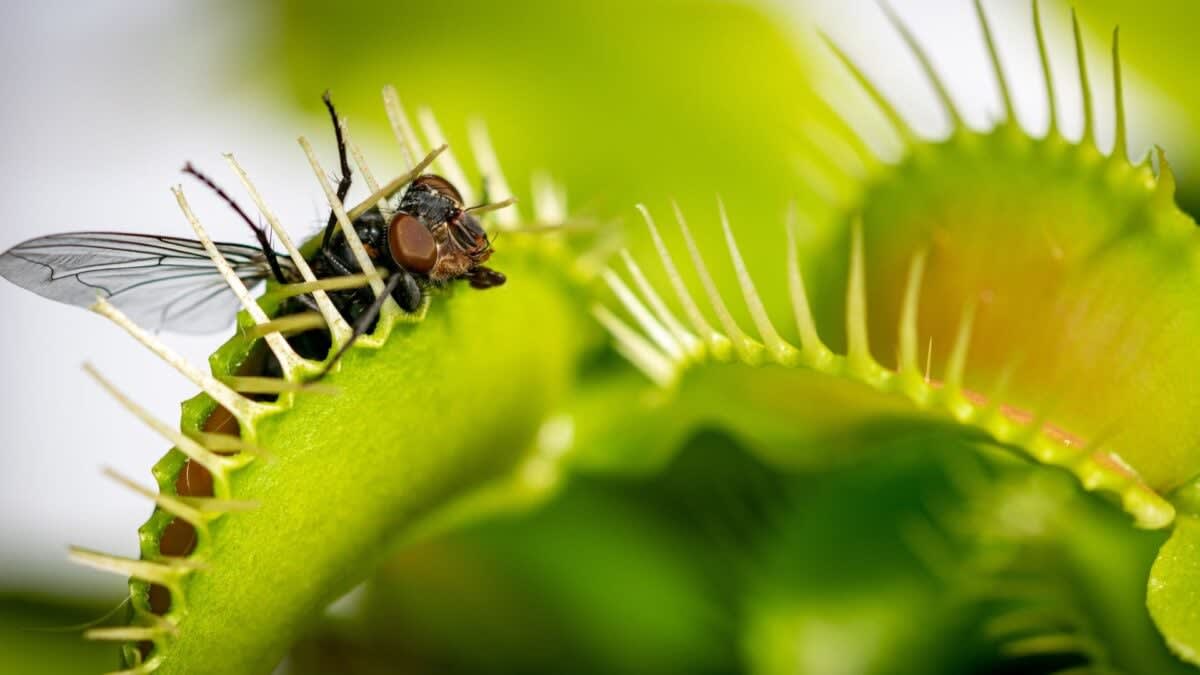
Scientists Crack How Venus Flytraps Snap Shut in 1 Second
French researchers just solved a 200-year botanical mystery by discovering exactly how Venus flytraps close their jaws without muscles. The breakthrough could inspire the next generation of soft robotics.
Scientists finally figured out how one of nature's strangest plants performs its signature trick, and the answer is even more elegant than anyone expected.
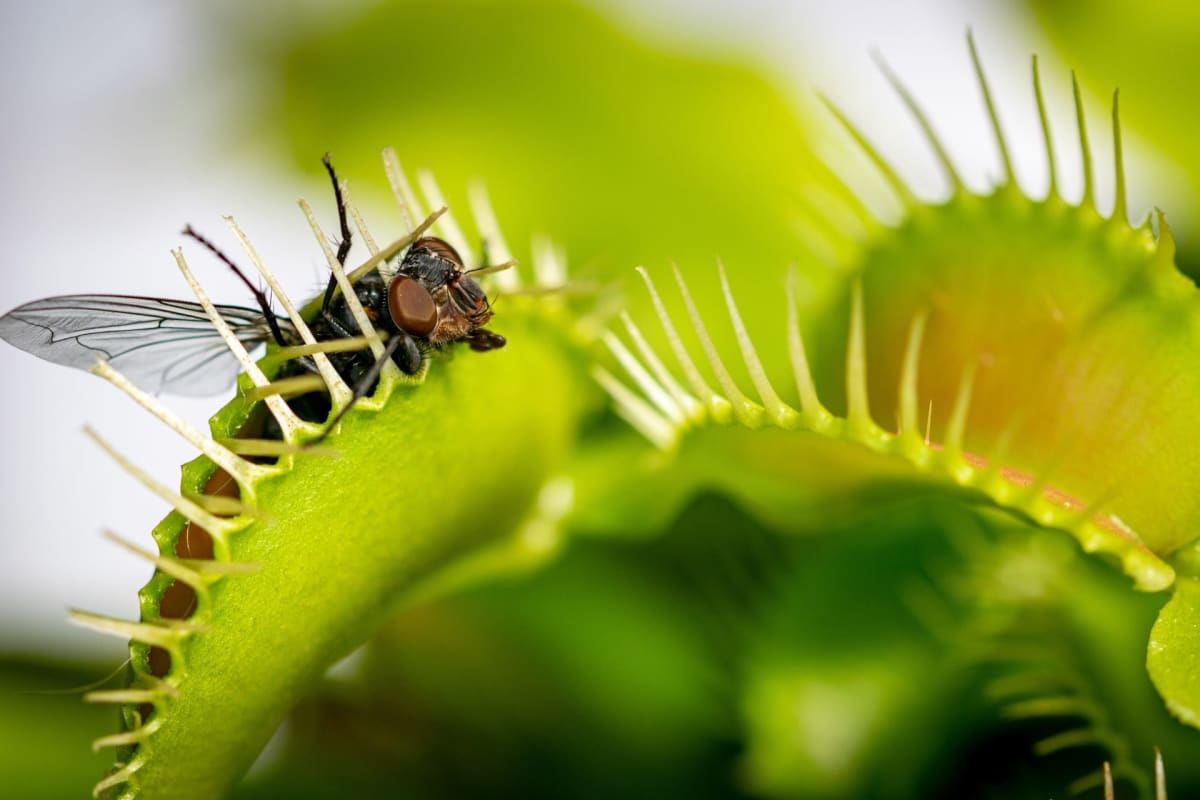
Researchers at Aix-Marseille University in France discovered that Venus flytraps close their leafy jaws by rapidly softening their outer cell walls for just one second. This releases stored elastic energy inward, snapping the trap shut like a spring being released.
The finding solves a mystery that has puzzled botanists for generations. Scientists knew these carnivorous plants could count the number of times prey touched their trigger hairs and could signal the entire plant when to close. But nobody understood the actual mechanics of that initial snap.
Lead researcher Jeongeun Ryu and her team tested two competing theories. One suggested water movement pushed the lobes closed, like someone pushing a door. The other proposed the cell walls suddenly relaxed, releasing built-up energy like letting go of a compressed spring.
The team watched flytraps in action and found water moved too slowly to drive the closing motion. Instead, they observed the cell walls softening in just one second, making it the fastest change in cell wall mechanics ever recorded in plants.
Why This Inspires
This discovery does more than satisfy scientific curiosity. The flytrap's muscle-free movement could help engineers design better soft robots and smart materials that change shape without traditional motors or actuators.
The research also opens doors to understanding how different carnivorous plants evolved their unique hunting strategies. Some plants use slower, water-based trapping mechanisms, so comparing these approaches could reveal fascinating evolutionary stories.
Plant biophysicist Jacques Dumais, who wrote an accompanying editorial but wasn't involved in the study, says the findings help explain how complex adaptations can arise step by step through evolution. Understanding one piece of the puzzle makes it easier to see how all the pieces fit together.
Future studies will work out the exact molecular switches that trigger this wall-softening trick. For now, scientists can celebrate cracking one of the plant kingdom's most captivating secrets.
Nature continues to prove it's the ultimate engineer, solving problems in ways we're only beginning to understand.
More Images



Based on reporting by Google News - Science
This story was written by BrightWire based on verified news reports.
Spread the positivity!
Share this good news with someone who needs it