Scientists crack oyster reef code to restore lost ecosystems
Researchers discovered the secret geometry that helps baby oysters survive, offering a blueprint to rebuild the 85% of reefs we've lost. Nature already solved the design problem—we just had to learn how to read it.
Scientists just figured out why some oyster reefs thrive while others fail, and the answer could help restore ocean ecosystems around the world.
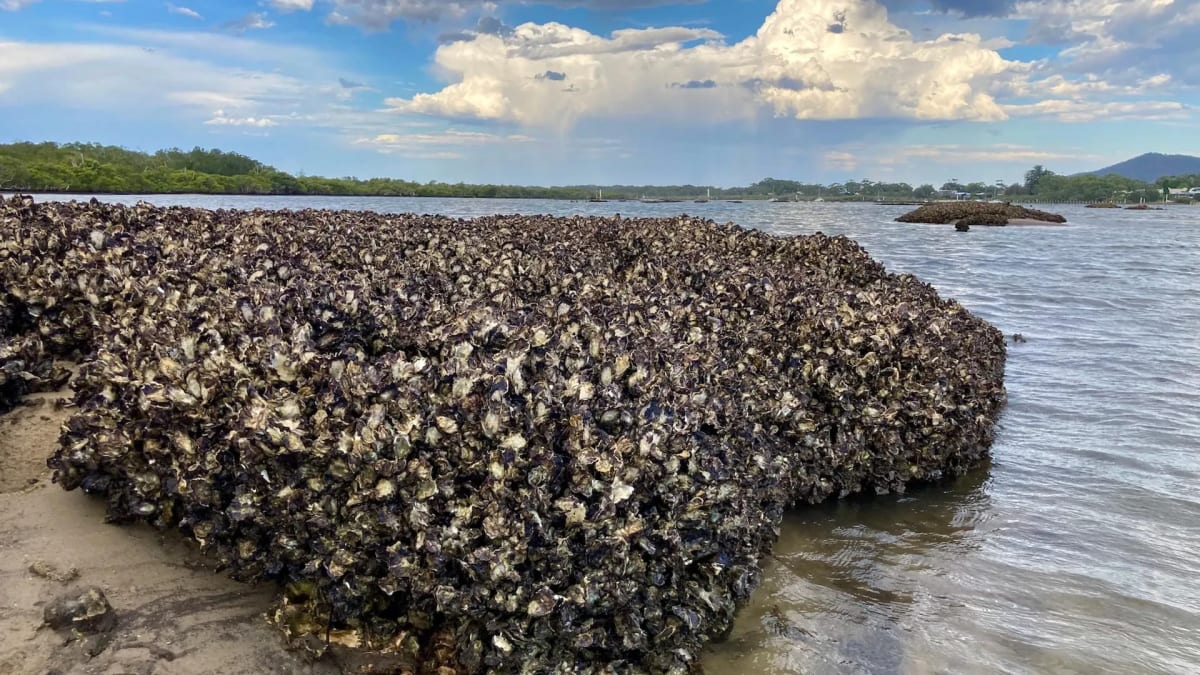
Researchers at Macquarie University discovered that oyster reefs aren't random piles of shells. They're carefully shaped survival systems where specific patterns of ridges and spaces determine which baby oysters live or die.
Dr. Juan Esquivel-Muelbert and his team used 3D photography to map every curve and crevice of surviving Sydney rock oyster reefs. They found that reef shapes control everything from predator protection to growth rates.
To test their findings, the scientists created 16 types of concrete tiles with different ridge heights and patterns matching natural reefs. They placed these experimental structures in three estuaries near Sydney, some protected from predators and some exposed.
The results surprised them. The most successful designs weren't the tallest or most complex structures. Instead, baby oysters thrived on tiles that created multiple small, protected spaces where they could hide from crabs and fish while avoiding deadly heat exposure at low tide.
"There's no point in having lots of oyster larvae turning up if they don't survive," says Dr. Esquivel-Muelbert. The winning design balanced surface area with protection, giving tiny, vulnerable oysters the shelter they desperately need.
The timing couldn't be better. An estimated 85% of Australia's oyster reefs have vanished since European settlement. Early colonists didn't just harvest oysters for food—they dredged entire reefs, crushed the shells, and burned them to make cement for buildings across Sydney.
The Ripple Effect
Restoring these reefs means more than bringing back oysters. These structures create homes for hundreds of plant and animal species while protecting coastlines from erosion and storm damage.
Professor Joshua Madin of the Hawaiʻi Institute of Marine Biology sees global potential in the findings. "Nature has already solved the design problem," he says. "Our job is to read that blueprint and scale it up to help reefs grow faster and survive longer."
The research, published in Nature, offers practical guidance for restoration projects worldwide where shellfish and coral ecosystems face similar devastation. Engineers and conservationists now have a tested template for building artificial reefs that actually work.
What started as a study of reef geometry in Sydney could help rebuild ocean ecosystems from Australia to the Atlantic, one carefully designed tile at a time.
Based on reporting by Science Daily
This story was written by BrightWire based on verified news reports.
Spread the positivity!
Share this good news with someone who needs it