Scientists Create 3D Vaquita Archive to Save Tiny Porpoise
Researchers have digitally preserved the world's most endangered marine mammal using advanced scanning technology. The detailed 3D models of a rare vaquita skeleton are now freely available online to inspire conservation efforts.
Scientists just gave the world's tiniest porpoise a fighting chance by creating a digital twin that anyone can explore online.
The vaquita, a five-foot porpoise found only in Mexico's Gulf of California, stands on the brink of extinction with fewer than a handful left in the wild. Recognizable by distinctive dark rings around its eyes and mouth, this shy marine mammal has become a powerful symbol of our ocean's biodiversity crisis.
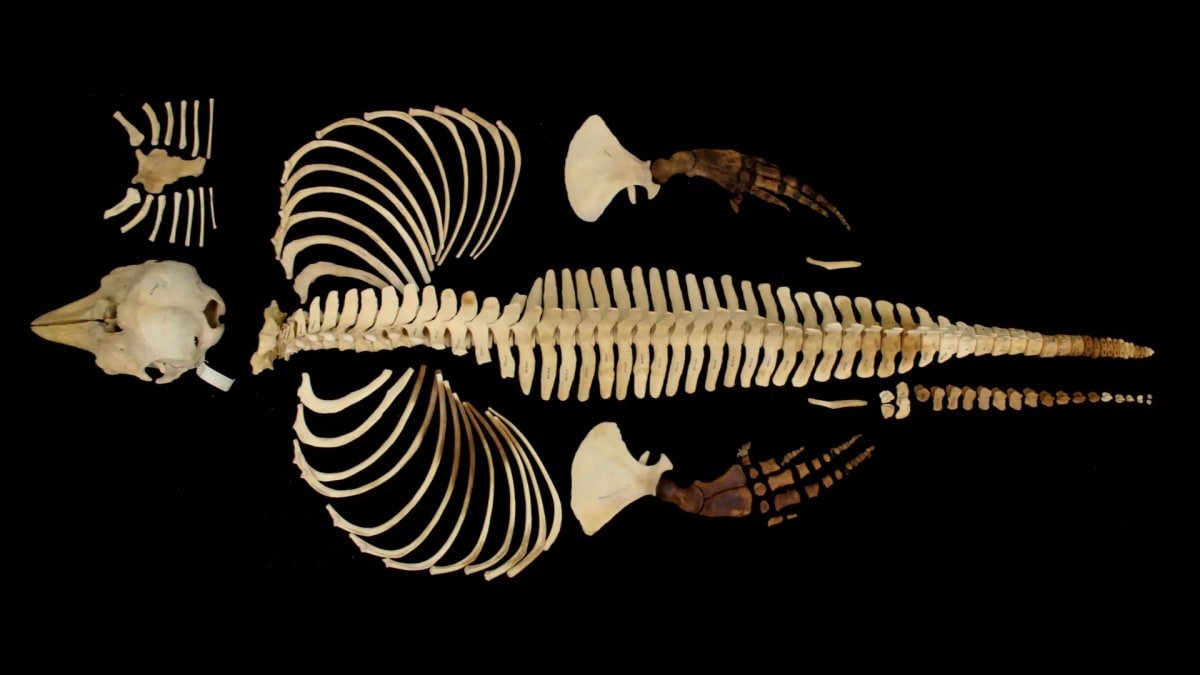
Researchers from Florida Atlantic University teamed up with the San Diego Natural History Museum, SeaWorld California, and NOAA Fisheries to digitally preserve a complete female vaquita skeleton from 1966. Using medical CT scans, micro-CT imaging, and digital photography, they created one of the most detailed anatomical records of the species ever made.
The imaging process captured features smaller than a human hair. Scientists scanned the skeleton at multiple scales, generating thousands of cross-sectional images that were reconstructed into interactive 3D models viewable from any angle.
"By combining advanced imaging technologies with open-access data sharing, the effort not only safeguards a valuable record of one of the planet's most endangered marine mammals, but also makes that information accessible to anyone," said Jamie Knaub, the study's lead author and PhD candidate at FAU.
The vaquita's population collapsed primarily due to accidental entanglement in gillnets used to illegally catch totoaba fish. These large fish are prized because their swim bladders command high prices on international black markets, despite fishing bans enacted decades ago.
Why This Inspires
The research team uploaded all 3D models to MorphoSource, a free online repository where educators, scientists, and curious minds worldwide can access them. Museums and classrooms can now produce scientifically accurate replicas without risking damage to the fragile original skeleton.
This digital preservation offers something precious: the ability to study and celebrate the vaquita even as conservationists race to save the living animals. The models raise awareness about a species most people have never seen, turning abstract conservation statistics into something tangible and real.
The vaquita's survival still depends on eliminating gillnet fishing in its habitat through swift international cooperation. But now, thanks to this digital lifeline, future generations will always be able to see exactly what we're fighting to save.
Based on reporting by Science Daily
This story was written by BrightWire based on verified news reports.
Spread the positivity!
Share this good news with someone who needs it