Scientists Create 'Cloud in a Box' to Solve Weather Mystery
Researchers at Brookhaven National Laboratory just watched the first cloud form inside their revolutionary new chamber. This breakthrough tool could finally answer why some clouds rain while others don't.
📺 Watch the full story above
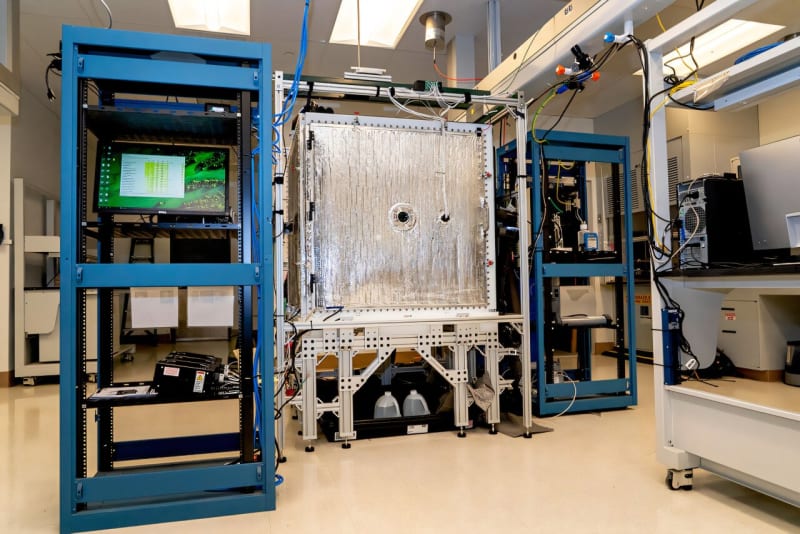
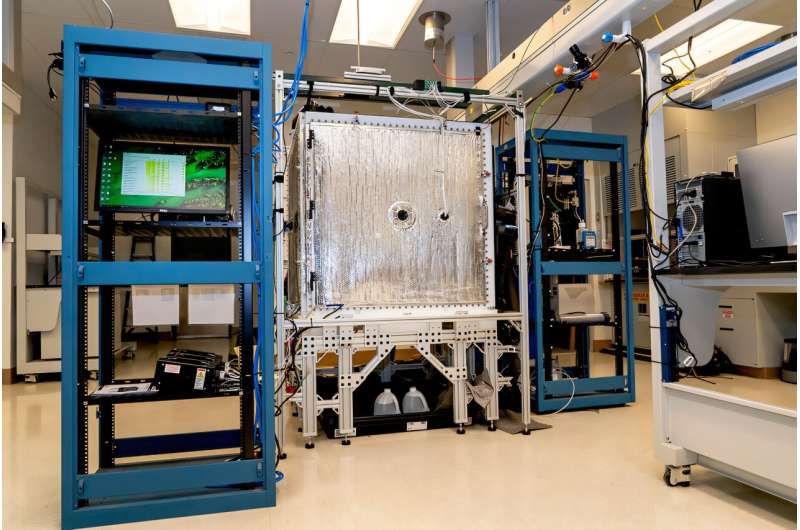
In a quiet laboratory at Brookhaven National Laboratory, scientists watched green light illuminate tiny specks swirling into wisps. They had just witnessed something extraordinary: the birth of a cloud inside a programmable one-cubic-meter metal box.
"There was a lot of excitement and happiness, and relief, in that moment," said atmospheric scientist Arthur Sedlacek. The team definitely wasn't quiet after that.
Clouds might look simple, but they're one of the biggest mysteries in weather science. They regulate Earth's energy balance, control how water moves through the atmosphere, and drive storm formation. Yet scientists still can't answer basic questions, like why some warm clouds produce rain while others just float by.
The problem has always been measurement. Scientists have flown specially equipped aircraft through clouds to gather data, but each cloud changes between passes. You can't rewind nature and try again.
The new convection cloud chamber solves this by letting researchers create repeatable, controlled experiments. Scientists can now isolate specific factors and study the small-scale processes that make clouds tick.
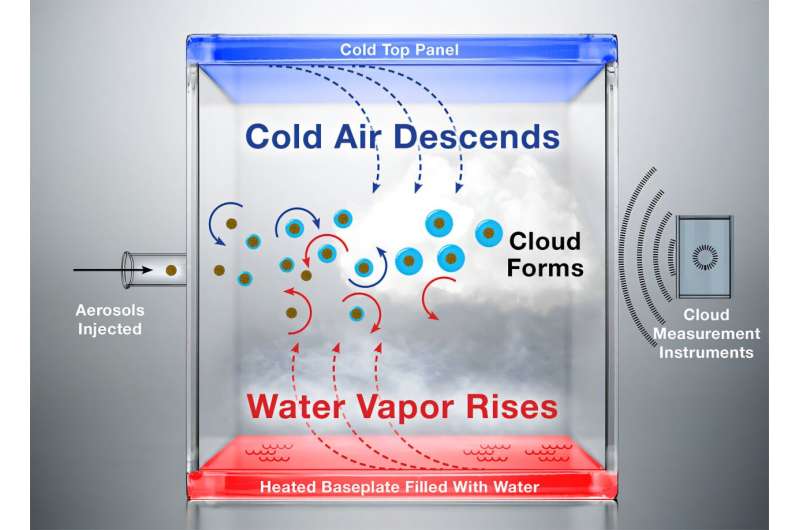
Making a cloud requires three ingredients: warm humid air, cool air, and aerosol particles. The chamber heats water at the bottom to create water vapor, while a cold top panel creates cool air. When they mix, the humidity climbs above 100 percent, reaching what scientists call supersaturation.
Then researchers inject tiny particles like table salt into the chamber. Water vapor condenses on these seeds, forming cloud droplets that grow and eventually reach a steady state. The entire cloud can maintain itself for hours, allowing repeated measurements that improve statistical accuracy.
The real innovation lies in the chamber's modular design. Individual heating and cooling panels let scientists adjust humidity, temperature, and turbulence like turning knobs on a mixing board. Rearranging the panels creates different atmospheric conditions and more complex cloud formations.
Why This Inspires
This isn't just about understanding weather better. Cloud behavior remains the biggest source of uncertainty in climate models. Getting cloud physics right means better predictions for everything from daily weather forecasts to long-term climate patterns that affect agriculture, water resources, and disaster preparedness.
The team has already started thinking about incorporating artificial intelligence and machine learning into the chamber's workflow. Future experiments will explore how different aerosol types, temperatures, and mixing patterns influence cloud formation and persistence.
After years of flying through constantly changing clouds, atmospheric scientists finally have a laboratory where they can press pause, rewind, and study the same cloud scenario again and again until the answers become clear.
More Images
Based on reporting by Phys.org - Earth
This story was written by BrightWire based on verified news reports.
Spread the positivity!
Share this good news with someone who needs it