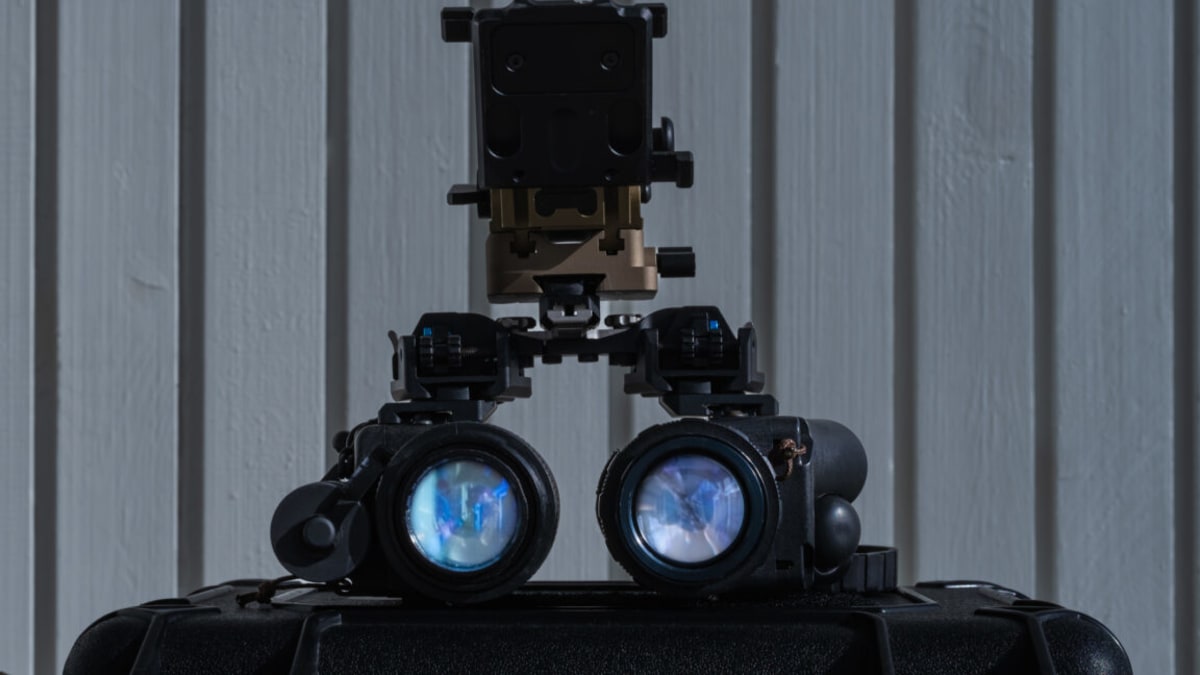
Scientists Create Full-Color Night Vision Glasses
Chinese researchers built lightweight glasses that let people see infrared light in full color instead of the usual green glow. The 23-gram device could transform how we see in the dark.
Imagine seeing the world at night in vivid color instead of shades of green. Scientists in Beijing just made that possible with a breakthrough pair of night vision glasses.
A team at the Beijing Institute of Technology, led by Xin Tang and Ge Mu, created glasses that translate infrared light into a full-color image visible to human eyes. Unlike traditional night vision goggles that show everything in green, these glasses display different heat signatures and infrared wavelengths as distinct colors.
The secret lies in tiny particles called quantum dots, each just 4 nanometers across. When infrared light hits these dots, they absorb the energy and pass it to a special two-layer screen that converts it into visible colors.
Here's how it works: weak or long-wavelength infrared light produces a red glow, while stronger or shorter wavelengths create a mix of red and cyan. This color variation gives wearers much more information than brightness alone ever could.
Human eyes are naturally better at distinguishing colors than brightness levels. The research team calculated their device lets users spot differences in infrared light about 200 times smaller than what single-color night vision can detect.
The prototype glasses weigh just 23 grams, about as heavy as four sheets of paper. They're semi-transparent, meaning wearers can see both normal visible light and infrared simultaneously.
Our eyes can't see infrared because these light waves don't carry enough energy to trigger our light-sensing cells. That leaves over half the sun's energy invisible to us, along with heat signatures from living creatures and warm objects.
Why This Inspires
This technology could revolutionize fields far beyond military use. Search and rescue teams could spot people in complete darkness with unprecedented clarity. Drivers might navigate fog with ease. Scientists could observe nocturnal animals in their natural habitats without disturbing them.
The glasses represent a fundamental shift in how we extend human senses. Rather than just making the invisible barely visible, they translate it into something our brains already understand perfectly: color.
Previous infrared devices forced users to interpret unfamiliar green-scale images. This new approach works with our natural visual abilities instead of against them.
The team successfully tested the glasses on various objects, proving the concept works in real-world conditions. The lightweight design means people could wear them comfortably for extended periods.
The technology opens doors we didn't know were closed, giving human eyes access to a whole spectrum of light that's been hidden since the beginning of time.
More Images



Based on reporting by Ars Technica Science
This story was written by BrightWire based on verified news reports.
Spread the positivity!
Share this good news with someone who needs it