Scientists Create New Minerals That Could Store Ancient Water
Researchers have synthesized two never-before-seen minerals that might exist deep in Earth's mantle, potentially solving the mystery of where our planet hides massive amounts of ancient water. These lab-created minerals could explain unusual zones at the bottom of the mantle and reveal secrets about Earth's formation.
Deep beneath our feet, Earth might be hiding an ancient water reservoir we never knew existed.
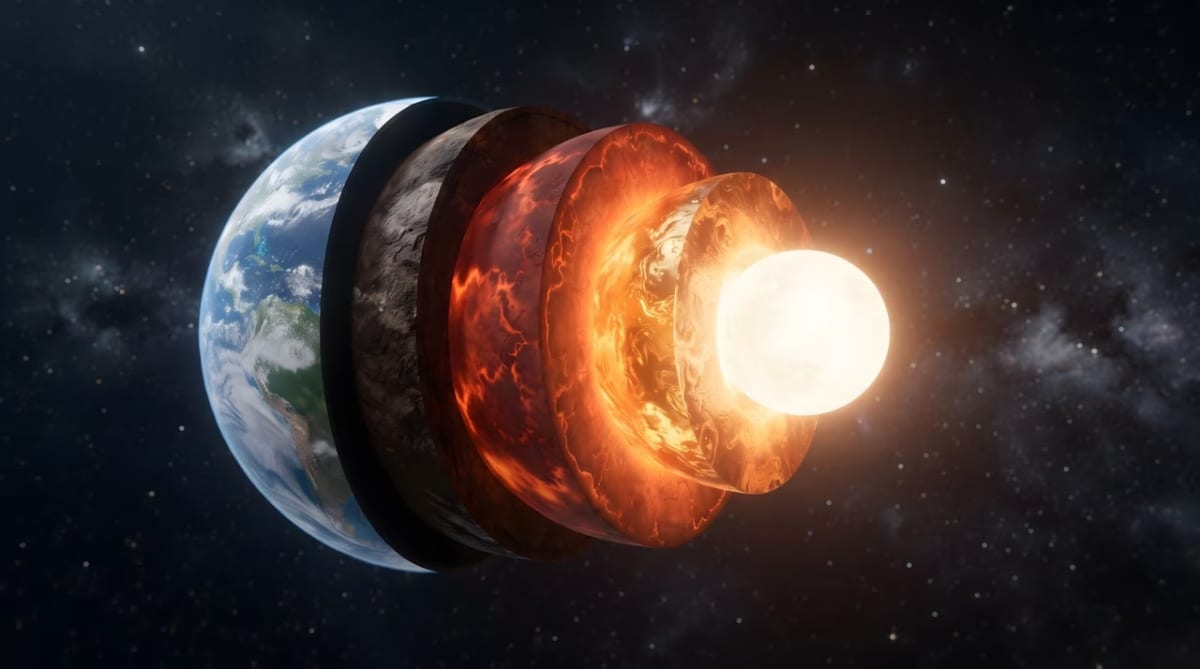
Scientists have successfully created two brand-new mineral phases in the lab that could exist at the bottom of Earth's mantle, nearly 1,800 miles below the surface. These hexagonal iron oxyhydroxides can trap hydrogen in their crystal structure and might survive the crushing pressure and scorching heat where the mantle meets the core.
The discovery tackles a mystery scientists have puzzled over for years. We know water exists throughout Earth's interior, not as liquid but trapped inside minerals as tiny hydroxyl groups. The mantle's middle section stores water particularly well, but the lower mantle seemed too dry to matter.
These newly created minerals change that picture entirely. If they form naturally inside Earth, they could act as massive storage tanks for hydrogen and other volatile elements, some dating back to our planet's birth 4.5 billion years ago.
The find might also explain something else that has baffled geologists. Seismic waves sometimes slow down dramatically in certain zones at the mantle's base, called Ultra-Low Velocity Zones. Scientists have debated what causes these strange areas, and these dense, hydrogen-rich minerals could be the answer.
The research team used extreme-pressure, high-temperature experiments to create the minerals, mimicking conditions found in Earth's deepest interior. While the lab work proves these minerals can exist under those hellish conditions, researchers still need to confirm they actually form inside our planet.
Why This Inspires
This discovery reminds us how much we still don't know about our own planet. The mantle makes up more than 80% of Earth's volume, yet its deepest levels remain largely mysterious. Every new finding brings us closer to understanding how our world works.
These minerals could help scientists trace the journey of water from Earth's formation through billions of years of geologic time. They might even play a role in transferring elements between the mantle and core, or releasing them as hot plumes rise toward the surface. That process helped create Earth's atmosphere and oceans, making our planet habitable.
The work opens exciting new paths for understanding not just where Earth's water came from, but how our planet evolved into the life-supporting world we call home.
The deepest parts of our planet still hold secrets waiting to be discovered.
More Images



Based on reporting by Google: scientific discovery
This story was written by BrightWire based on verified news reports.
Spread the positivity!
Share this good news with someone who needs it