Scientists Create Self-Charging Smartphone Screens
Japanese researchers solved a major tech challenge by creating screens that both light up and harvest energy at the same time. Your future phone could charge itself using ambient light instead of needing a wall outlet.
Imagine never having to plug in your phone because the screen charges itself throughout the day just by being exposed to light.
Scientists at Chiba University in Japan just made this possible by cracking a problem that stumped researchers for years. They created materials that can emit light for your display while simultaneously harvesting energy from sunlight or indoor lighting.
The breakthrough centers on organic semiconductors, the flexible materials already powering today's vibrant OLED screens in smartphones and TVs. Until now, these materials could either create light or harvest energy, but never both efficiently.
Professor Hirohiko Fukagawa and his team discovered the solution by precisely controlling tiny energy particles called excitons. For screens to glow, excitons need to stick together. For power generation, they need to split apart. This created an impossible trade-off that limited previous attempts.
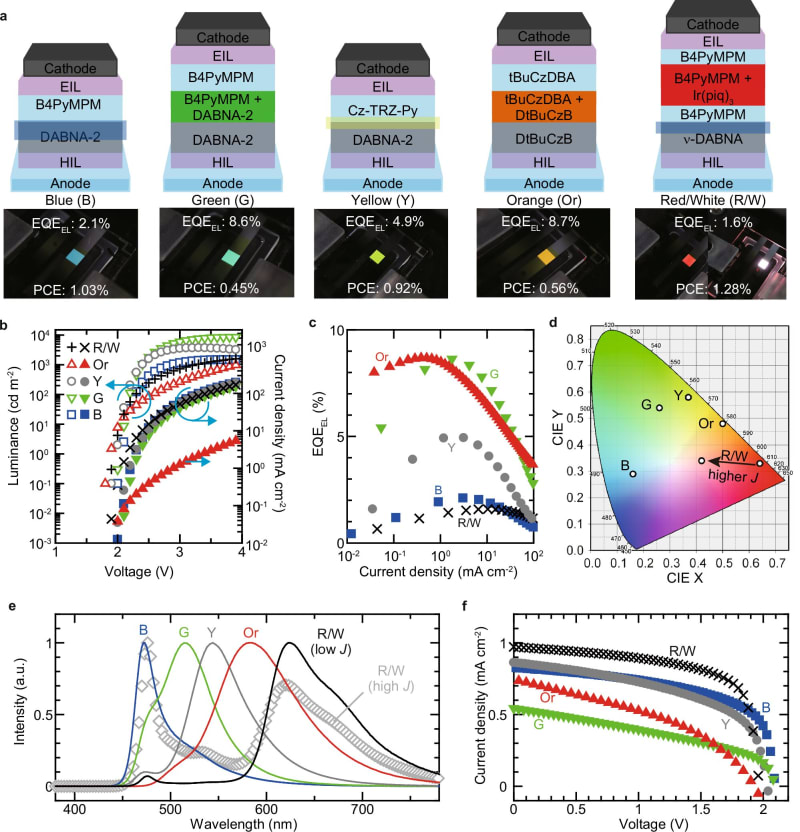
The team used specialized materials called MR-TADF to manage the energy holding these particles together. By adjusting this binding energy, they achieved something remarkable: devices that maintain high performance in both functions simultaneously.
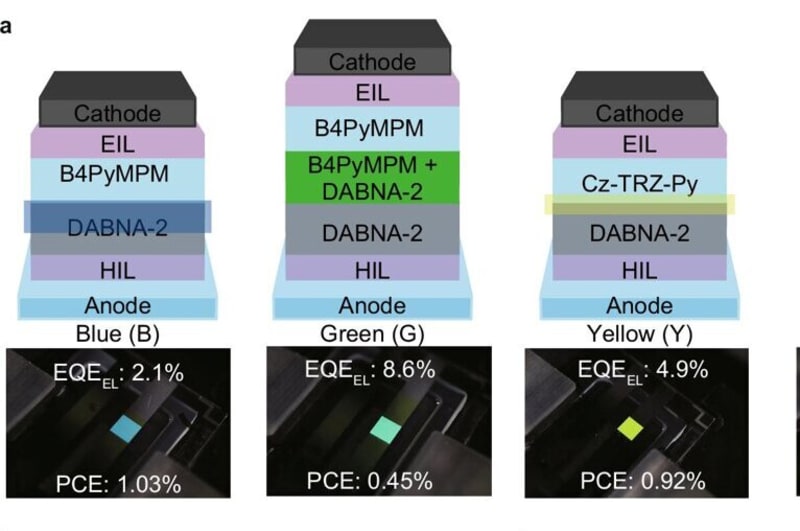
Their green and orange devices achieved over 8.5% light emission efficiency while converting about 0.5% of incoming light into electricity. That might sound small, but it's close to the theoretical maximum with virtually no energy loss. They also created the world's first power-generating blue OLED, which experts previously thought was extremely difficult.
The technology works across the full color spectrum, meaning entire displays could harvest energy while showing your photos, videos, and apps.
The Ripple Effect
This advance could transform how we think about charging our devices. Smartphone screens could soak up light indoors or outdoors, extending battery life by hours or even days. Office buildings with smart displays could power their own screens using natural daylight streaming through windows.
The applications extend beyond phones. The researchers envision battery-free sensors and wearable electronics that run entirely on harvested light. Visible light communication devices could generate power during the day and transmit data at night without external charging.
The team published their findings in Nature Communications in December 2025, marking what Professor Fukagawa calls "the first step toward fully integrated multifunctional electronics." Instead of separate components for every function, future devices could use single all-in-one films that both display information and power themselves.
The shift from wall-dependent devices to self-sustaining electronics is finally within reach.
More Images
Based on reporting by Phys.org - Technology
This story was written by BrightWire based on verified news reports.
Spread the positivity!
Share this good news with someone who needs it