Scientists Create Visible Time Crystal That Defies Physics
Physicists at NYU built a handheld device using foam beads and sound waves that breaks Newton's Third Law and could unlock secrets of quantum computing and human biology. The exotic time crystal fits in your palm and uses technology as simple as packing peanuts floating on acoustic waves.
Imagine holding a physics breakthrough in your hand that challenges the laws of motion Isaac Newton wrote 300 years ago.
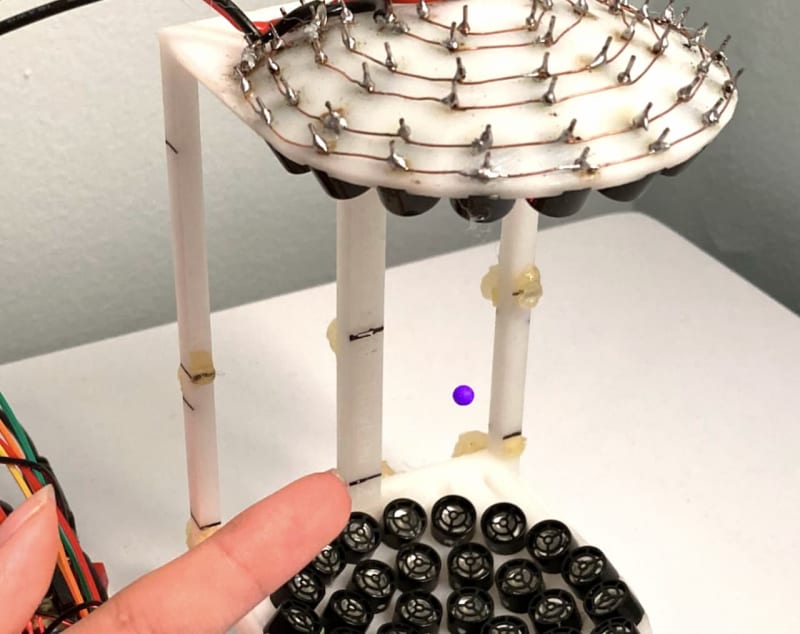
Scientists at New York University just made time crystals you can actually see with your naked eye. These exotic particles dance in mid-air inside a device small enough to fit in your palm, breaking one of the most fundamental rules of classical physics.
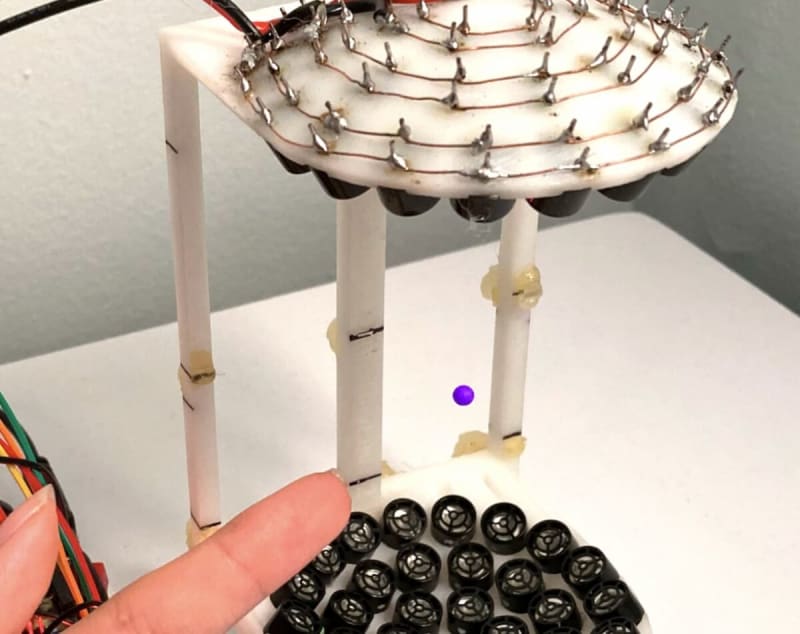
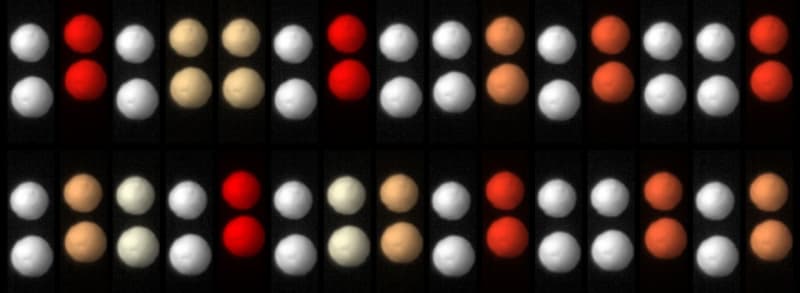
The team, led by physics professor David Grier, suspended tiny polystyrene foam beads (like packing peanuts) in the air using sound waves. The beads levitate on an invisible cushion of acoustic energy generated by speakers mounted on a 3D-printed frame barely six inches tall.
Here's where it gets wild. When these floating particles interact by exchanging sound waves, they violate Newton's Third Law of Motion, which states that every action has an equal and opposite reaction.
The magic happens because larger particles scatter more sound energy than smaller ones. When a big bead and small bead interact through the acoustic field, the big one pushes the small one harder than the small one pushes back. The forces don't balance, breaking the reciprocal relationship Newton described.
Graduate student Mia Morrell explains it like two ferries of different sizes approaching a dock. Each generates waves that push the other, but the larger ferry creates bigger waves. This asymmetry allows the beads to move spontaneously in coordinated, repetitive cycles, the hallmark of a time crystal.
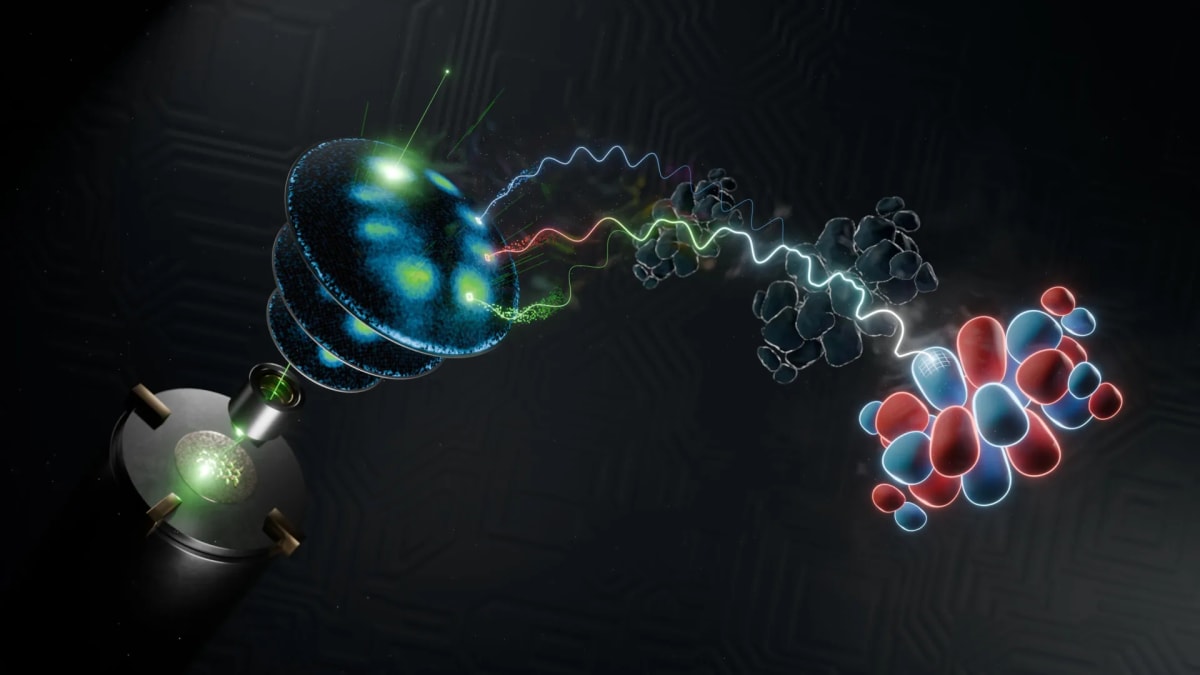
Time crystals were only theorized about a decade ago. They're collections of particles that "keep time" by moving in regular, repeating patterns without using energy the way a traditional clock would.
Why This Inspires
This breakthrough proves that some of nature's most exotic phenomena don't require billion-dollar laboratories or equipment the size of buildings. The simplicity of this system makes time crystals accessible for study in ways previously impossible.
The research, published in Physical Review Letters, opens doors far beyond theoretical physics. These nonreciprocal interactions mirror biochemical networks in our bodies that regulate circadian rhythms and metabolism. Understanding how this acoustic time crystal works could help scientists decode our internal biological clocks.
The team believes this discovery could advance quantum computing and revolutionary data storage technologies. By isolating and controlling nonreciprocal interactions in such a straightforward system, researchers now have a powerful tool for exploring similar phenomena across multiple scientific fields.
"Our system is remarkable because it is incredibly simple," Grier notes. "Time crystals are fascinating because they seem so exotic and complicated, but here we have one you can see and hold."
Sometimes the most profound scientific advances come in the smallest, most elegant packages.
More Images
Based on reporting by Google News - Scientists Discover
This story was written by BrightWire based on verified news reports.
Spread the positivity!
Share this good news with someone who needs it