Scientists Detect Most Promising Dark Matter Signal Yet
A detector buried nearly a mile underground in South Dakota captured a mysterious flash that could be the first real evidence of dark matter. After months of analysis, 250 scientists worldwide are cautiously optimistic they may have finally glimpsed the invisible substance that makes up 85% of our universe.
Scientists hunting for one of the universe's biggest mysteries just spotted something extraordinary deep beneath South Dakota's Black Hills.
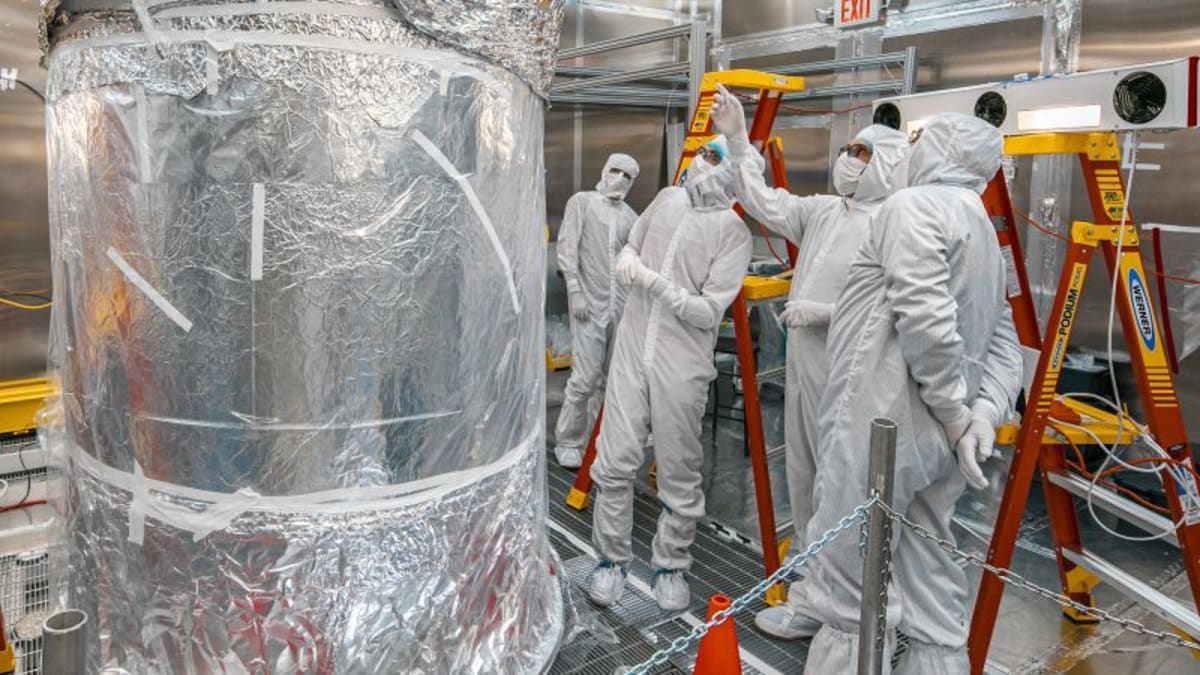
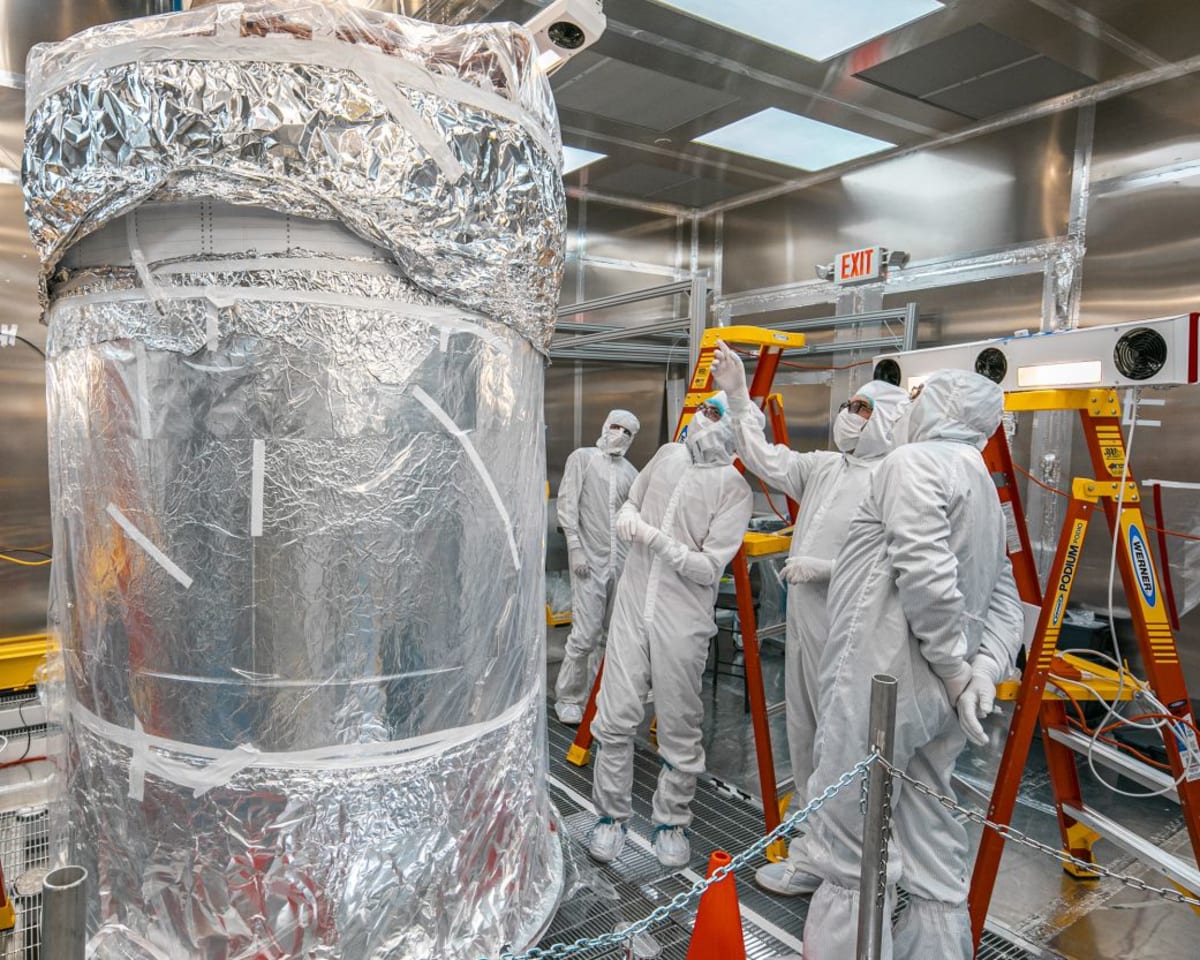
The LUX-ZEPLIN experiment, a detector containing 7 tons of liquid xenon sitting nearly a mile underground in a former gold mine, recorded an unusual particle interaction in June 2023. After careful analysis, researchers estimate only a 0.5% chance that the signal came from ordinary interference, making this the most compelling hint of dark matter ever recorded by the instrument.
Dark matter is the invisible scaffolding holding our universe together. It makes up 85% of all matter and is five times more abundant than the ordinary stuff we can see, but scientists have been searching for direct evidence of it for nearly 50 years.
The detector sits in South Dakota's Sanford Underground Research Facility, shielded by rock and protective layers to block cosmic rays that could create false signals. When a particle collides with xenon atoms inside, it produces a tiny flash of light that scientists can measure.
Alvine Kamaha, a physicist at UCLA who helped build the detector, explains that one event alone isn't enough to claim discovery. The team needs to see whether more events appear as they collect additional data over the coming months.
In particle physics, proving a discovery requires what's called 5-sigma certainty, meaning only a 1 in 3.5 million chance of a statistical fluke. This signal currently sits at 2.6-sigma, or a 1 in 200 chance of being random noise, but researchers are already working on further analysis to increase confidence.
The 250 scientists and engineers from 39 institutions who make up the LZ collaboration presented their findings at a conference in Japan on September 1. Their study has been submitted to the journal Physical Review Letters.
Why This Inspires
This moment represents decades of patient, meticulous work coming together. Scientists chose to build their detector in an old gold mine specifically because the rock overhead blocks interference. They selected xenon because its heavy atoms make particularly sensitive targets for the hypothetical particles called WIMPs that might make up dark matter.
Even if dark matter particles exist, they're so weakly interacting that vast numbers could pass through a human body every second without anyone noticing. The collision the team detected would be extraordinarily rare, which is exactly what makes it so exciting.
A definitive detection would crack open an entirely new area of physics. We know dark matter shapes galaxies and the large-scale structure of the universe, but we still don't know what it actually is.
The team isn't declaring victory yet, but they're watching their detector closely, hoping more flashes will emerge from the darkness.
More Images


Based on reporting by Google News - Science
This story was written by BrightWire based on verified news reports.
Spread the positivity!
Share this good news with someone who needs it