Scientists Discover Human Brain Has Two Separate Origins
Your brain isn't one organ growing from a single source. Stanford researchers just proved it develops from two completely different cell systems working together, rewriting what we thought we knew about how brains form.
Scientists just discovered something stunning hiding in plain sight: the human brain actually starts as two separate systems that team up during our earliest moments as embryos.
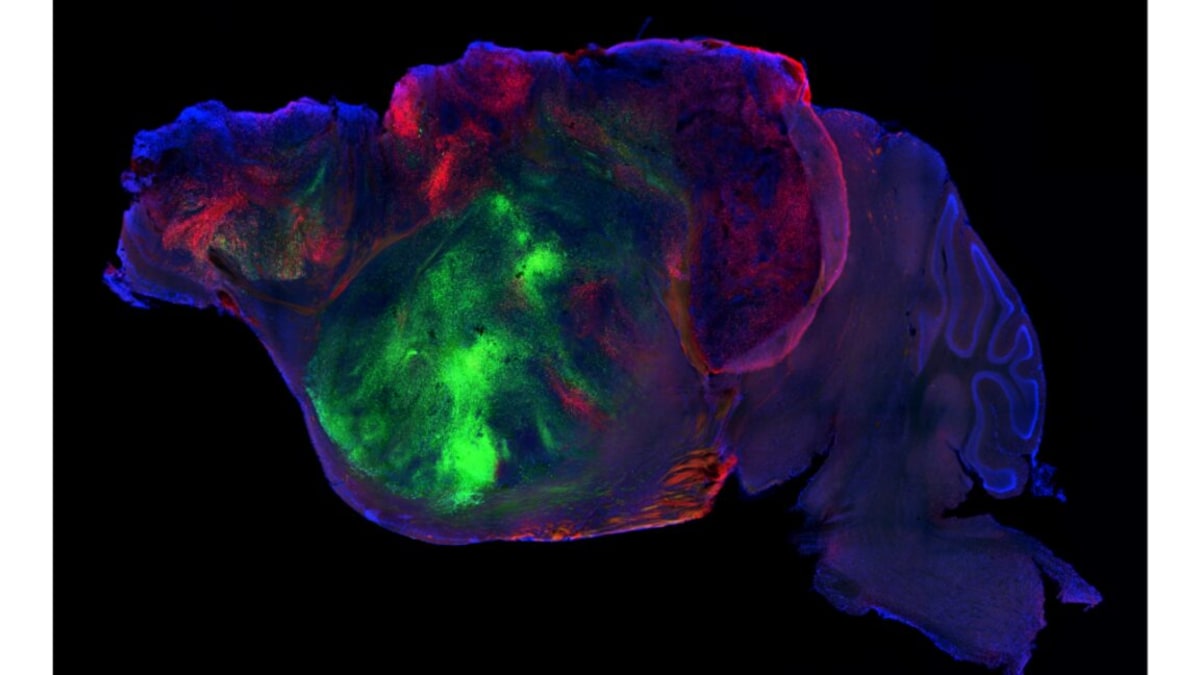
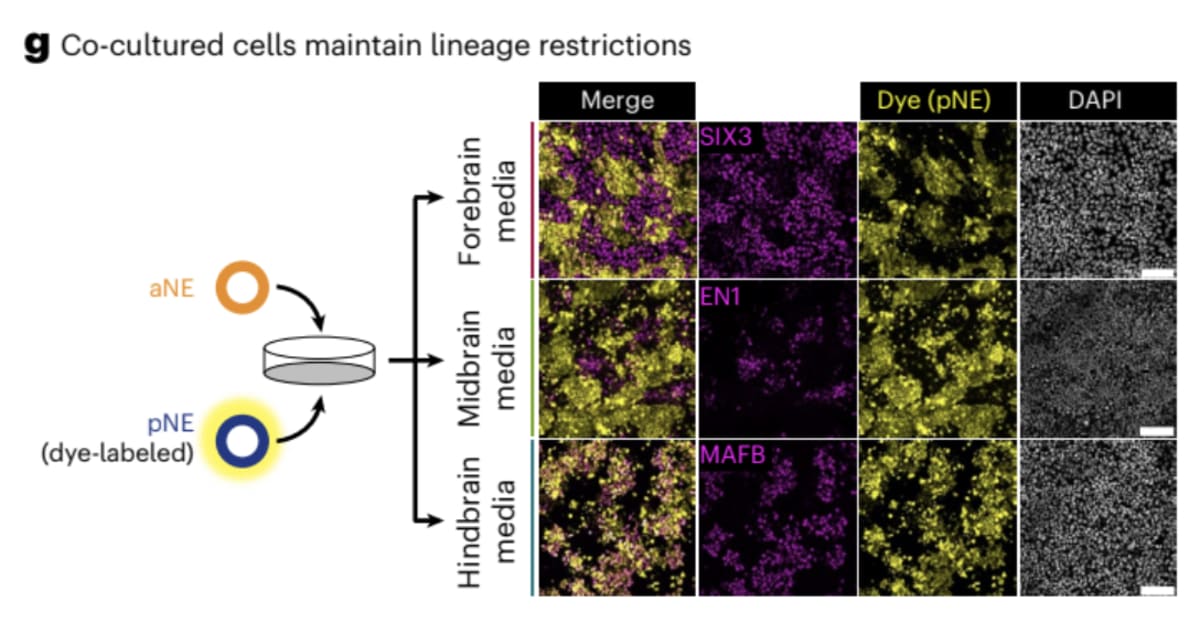
A Stanford-led research team published findings in Nature Neuroscience showing that different brain regions come from completely distinct types of embryonic cells called progenitors. One type builds your forebrain and midbrain, while another creates your hindbrain through an entirely different developmental pathway.
The researchers made their breakthrough by watching how mouse brains formed during gastrulation, the very earliest stage of embryonic development. They then confirmed that human stem cells follow these same two distinct paths, depending on the signals they receive.
Here's what makes it click: forebrain and midbrain progenitor cells produce a specific protein using a gene called Otx2, while hindbrain cells express a totally different gene called Gbx2. The DNA packaging in these two cell types looks fundamentally different too, with distinct chromatin landscapes that mean they can't swap jobs.
This explains why scientists have struggled for years to grow hindbrain cells in the lab. They were using the wrong starting materials, trying to coax forebrain-destined cells into becoming something they were never meant to be.
"In stem cell biology, people are always fixated with creating the end cell type, like the neuron," says developmental biologist Rayyan Jokhai, co-first author of the study. "But it's important to begin at the earliest stages of embryonic development."
In a scientific first, the team successfully encouraged human stem cells to develop into working hindbrain motor neurons, complete with electrical activity and the right proteins. This breakthrough will likely accelerate research into diseases affecting the brainstem, where our most basic life functions are controlled.
Why This Inspires
The discovery reaches back through hundreds of millions of years of evolution. The researchers found this two-part brain blueprint in mouse, macaque, chicken, zebrafish, and acorn worm embryos at the gastrulation stage.
All these animals share a common ancestor from roughly 550 million years ago. That means your brain has been following this ancient two-part construction plan since before fish crawled onto land.
"Our research suggests that evolution took two existing neural systems and pushed them together spatially," says developmental biologist Kyle Loh, whose lab hosted the research. "Having the brain as one organ would probably be more efficient, but we rely on this primordial way to make the brain as two separate pieces."
The word "brain" implies one unified organ with a single origin, but nature had other plans. Two separate systems learned to collaborate so seamlessly that for centuries, we never noticed the seam.
This ancient partnership still powers every thought you have today.
More Images

Based on reporting by Google News - Science
This story was written by BrightWire based on verified news reports.
Spread the positivity!
Share this good news with someone who needs it