Scientists Fast-Track Designer Viruses to Fight Superbugs
A breakthrough method lets researchers build custom bacteria-killing viruses in weeks instead of years, opening new hope against antibiotic-resistant infections. The Golden Gate technique could transform how we treat dangerous superbugs that no longer respond to traditional medicine.
Scientists just cracked the code to engineering custom viruses that could save lives threatened by superbugs, and they did it by building them from scratch like molecular LEGO sets.
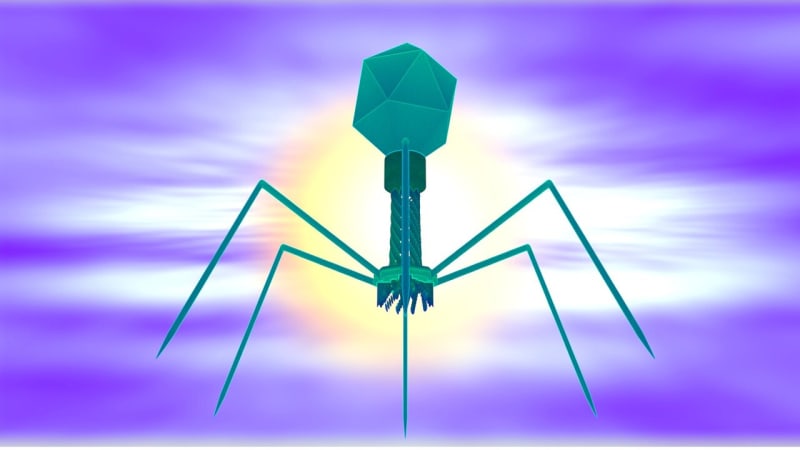
Researchers at New England Biolabs and Yale University developed a groundbreaking system that assembles therapeutic bacteriophages (viruses that kill bacteria) entirely from synthetic DNA. Instead of spending years trying to modify naturally occurring viruses, scientists can now design and build custom phage therapies in a matter of weeks.
The team proved their method works by creating a fully synthetic virus targeting Pseudomonas aeruginosa, a dangerous superbug that causes life-threatening infections in hospitals worldwide. They assembled the entire virus from 28 separate DNA fragments, programming it with custom features like the ability to target specific bacteria and glow during infections so doctors can track treatment in real time.
This matters enormously because antibiotic resistance now threatens millions of lives globally. Bacteria that once responded to common antibiotics are evolving faster than we can develop new drugs. Bacteriophages offer a century-old solution that's seeing renewed interest, but until now, working with them has been painfully slow and complex.
"Even in the best of cases, bacteriophage engineering has been extremely labor-intensive," says Andy Sikkema, research scientist at NEB and study co-author. The old approach required researchers to spend entire careers developing processes for just one type of virus.
The Golden Gate Assembly platform changes everything by letting scientists build viruses outside living cells, piece by piece, with desired modifications already built in. The shorter DNA segments are easier to prepare, less likely to contain errors, and work reliably even with the complex genetic sequences common in therapeutic phages.
The Ripple Effect
The method is already spreading to tackle other deadly superbugs. One team used it to engineer phages against tuberculosis-causing bacteria. Another created biosensor phages that detect E. coli in drinking water, potentially protecting communities from contaminated water supplies.
"My lab builds 'weird hammers' and then looks for the right nails," explains Greg Lohman, senior investigator at NEB. "In this case, the phage therapy community told us, 'That's exactly the hammer we've been waiting for.'"
The publication in the Proceedings of the National Academy of Sciences represents more than just technical innovation. It's a toolkit that democratizes phage therapy development, letting more researchers join the fight against antibiotic resistance without needing decades of specialized expertise.
As superbugs continue evolving resistance to our best antibiotics, this synthetic approach offers hope that medical science can evolve faster, designing custom viral treatments tailored to each emerging threat.
More Images
Based on reporting by Google News - Science
This story was written by BrightWire based on verified news reports.
Spread the positivity!
Share this good news with someone who needs it