Scientists Find 2 'Ghost' Human Lineages in Our DNA
A new genetic method reveals traces of two extinct human populations in modern genomes, including one that interbred with our ancestors before humans left Africa. One "super-archaic" lineage dates back nearly 2 million years.
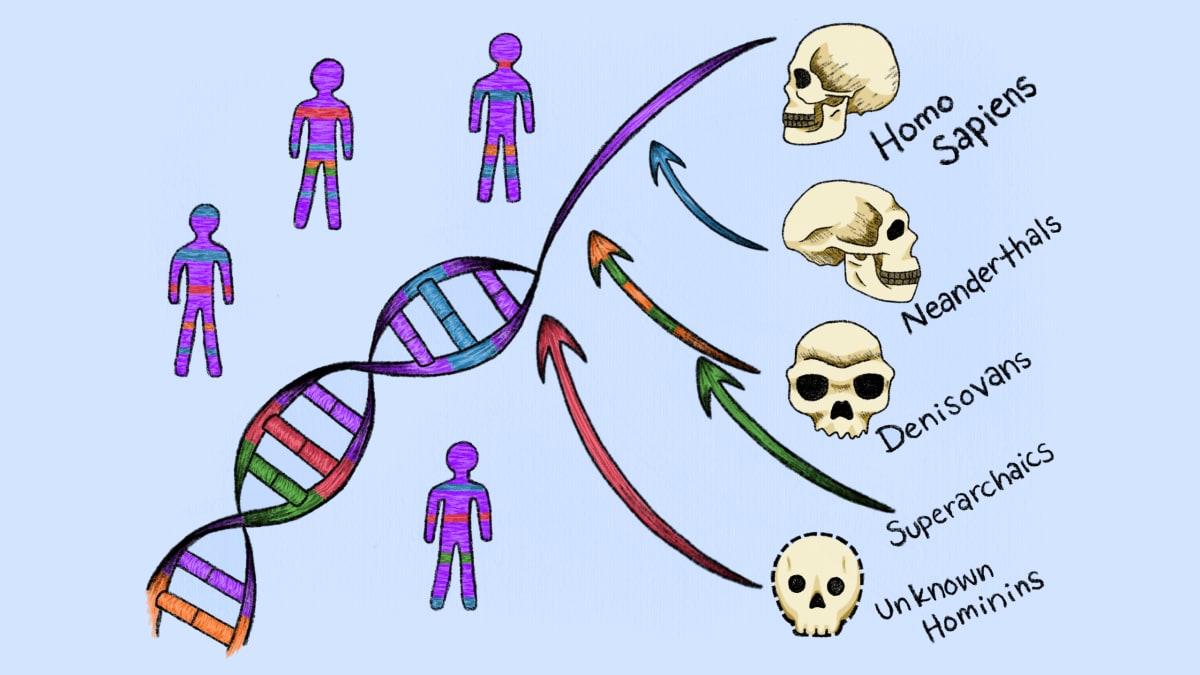
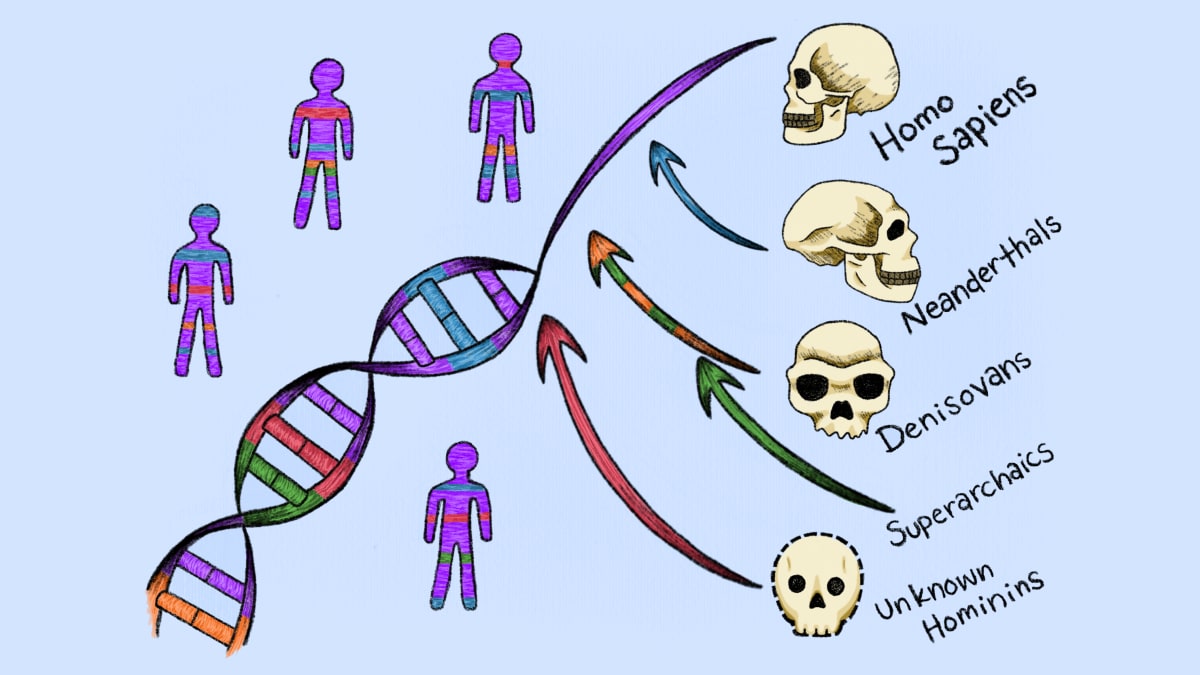
Your genome holds secrets from human relatives who vanished long before recorded history. Scientists at UC Berkeley just discovered traces of two mysterious "ghost lineages" hidden in the DNA of people alive today.
Researchers developed a breakthrough method to scan over 500 complete genomes from people around the world. Instead of relying on rare ancient DNA samples from fossils, they reconstructed family trees of our ancestors by tracking when genetic lineages split and merged.
The team found something remarkable. One ghost lineage left its mark in every modern human on Earth, suggesting our ancestors interbred with this mysterious group in Africa more than 50,000 years ago.
"These extinct populations may have lived hundreds of thousands or even more than a million years ago, yet traces of their genetic legacy remain preserved in our genomes today," said study co-author Priya Moorjani, a human evolutionary geneticist at UC Berkeley. This ghost DNA makes up about 0.5% to 1% of modern human genomes, similar to the amount of Neanderthal DNA many people carry.
The scientists estimate this lineage diverged from our ancestors around 800,000 years ago, about the same time Neanderthals and Denisovans split off. One prime candidate is Homo heidelbergensis, a human species that lived in Africa and Europe between 700,000 and 200,000 years ago.
The second discovery proves even more ancient. People from Oceania carry traces of a "super-archaic" lineage that separated from modern humans nearly 1.8 million years ago.
Why This Inspires
This discovery rewrites what's possible in studying human history. For decades, scientists could only learn about extinct human groups if DNA survived in fossils, which requires cold, dry conditions rarely found in Africa and tropical regions.
Now researchers can read the story written in living people's genomes. "We no longer have to wait for extraordinary fossil preservation to learn about extinct human populations," Moorjani explained. The genomes of people walking around today contain traces of ancient ancestors previously lost to time.
The method successfully identified known Neanderthal and Denisovan ancestors as a test, then revealed these previously unknown interbreeding events. It opens a new window into parts of human evolution that seemed forever out of reach.
Every person carries fragments of these vanished lineages, connecting us to relatives who lived when the world looked completely different. Their DNA survived in us, a biological time capsule waiting to be read.
More Images

Based on reporting by Google News - Scientists Discover
This story was written by BrightWire based on verified news reports.
Spread the positivity!
Share this good news with someone who needs it
%2Fhttps%3A%2F%2Ftf-cmsv2-smithsonianmag-media.s3.amazonaws.com%2Ffiler_public%2F81%2Fdd%2F81ddd40e-6ceb-4c0a-8b50-8faad9e7912c%2F3fgt4pc.jpg)