Scientists Find 5-Million-Year Whale Graveyard 7,000m Deep
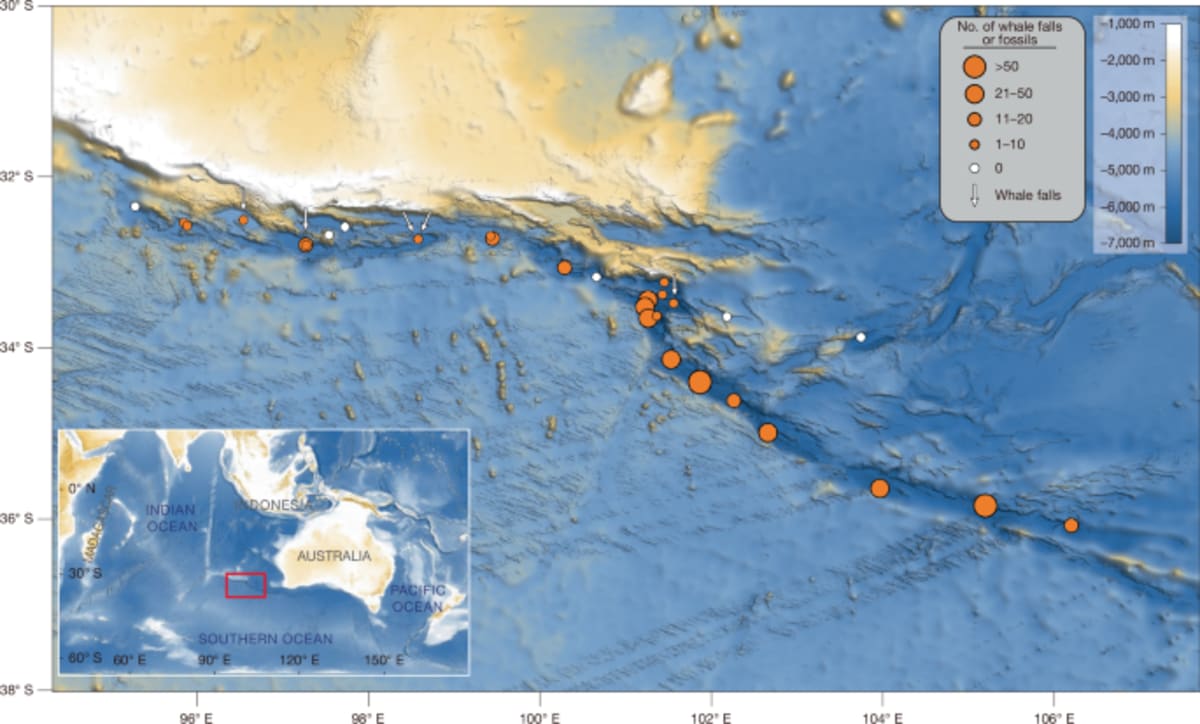
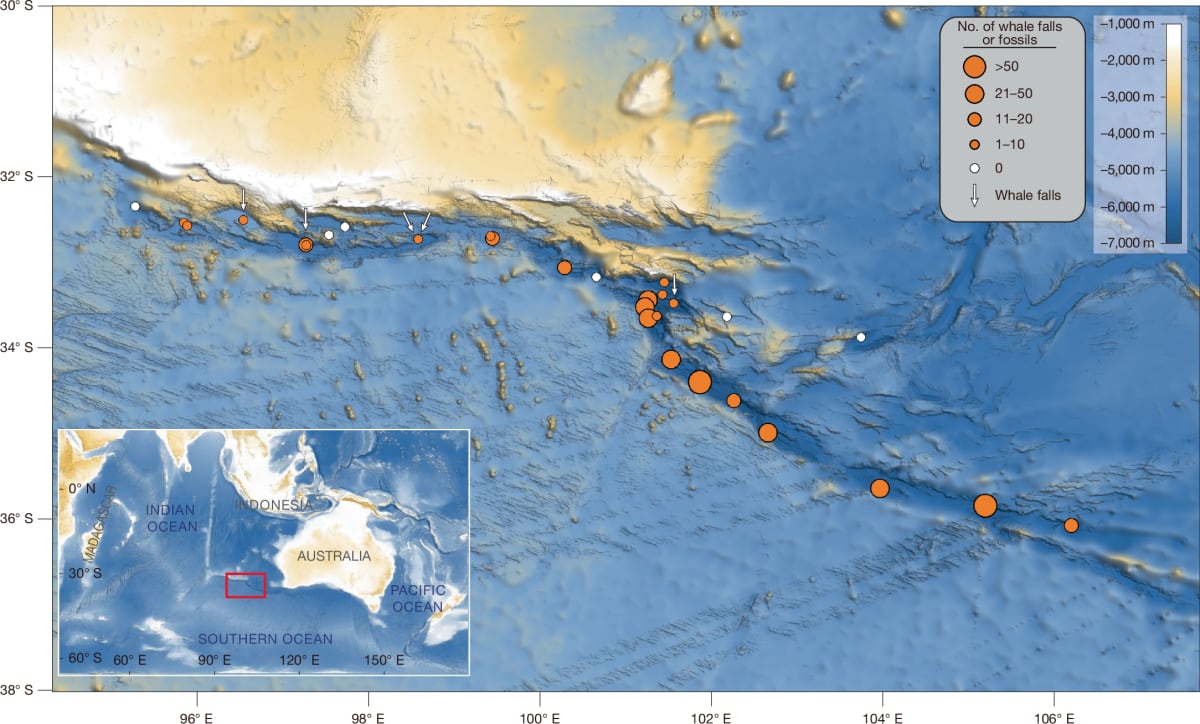
Deep-sea explorers discovered an underwater whale cemetery spanning 750 miles in the Indian Ocean, revealing how life thrives in Earth's most extreme environments. The find includes 476 ancient whale fossils dating back 5.3 million years, alongside five thriving ecosystems still feeding life today.
Scientists aboard a Chinese research vessel just mapped one of the most remarkable discoveries in ocean history: a vast whale graveyard stretching 750 miles across the deepest parts of the Indian Ocean.
The team found 476 fossil whales and five active whale-fall ecosystems in the Diamantina Zone, some resting nearly four and a half miles below the surface. That's deeper than Mount Fuji is tall.
When whales die and sink to the ocean floor, they become "whale falls" that sustain entire communities of life for decades. These underwater oases feed creatures that can't survive anywhere else on Earth.
The discovery happened almost by accident. On February 8, 2023, scientists piloting the Fendouzhe submersible spotted their first whale bones at 23,000 feet deep in the Dordrecht Deep. Over the next month, they conducted 32 dives and kept finding more.
The bones host thriving neighborhoods of bizarre deep-sea life. Brittle stars blanket the surfaces while bone-eating worms called Osedax burrow inside, their transparent tubes waving in the current. Chemosynthetic clams cluster around the remains, feeding on chemicals released as the bones decompose.
Dating tests revealed these whale falls have been occurring in this region for at least 5.3 million years. The fossils include both modern whale species and extinct deep-diving beaked whales that vanished long ago.
Why This Inspires
This discovery rewrites what scientists thought possible in the deepest ocean. The Diamantina Zone has quietly served as both a thriving ecosystem and a natural museum, preserving whale evolution across millions of years.
The sheer scale surprises researchers most. Previous whale-fall discoveries typically involved one or two sites, rarely deeper than 13,000 feet. Finding hundreds across 750 miles reveals that deep ocean floors act as time capsules, connecting past and present life in ways never imagined.
These findings arrived at a perfect moment. As technology finally allows humans to explore the deepest parts of our ocean, we're learning that even in crushing darkness and pressure, life finds extraordinary ways to flourish.
The research shows that death in the ocean creates life in the depths, turning every sunken giant into a decades-long feast that sustains creatures found nowhere else on Earth. What scientists once thought were rare events turn out to be common highways of nutrition connecting the surface world to the abyss.
This ancient whale necropolis proves that even our planet's most remote, extreme environments hold secrets waiting to inspire us.
More Images
Based on reporting by Nature News
This story was written by BrightWire based on verified news reports.
Spread the positivity!
Share this good news with someone who needs it