Scientists Find 67,800-Year-Old Hand Art in Indonesia
Researchers discovered the world's oldest known cave art in Indonesia, a 67,800-year-old hand stencil that rewrites the story of human creativity. The finding proves our ancestors were making symbolic art tens of thousands of years before Europe's famous cave paintings.
📺 Watch the full story above
A hand pressed against a cave wall in Indonesia 67,800 years ago just changed everything we thought we knew about the birth of human art.
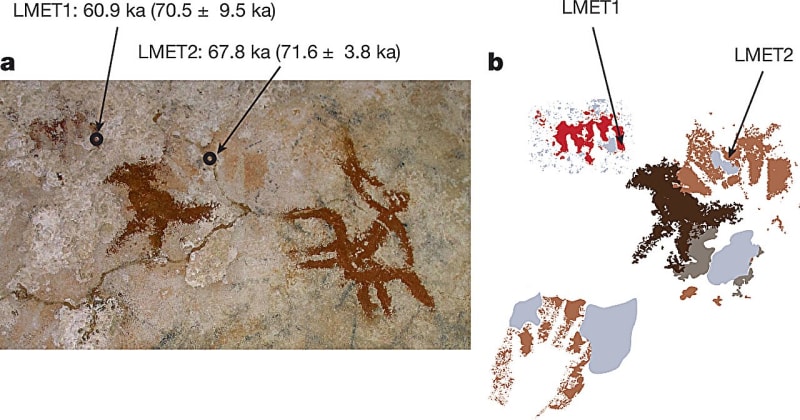
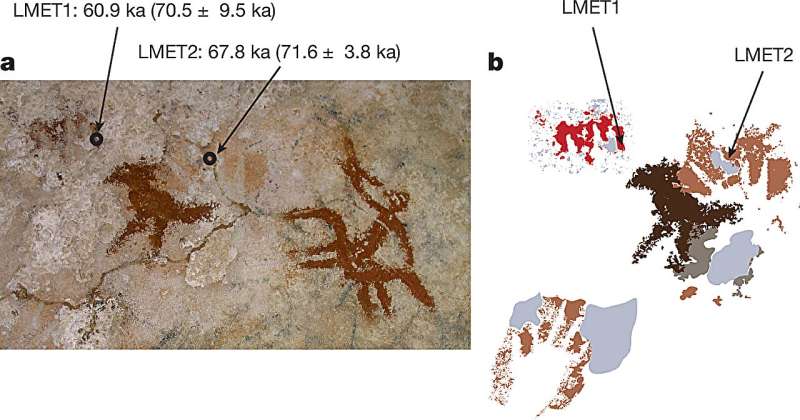
Scientists working in limestone caves on the island of Sulawesi have dated ancient red hand stencils to at least 67,800 years ago, making them the oldest securely dated cave art ever discovered. That's 30,000 years older than the famous paintings in French caves that textbooks have long celebrated as humanity's first art.
The discovery happened when researchers analyzed tiny amounts of uranium in mineral layers that formed over the paintings. Because these minerals sat on top of the art, they revealed the youngest possible age of the images beneath them.
But here's where it gets even more fascinating. The hand stencil isn't just old; it's uniquely styled. Ancient artists carefully reshaped the fingertips to look pointed, like animal claws, suggesting these people had complex ideas about the relationship between humans and animals.
The caves tell an even longer story. People painted there repeatedly over tens of thousands of years, continuing until about 20,000 years ago during the last ice age. After a gap, new farmers arrived 4,000 years ago and added their own images over the ancient artwork.
The location matters tremendously. Sulawesi sits directly along the northern migration route that humans took to reach Australia and New Guinea between 65,000 and 60,000 years ago. Those journeys required deliberate ocean crossings, representing the earliest known long-distance sea voyages our species ever attempted.
Why This Inspires
This discovery proves that human creativity didn't bloom in just one place. While Europe got credit for sparking symbolic culture, people in Southeast Asia were already creating sophisticated art, telling stories, and marking their identity through images.
The artists who pressed their hands against those cave walls were likely ancestors of today's Indigenous Australians and Papuans. They carried rich cultural traditions with them as they made those daring ocean crossings, bringing creativity and symbolic thinking to new lands.
The research, published in the journal Nature, shows that our human impulse to create, to leave our mark, and to express complex ideas through images runs deeper in our history than we ever imagined.
Humanity's creative spirit has been shining bright for nearly 70,000 years.
More Images

Based on reporting by Phys.org
This story was written by BrightWire based on verified news reports.
Spread the positivity!
Share this good news with someone who needs it