Scientists Find Bacteria's Off Switch in Superbug Fight
Viruses that attack bacteria have revealed a critical weakness that could lead to powerful new antibiotics. The discovery offers hope as drug-resistant infections claim tens of thousands of American lives each year.
Scientists at Caltech have discovered how viruses naturally shut down a protein that bacteria need to survive, opening a promising new path to fighting superbugs that resist current antibiotics.
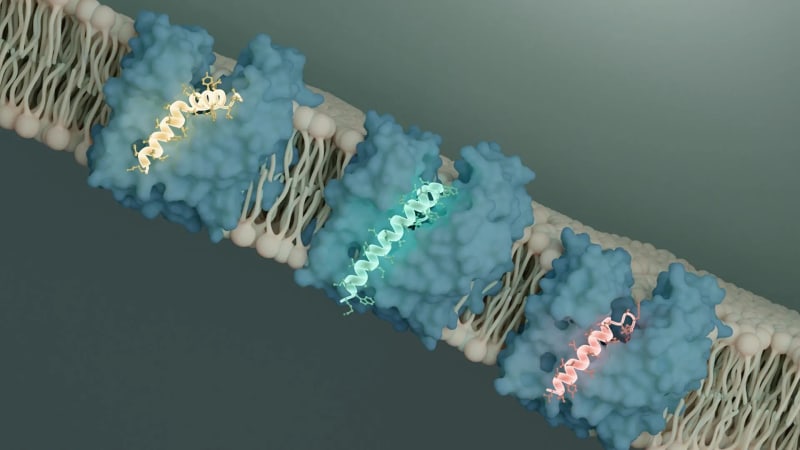
The breakthrough centers on MurJ, a protein that bacteria use to build their protective cell walls. Without it, bacteria cannot survive. Researchers found that multiple unrelated viruses evolved separate proteins that all disable MurJ in exactly the same way, suggesting nature has identified an Achilles heel.
Graduate student Yancheng Evelyn Li used powerful microscopes to watch how viral proteins lock MurJ into a single position, freezing it like a jammed door. This stops bacteria from constructing their cell walls, causing them to die. The research appeared in the journal Nature on February 26.
The timing matters. In the United States alone, tens of thousands of people die annually from infections that no longer respond to existing antibiotics. That number keeps rising. Professor Bil Clemons, who led the research, explains the urgency simply: "We now deal with bacteria that are resistant to all the medicines that we have."
Current antibiotics like penicillin already target bacterial cell walls, but they attack different stages of construction. MurJ represents fresh territory because no approved drugs currently target it directly. Better yet, the protein exists only in bacteria, not human cells, making it an ideal target that should avoid harming patients.
The research focused on bacteriophages, viruses that infect bacteria. These tiny invaders must break through bacterial defenses to escape and spread. Small phages use specialized proteins called Sgls to kill their bacterial hosts by blocking MurJ.
What excites researchers most is how MurJ gets stuck. The viral proteins catch it in an outward-facing position, exposed to the environment outside the bacterial cell. This accessibility could make it easier for future drugs to reach and disable the protein.
The fact that completely different viruses independently evolved the same attack strategy tells scientists they are onto something significant. When nature repeatedly chooses the same solution, it often signals a fundamental vulnerability.
Why This Inspires
This discovery shows how studying nature's own solutions can unlock medical breakthroughs. Viruses have spent millions of years perfecting ways to defeat bacteria. By learning from their strategies, scientists can design drugs that work in harmony with natural processes rather than starting from scratch.
The research also demonstrates that even as bacteria evolve resistance to our current medicines, we are not out of options. New targets like MurJ exist, waiting to be exploited. Each discovery adds another tool to humanity's medical toolkit.
Clemons and his team are now working to identify small molecules that could mimic what the viral proteins do naturally. The path from laboratory discovery to pharmacy shelf takes years, but the blueprint is clear.
For families who have watched loved ones battle untreatable infections, this research offers something precious: scientific hope grounded in real progress.
Based on reporting by Google News - Scientists Discover
This story was written by BrightWire based on verified news reports.
Spread the positivity!
Share this good news with someone who needs it