Scientists Find Brain Signal That May Predict Suicide Risk
Dutch researchers discovered a receptor that appears elevated in brains of people with severe suicidal thoughts and may decrease when they recover. The finding could lead to new ways to identify and help people in crisis.
Scientists may have found a biological marker in the brain that signals severe suicidal thoughts and, even more importantly, shows signs of recovery when people heal.
Researchers at the Netherlands Institute for Neuroscience discovered that a receptor called P2RX7 appears significantly elevated in the brains of people who experienced intense suicidal thoughts near death. The receptor plays a role in how cells respond to stress, inflammation, and energy metabolism.
Lead researcher Lin Zhang initially struggled to find clear biological differences when comparing people with and without mood disorders. But when she reorganized brain tissue samples based on how donors had died, a striking pattern emerged.
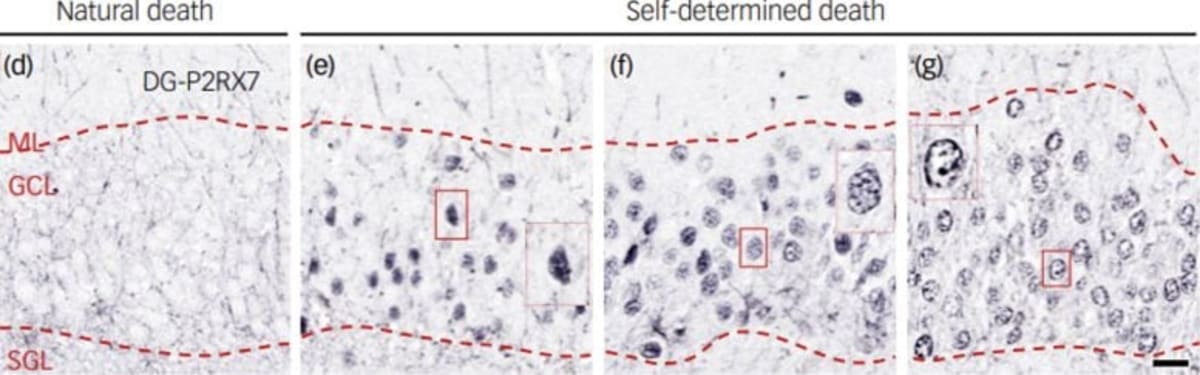
People who died by suicide or euthanasia showed much higher levels of P2RX7 in their nerve cells compared to those who died naturally. The difference appeared regardless of whether someone had been diagnosed with depression, suggesting that suicidal thoughts may involve separate biological processes from depression itself.
The most hopeful discovery came from examining the natural death group more closely. Medical records showed some of these donors had previously experienced suicidal thoughts or even attempted suicide earlier in life, yet their P2RX7 levels were low at death.
This suggests the receptor levels may rise during periods of severe suicidal thoughts and fall again when people recover. Zhang compares brain images from different donors: one from a natural death shows almost no markings, while three others from suicide or euthanasia deaths are scattered with dark blue dots indicating P2RX7 presence.
The Bright Side
If researchers can confirm this pattern holds true in living people, it could open doors to earlier intervention and better understanding of what helps someone recover from suicidal thoughts. The team at Amsterdam UMC plans to use PET imaging to measure brain signals associated with P2RX7 in people currently experiencing suicidal thoughts.
Zhang receives messages from people who have struggled with suicidal ideation themselves. Her response carries profound hope: "Your brain loves you more than you imagine. Every cell in your body is trying to fight against your suicidal ideation."
The research remains preliminary and scientists stress they don't yet know if P2RX7 can reliably indicate the presence or severity of suicidal thoughts. But the possibility that the brain shows biological signs of both crisis and recovery offers a new pathway for understanding resilience.
Recovery remains possible, even when it doesn't feel that way.
More Images
Based on reporting by Google News - Scientists Discover
This story was written by BrightWire based on verified news reports.
Spread the positivity!
Share this good news with someone who needs it