Scientists Find 'Exercise Sensor' That Keeps Bones Strong
Researchers discovered how bones detect movement and stay strong, opening the door to drugs that could protect fragile bones in people unable to exercise. The breakthrough could help millions facing osteoporosis and age-related bone loss.
Scientists have cracked the code on how our bones know when we're moving and respond by getting stronger.
Researchers at the University of Hong Kong identified a protein called Piezo1 that acts as the body's built-in exercise sensor. When you move, this protein detects the physical forces and tells bone marrow stem cells to build bone tissue instead of storing fat.
The discovery explains why staying active keeps bones strong and why inactivity leads to bone loss. More importantly, it points to a potential solution for people who can't exercise.
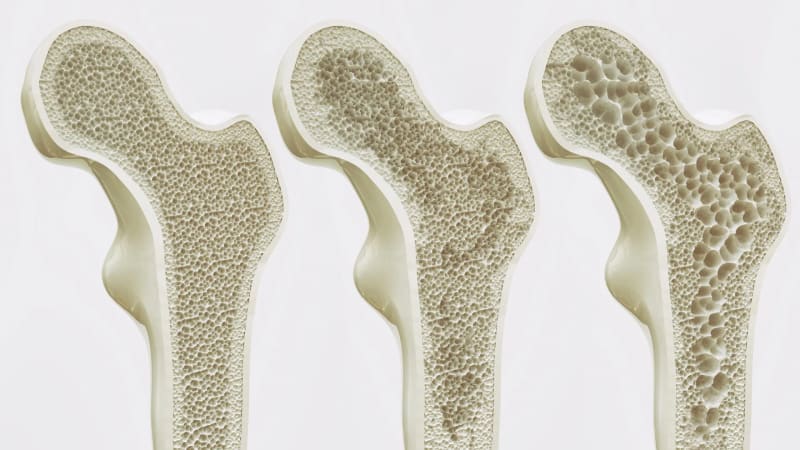
As we age, bone marrow stem cells naturally shift toward creating fat cells instead of bone tissue. This fat crowds out healthy bone and creates a downward spiral. Professor Xu Aimin, who led the study, found that activating Piezo1 reverses this process in mice.
When Piezo1 is working properly, it limits fat buildup and promotes new bone formation. Without it, stem cells become fat cells and release inflammatory signals that accelerate bone loss even further.
The research team tested their theory using mouse models and human stem cells. They found that blocking these inflammatory signals helped restore healthier bone conditions.
The Ripple Effect
This breakthrough matters for millions of people worldwide. One in three women and one in five men over 50 will experience a fracture from weakened bones. In Hong Kong, osteoporosis affects 45% of women and 13% of men aged 65 and older.
The impact extends beyond individual health. Bone fractures often lead to long-term pain, reduced mobility, and loss of independence. They also place enormous strain on healthcare systems globally.
Current treatments rely heavily on physical activity, which many patients simply cannot perform. Bedridden patients, people recovering from injuries, and those with chronic illnesses face particularly high risks.
Dr. Wang Baile, who co-led the study, emphasized the potential for vulnerable populations. The team envisions developing "exercise mimetics" that chemically activate the Piezo1 pathway to maintain bone mass without actual movement.
Professor Eric Honoré from the French National Centre for Scientific Research called it a promising strategy beyond traditional physical therapy. Future treatments could provide the biological benefits of exercise through targeted medications.
The findings, published in Signal Transduction and Targeted Therapy, represent a critical step toward replicating exercise benefits at the molecular level.
The research team is now working toward developing these treatments, offering new hope for protecting independence and quality of life in aging populations.
Based on reporting by Science Daily
This story was written by BrightWire based on verified news reports.
Spread the positivity!
Share this good news with someone who needs it