Scientists Find Giant Hidden Structure Under Antarctica
Researchers discovered a massive fan-shaped network of basins beneath Antarctica's ice sheet, revealing that several famous features are actually connected. This finding could help predict how the ice sheet responds to climate change.
Beneath nearly two miles of Antarctic ice, scientists just found something extraordinary: a network of enormous basins forming a single geological structure the size of a continent.
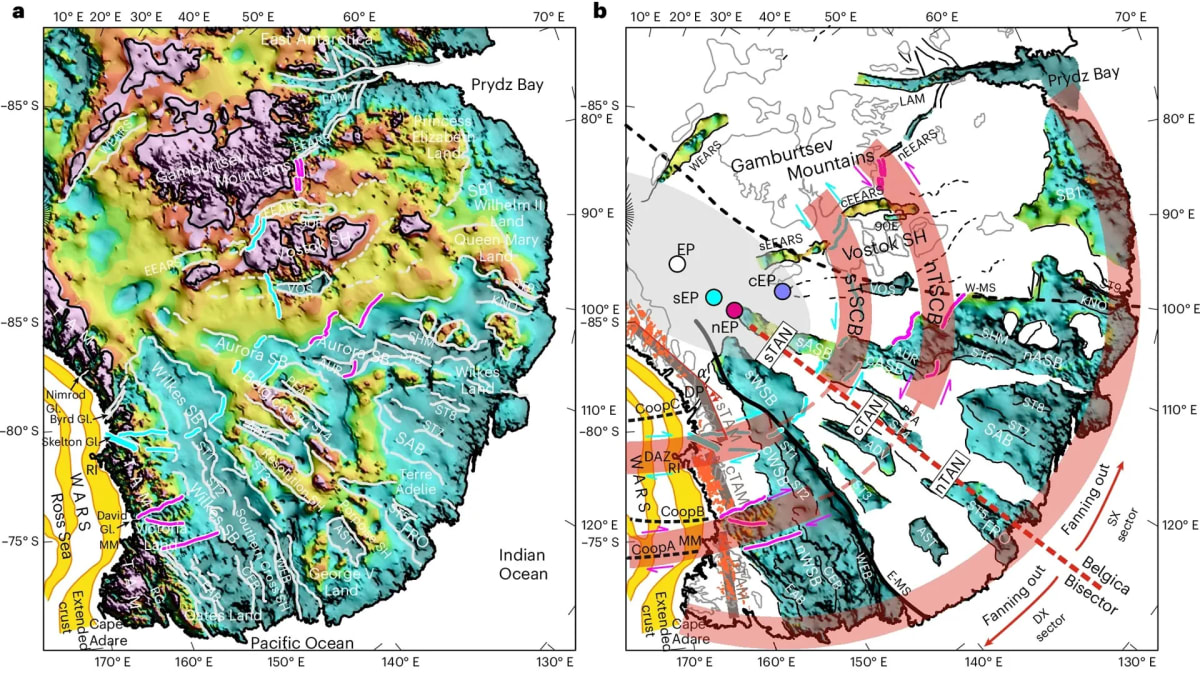
The newly named East Antarctic Fan-shaped Basin Province connects several famous features scientists thought were separate. Lake Vostok, Earth's largest subglacial lake, sits in one of these basins. The Wilkes and Aurora basins are also part of this hidden system.
Researchers from Durham University and the University of Genoa pieced together the discovery using gravity measurements, seismic data, and ice-penetrating radar. What emerged was a pattern resembling a giant hand beneath the ice, with triangular basins spreading out like fingers from a central point.
The structure likely formed hundreds of millions of years ago when the ancient supercontinent Gondwana was breaking apart. As Earth's crust slowly stretched and pulled in different directions, it created these massive depressions. The process may have even played a role in separating Antarctica from Australia.
Dr. Guy Paxman and his team modeled what Antarctica would look like if all the ice melted and the land rebounded upward. The continent would rise by up to one kilometer in some places. This "ice-free" view helped reveal the true scale and shape of the hidden province.
The Bright Side
This discovery isn't just about understanding ancient geology. The shape of the rock beneath Antarctica directly influences how ice moves across the continent today.
These hidden basins help determine where subglacial lakes form and how water flows under the ice. That movement affects ice stability in regions most vulnerable to warming temperatures.
Scientists can now build better models of how Antarctica's ice sheet might respond to climate change. Understanding the bedrock beneath helps predict which areas could lose ice faster and how much sea levels might rise.
The finding also opens new questions about when these basins formed and what other hidden structures might exist beneath the ice. With only portions of Antarctica's bedrock mapped in detail, more surprises likely await discovery.
What began as separate observations of individual basins turned into recognizing one of Earth's largest examples of continental crust stretching. Sometimes the biggest discoveries come from connecting dots that were hiding in plain sight all along.
Based on reporting by Science Daily
This story was written by BrightWire based on verified news reports.
Spread the positivity!
Share this good news with someone who needs it