Scientists Find How REM Sleep Organizes Memories
Researchers discovered chains of rapid brainwaves during REM sleep that replay memories in precise sequences, solving a long-standing mystery about how we consolidate experiences into lasting memories. This breakthrough reveals REM and deep sleep work as a tag team to strengthen what we remember.
Scientists just cracked a major puzzle about how your brain turns daily experiences into permanent memories while you dream.
Researchers at Brandeis University discovered that during REM sleep (the dreaming phase), the brain uses repeating chains of rapid electrical waves to replay memories in highly organized sequences. This finding, published in eLife, finally explains what REM sleep does for memory, a question that has stumped scientists for decades.
The research team, led by Justin D. Shin and Professor Shantanu P. Jadhav, monitored brain activity in rats learning to navigate a maze for rewards. They implanted tiny electrodes to track both overall brain rhythms and individual neuron firing patterns during learning and sleep.
During deep sleep, the brain's prefrontal cortex fires rapid bursts that trigger massive, widespread neuron activity. But during REM sleep, something completely different happens.
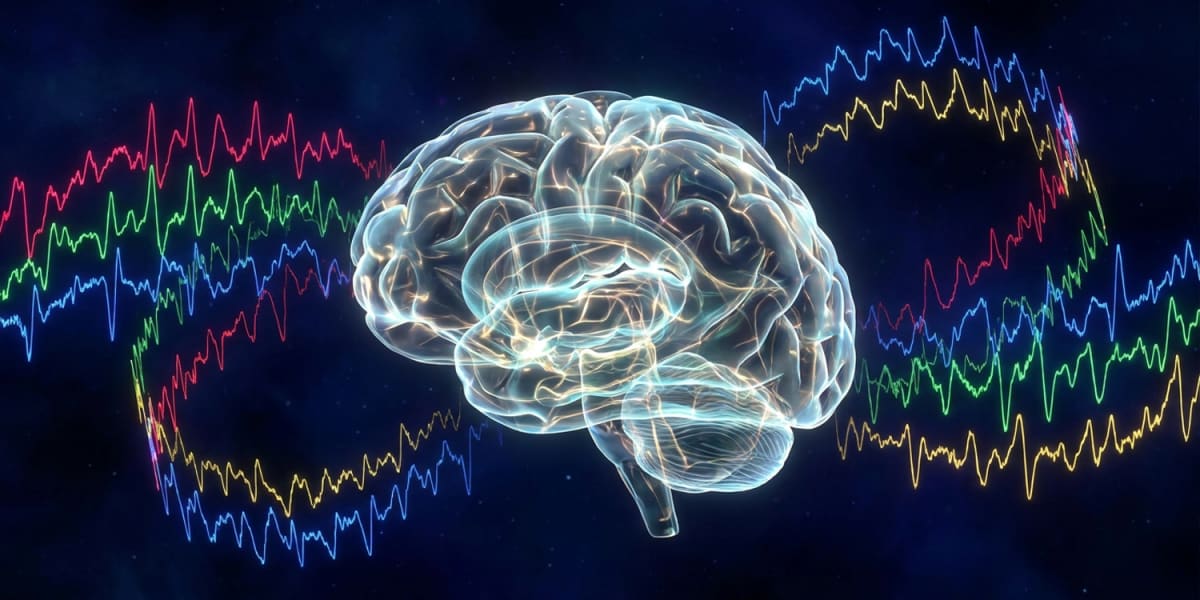
The researchers discovered high-frequency oscillations that occur in repeating chains, cycling about every 130 milliseconds. These chains perfectly sync with theta waves, the steady brain rhythm active during REM sleep.
Instead of massive bursts, REM sleep features something far more precise. Small groups of neurons fire in sparse, sequential patterns against a quieted background, replaying memories in exact order like a carefully conducted orchestra.
Why This Inspires
This discovery reveals that your sleeping brain is far more sophisticated than anyone imagined. REM and deep sleep aren't competing processes but partners in an elegant memory-building dance.
During deep sleep, your brain strengthens memories through powerful bursts. During REM sleep, it fine-tunes them with precision, engaging specific neurons that deep sleep had quieted.
The researchers tracked these neurons across entire sleep sessions and watched them gradually adjust their activity levels. This shows the two sleep stages working together to calibrate your memory circuits.
"REM reactivation was sparse, involving smaller specific subsets of neurons, and temporally extended, lasting about one second," Jadhav explained. "In contrast, NREM reactivation occurs in bursts lasting about 100 milliseconds."
The prefrontal cortex and hippocampus, your brain's memory control centers, showed increased synchronization during these REM chains. They were literally getting on the same wavelength to organize what you'll remember.
This breakthrough could eventually help people with memory disorders, sleep problems, or conditions affecting learning. Understanding how healthy brains consolidate memories is the first step toward helping struggling ones.
Every night while you dream, your brain is conducting an intricate performance to preserve your most important experiences.
Based on reporting by Google News - Scientists Discover
This story was written by BrightWire based on verified news reports.
Spread the positivity!
Share this good news with someone who needs it