Scientists Find New Clue to Cut Cow Methane by 30%
Researchers discovered a tiny structure inside cow gut microbes that produces hydrogen, which becomes methane gas responsible for heating our planet. This breakthrough could help us slow global warming faster than targeting carbon dioxide alone.
Scientists just found a microscopic key that could unlock solutions to one of climate change's biggest challenges hiding inside the stomach of a cow.
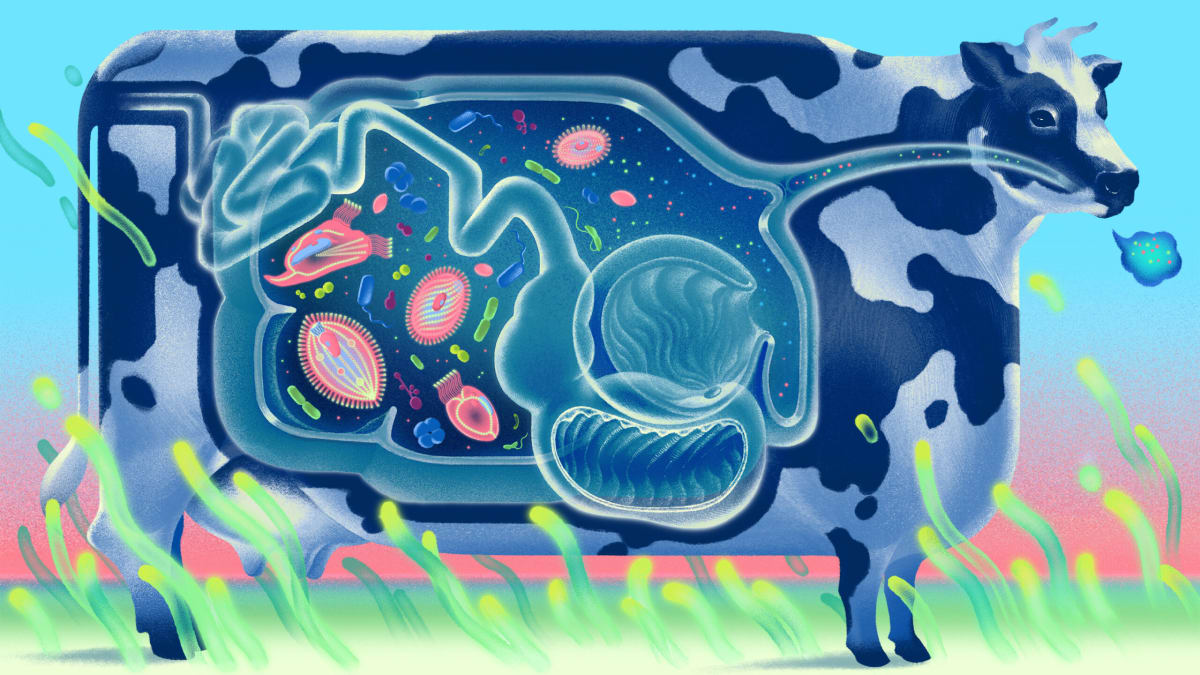
Inside every cow's gut lives a bustling world of microbes working together like a tiny city. The star players are ciliates, single-celled creatures that rule this ecosystem by gobbling up bacteria for energy.
When ciliates digest their food, they release hydrogen gas as waste. Other microbes called methanogens then transform that hydrogen into methane, the powerful greenhouse gas that cows burp into the atmosphere.
Here's why this matters: Livestock burps account for a third of all methane in our atmosphere. Combined with methane from landfills and fossil fuels, this gas has caused 30% of global temperature rise over the past 150 years.
But researchers from a new study published in Science just discovered something groundbreaking. By sequencing the genomes of 450 different ciliates, they found a previously unknown structure inside these microbes.
They named it the "hydrogenobody" because it's specifically designed to produce hydrogen gas. Think of it as a tiny factory pumping out the raw material that eventually becomes planet-warming methane.
The discovery matters because methane has a weakness that carbon dioxide doesn't. It breaks down much faster in the atmosphere, meaning if we can reduce methane emissions now, we'll see climate benefits within our lifetimes rather than centuries from now.
The Ripple Effect
This finding opens new doors for climate solutions that go beyond just targeting methane-producing microbes directly. Juan Tricarico, who researches intestinal methane at Dairy Management Inc., says the discovery suggests we need a broader approach to managing livestock emissions.
Scientists can now explore ways to influence how ciliates work, potentially reducing the hydrogen supply that feeds methane production. This could mean developing new feed additives or breeding strategies that change the gut ecosystem without harming the animals.
Rod Mackie, a rumen microbiologist at University of Illinois who wasn't involved in the study, notes that the cow gut system has evolved over millions of years to be incredibly efficient. Understanding these intricate relationships between different microbes helps researchers work with nature rather than against it.
The research team's work mapping hundreds of ciliate genomes provides a roadmap for future interventions. Every new detail about how these microscopic communities function brings us closer to practical solutions.
What started as curiosity about tiny organisms inside a cow's stomach could ripple outward to meaningfully slow the warming of our entire planet.
More Images



Based on reporting by Google News - Science
This story was written by BrightWire based on verified news reports.
Spread the positivity!
Share this good news with someone who needs it