Scientists Find New Moon Mineral in China's First Meteorite
Chinese researchers discovered the 11th lunar mineral ever identified, hidden inside a tiny meteorite that fell to Earth. The new mineral glows under light and could help create better LEDs.
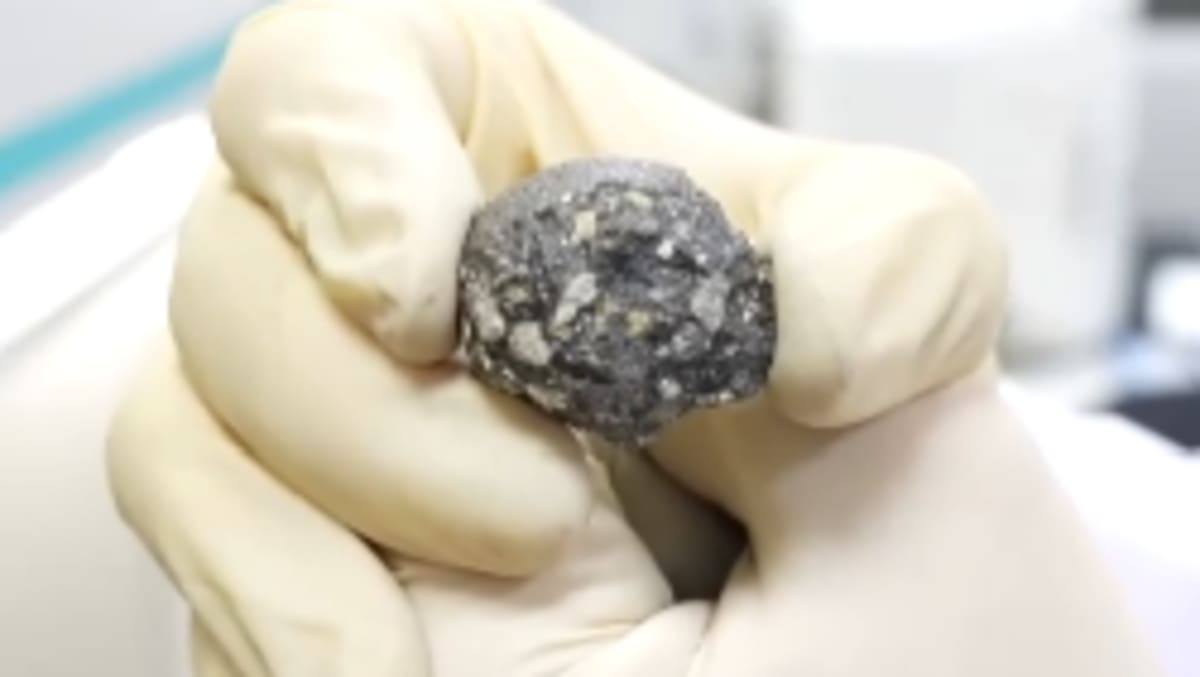
A 44-gram space rock that landed in China is revealing secrets about conditions that exist nowhere on Earth.
Chinese scientists have discovered and named Cerium-Magnesium Changesite, the 11th new lunar mineral ever identified. The tiny colorless crystals were found inside China's first lunar meteorite, hiding in grains smaller than a human hair.
What makes this discovery special isn't just the new mineral itself. It's what the mineral tells us about the Moon's history.
"The discovery of a new mineral in extraterrestrial space would indicate that conditions once existed beyond Earth that have never occurred on our planet," explained Che Xiaochao, associate researcher at the Institute of Geology of the Chinese Academy of Geological Sciences. The mineral formed under unique temperature, pressure, and chemical conditions found only in space.
The Cerium-Magnesium Changesite crystals measure between three and 25 micrometers, roughly one twenty-fifth the width of a human hair. Despite their tiny size, they pack remarkable properties: they're transparent, brittle, and show a distinct fluorescent glow.
The Ripple Effect
This glowing mineral could light up more than scientific understanding. Researchers found that Cerium-Magnesium Changesite's fluorescent properties show promising potential for creating better LED lights.
The mineral's unique ratio of rare earth elements, combined with its magnesium and iron content, gives materials scientists a new recipe to work with. "Its rare earth element ratio, its magnesium and iron content, as well as the characteristic changes in its crystal structure, can provide important references for synthetic materials," said Qu Kai from the Commission of New Minerals and Mineral Names.
Finding new minerals in lunar meteorites helps scientists understand both the Moon's geological history and Earth's past. If researchers later discover the same mineral on Earth, it would suggest our planet once experienced similar extreme conditions.
The discovery adds to humanity's growing knowledge of the Moon, joining ten other unique lunar minerals identified over decades of space exploration. Each new find helps piece together the puzzle of how our celestial neighbor formed and evolved.
A tiny meteorite weighing less than two ounces just expanded our understanding of what's possible in our solar system.
More Images

Based on reporting by Google News - Scientists Discover
This story was written by BrightWire based on verified news reports.
Spread the positivity!
Share this good news with someone who needs it