Scientists Create Synthetic Universe Matching Our Own
After ten years of work, astronomers built a computer simulation of the entire universe that looks remarkably like the real thing. The breakthrough confirms our understanding of how galaxies form is even better than we thought.
Scientists just built an entire synthetic universe on a supercomputer, and it looks so real they can barely tell the difference from our own cosmos.
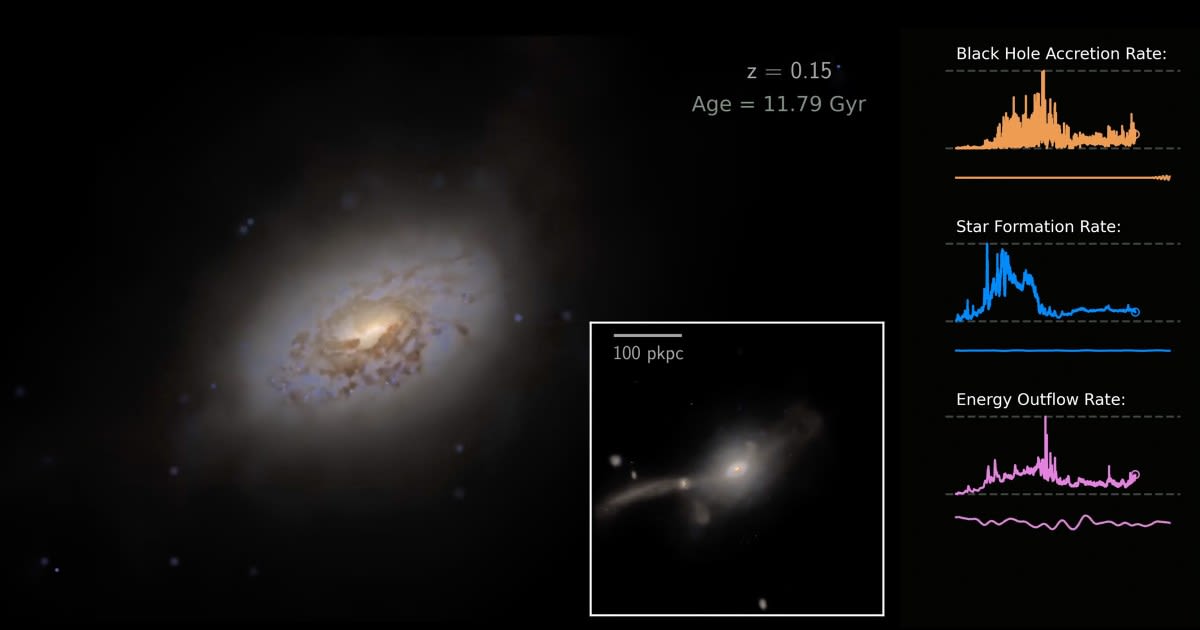
The international team spent nearly a decade creating the COLIBRE project, running it on Durham University's powerful COSMA8 supercomputer. The largest simulation took a staggering 72 million CPU hours to complete.
The results were worth the wait. The virtual galaxies that emerged look indistinguishable from real ones, matching their numbers, brightness, colors, and sizes with stunning accuracy.
"It is exhilarating to see 'galaxies' come out of our computer that look indistinguishable from the real thing," said physicist Carlos Frenk of Durham University. The team accomplished this purely by solving physics equations in an expanding universe.
This isn't just a cool tech achievement. The simulation confirms that our standard cosmological model can explain galaxy formation even better than scientists previously believed.
That reassurance comes at the perfect time. Recent discoveries from the James Webb Space Telescope had raised questions about whether our understanding of the universe was correct, making some astronomers nervous about the foundations of their field.
Why This Inspires
The COLIBRE project represents a genuine breakthrough in how scientists model the cosmos. Previous simulations couldn't handle the complexity of cold gases and cosmic dust below 10,000 degrees Fahrenheit, the raw materials that form stars inside galaxies.
The team cracked that problem with enough brainpower and computing muscle. Their simulation is the first large scale model to include these crucial cold materials, giving us our most realistic virtual universe yet.
The synthetic cosmos closely matches observations of both the early universe and today's galaxies, including the masses of some of the first galaxies ever formed. Researchers will spend several more years analyzing the treasure trove of data their simulations produced.
The model doesn't explain everything. Those mysterious "Little Red Dots" that the James Webb telescope spotted, luminous objects from when the universe was less than a billion years old, remain puzzling.
Still, researcher Evgenii Chaikin of Leiden University notes that once key physical processes are represented more realistically, the standard model holds up remarkably well against what we actually observe in space.
The breakthrough shows that even when our cosmic theories face challenges, patient scientific work and powerful tools can help us understand our universe with ever greater clarity.
More Images
Based on reporting by Futurism
This story was written by BrightWire based on verified news reports.
Spread the positivity!
Share this good news with someone who needs it