Webb Telescope Reveals How "Soccer Ball" Molecules Form in Space
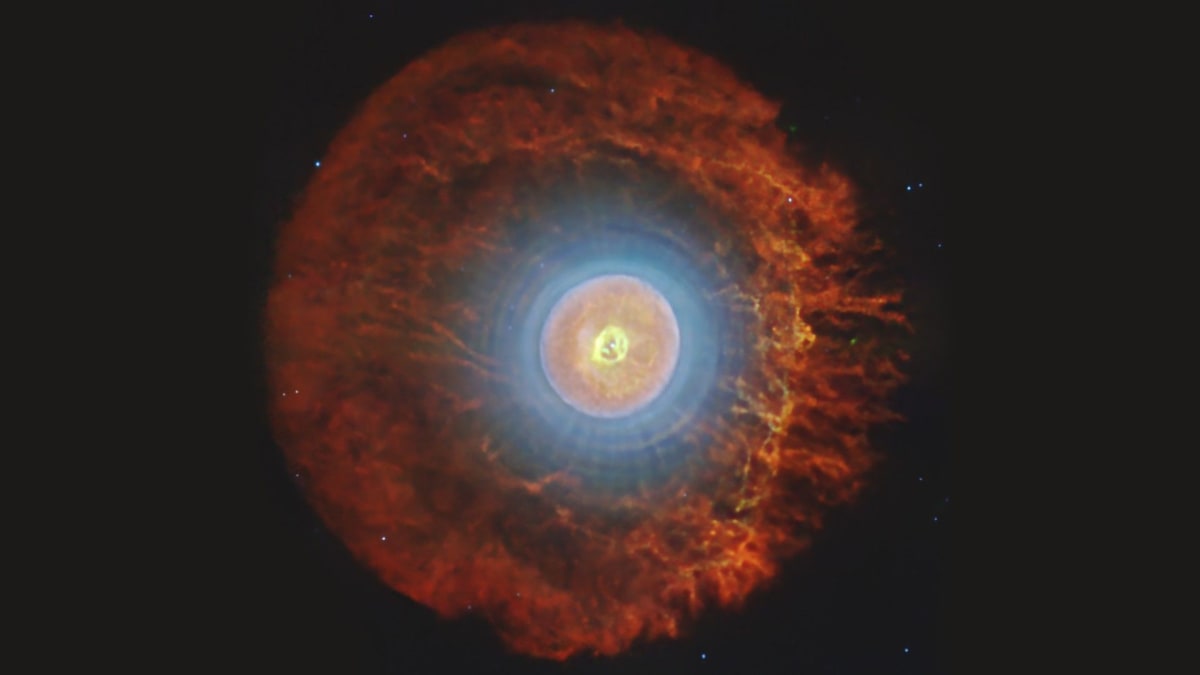
The James Webb Space Telescope captured stunning new images showing how mysterious carbon molecules called buckyballs form around dying stars, offering clues about the building blocks of life. Scientists discovered an unexplained question mark shape glowing in the gas cloud 10,000 light years away.
Scientists just watched the birthplace of some of the universe's weirdest molecules light up in spectacular detail.
The James Webb Space Telescope peered 10,000 light years into space to capture new images of Tc1, a glowing gas cloud where strange carbon molecules called buckyballs form. These hollow, soccer ball-shaped structures are actually ingredients that could lead to life.
"Tc 1 was already extraordinary, but this new image shows us we had only scratched the surface," said Jan Cami, a physics professor at Western University in Canada who led the research. "The structures we're seeing now are breathtaking."
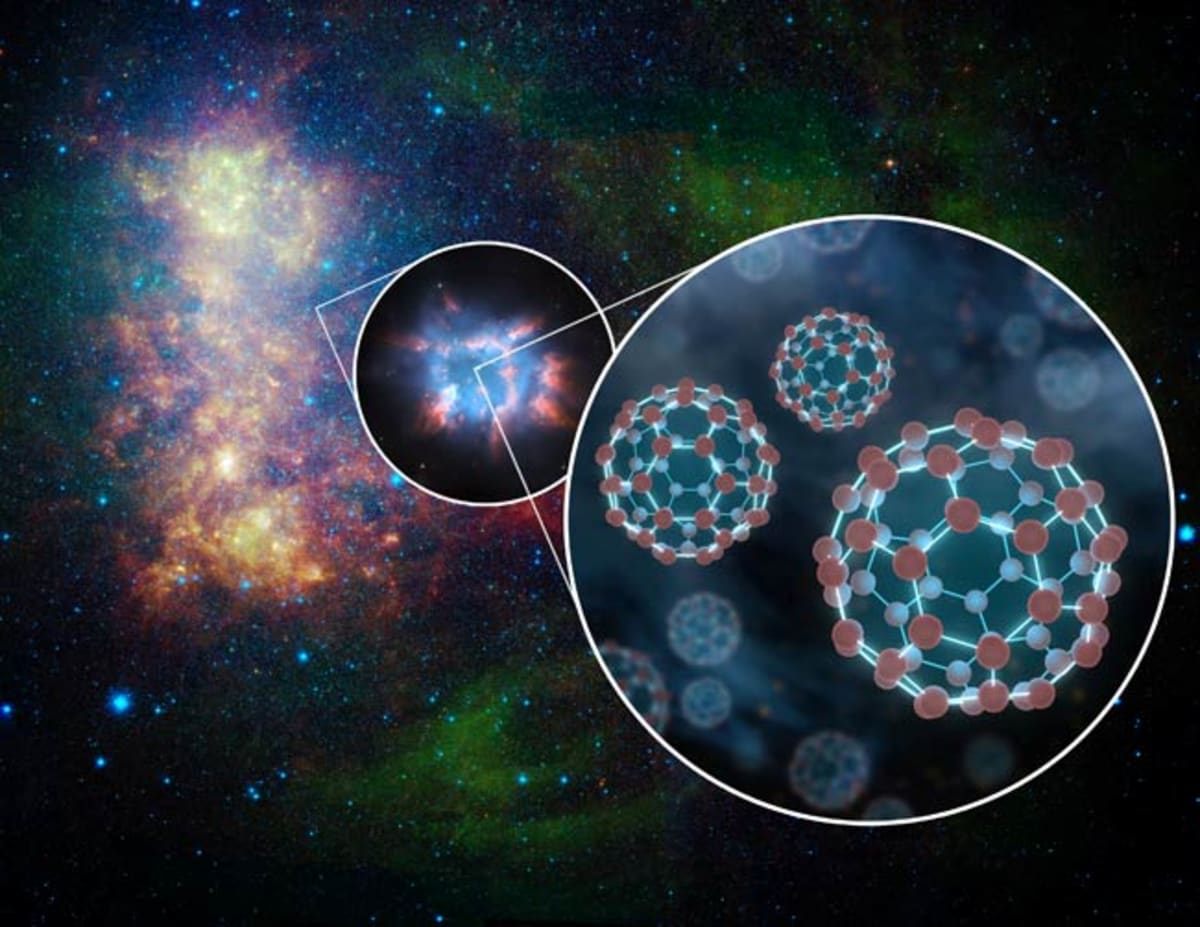
Buckyballs get their nickname from their resemblance to geodesic domes designed by architect Buckminster Fuller. Scientists officially call them buckminsterfullerene, and they're so significant that their discovery earned a Nobel Prize in Chemistry in 1996.
Cami's team first spotted these molecules in space back in 2010 using an older telescope. But Webb's powerful infrared vision revealed something new: an upside-down question mark shape glowing in the gas cloud that scientists can't yet explain.
The gas cloud itself came from a dying star similar to our sun. After running out of fuel, the star shed layers of material into space, leaving behind a glowing core called a white dwarf.
Why This Inspires
This discovery matters because buckyballs are organic compounds, essentially building blocks that could eventually form life. Scientists have found them in young stars, old stars, interstellar clouds, and even meteorites, but they're surprisingly rare.
"We see them essentially everywhere, but we don't see them very frequently," Cami explained. "And that's a bit of the mystery."
Webb's detailed observations now let scientists watch how these molecules change based on temperature, density, and radiation. Understanding how they form in space could unlock secrets about how life's ingredients spread throughout the universe.
The research also offers a preview of our sun's distant future. In billions of years, our star will shed its outer layers just like the one in Tc1, perhaps creating its own glowing shells of gas and mysterious molecules.
Scientists have only found buckyballs in about 10 out of several hundred similar gas clouds, and they're still trying to figure out why. Webb's incredible resolution is finally giving them the tools to solve the puzzle.
The universe keeps surprising us with new ways to create the ingredients for life.
More Images

Based on reporting by Google: James Webb telescope
This story was written by BrightWire based on verified news reports.
Spread the positivity!
Share this good news with someone who needs it