Scientists Find Plant Trick That Could Boost Crop Yields
Researchers discovered how hornwort plants use molecular "velcro" to supercharge photosynthesis. This breakthrough could help engineers design wheat and rice that convert sunlight into food far more efficiently.
Scientists have cracked a tiny plant's secret for capturing carbon more efficiently, and it could transform how we grow food for billions of people.
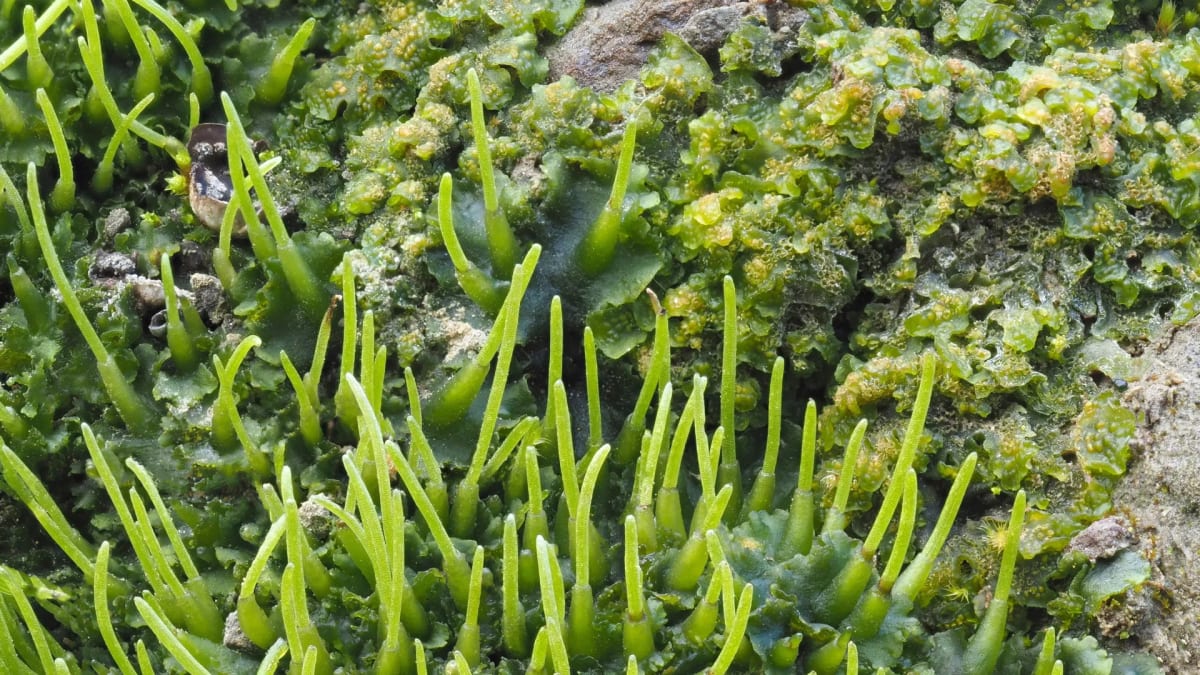
An international research team discovered that hornworts, a rare group of land plants, use a protein feature called RbcS-STAR that acts like molecular velcro. This velcro clusters a crucial enzyme called Rubisco into dense compartments, helping plants photosynthesize more effectively.
The discovery matters because Rubisco, while essential for nearly all life on Earth, has a major flaw. The enzyme works slowly and often grabs oxygen instead of carbon dioxide, which wastes energy and limits how well crops grow.
Scientists at the Boyce Thompson Institute, Cornell University, and the University of Edinburgh led the breakthrough. They found that hornworts modified Rubisco itself to cluster together, rather than using separate proteins like algae do.
"We assumed hornworts would use something similar to what algae use," said Tanner Robison, a graduate student and co-first author. "Instead, we discovered they've modified Rubisco itself to do the job."
The team tested whether this velcro component could work in other plants. They added RbcS-STAR to a hornwort species that doesn't naturally form these compartments, and Rubisco immediately reorganized into clusters.
They repeated the experiment in Arabidopsis, a common laboratory plant. The results were the same: Rubisco gathered into dense compartments inside the plant cells.
"We even tried attaching just the STAR tail to Arabidopsis's native Rubisco, and it triggered the same clustering effect," said Professor Alistair McCormick, who co-led the research. "That tells us STAR is truly the driving force."
The Ripple Effect
This discovery opens a realistic path toward engineering more efficient photosynthesis into wheat, rice, and other major food crops. Because the mechanism works across different plant species, scientists may not need to transfer complex machinery from algae, which has proven extremely difficult.
The researchers acknowledge more work remains. Plants must also efficiently deliver carbon dioxide to the clustered enzyme, not just organize it better.
But even small improvements in photosynthesis could dramatically increase crop yields while reducing farming's environmental footprint. That matters enormously as the world seeks sustainable ways to feed a growing population expected to reach nearly 10 billion by 2050.
"This research shows that nature has already tested solutions we can learn from," said Associate Professor Fay-Wei Li, who co-led the study. "Our job is to understand those solutions well enough to apply them where they're needed most: in the crops that feed the world."
Based on reporting by Science Daily
This story was written by BrightWire based on verified news reports.
Spread the positivity!
Share this good news with someone who needs it