Scientists Find Universe May Run on 'Fuzzy' Dark Matter
New telescope data suggests the mysterious invisible force holding galaxies together might be a quantum fog, not particles. This discovery could rewrite our understanding of how the universe actually works.
Scientists just found compelling evidence that the invisible glue holding our universe together might be completely different from what we've believed for decades.
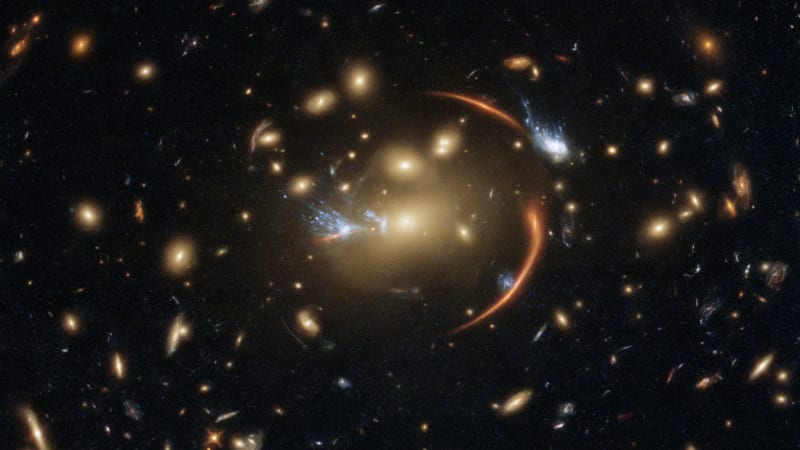
Using powerful gravitational lenses (natural cosmic magnifying glasses that bend starlight), researchers studied light from 11 distant galaxies and discovered something remarkable. The data strongly suggests dark matter behaves more like a quantum fog than tiny particles.
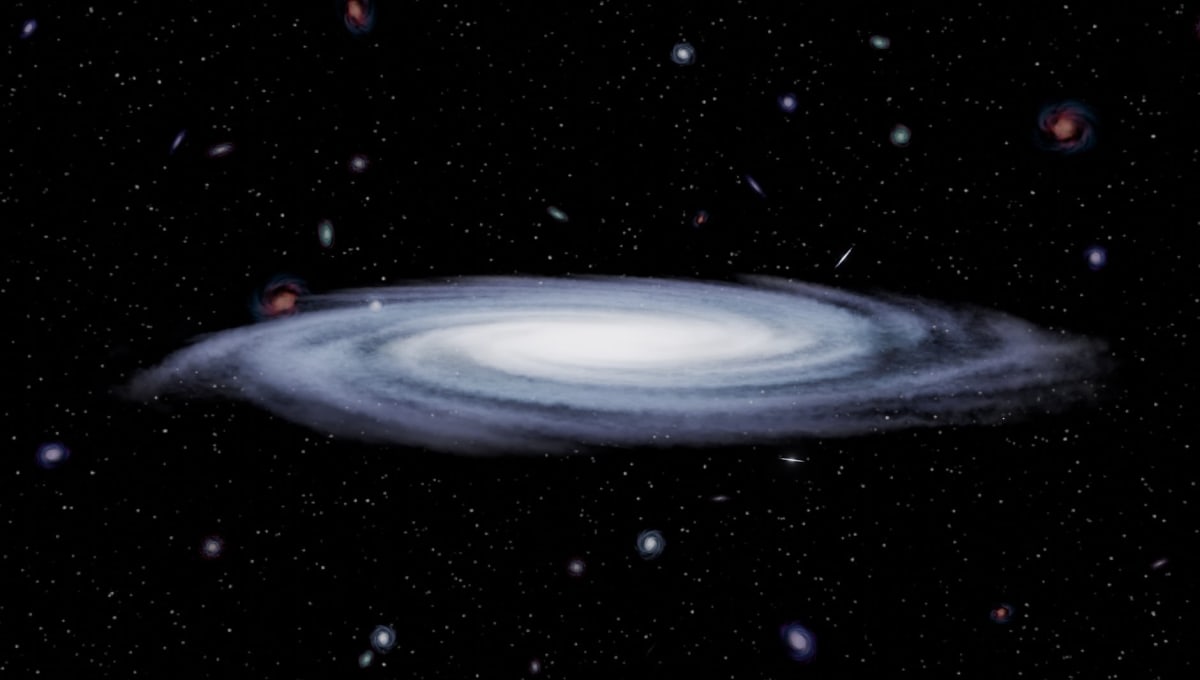
For context, dark matter makes up most of the universe and provides the invisible scaffolding that holds galaxies together. We can't see it, but we know it's there because of how it bends light and affects gravity.
For years, scientists favored "cold dark matter" as the answer. This theory imagined dark matter as countless tiny, slow-moving particles that clump together like cosmic sand. But this model has struggled to explain certain galactic quirks, especially how small dwarf galaxies rotate.
Enter fuzzy dark matter. Instead of distinct particles, this theory proposes dark matter is made of incredibly light waves that create rippling patterns throughout space. Think gentle waves on a pond rather than grains of sand.
The new research, published in January, analyzed how light bends around massive cosmic objects. The James Webb Space Telescope captured eight gravitational lenses that revealed crucial details about dark matter's behavior.
The results were striking. The smooth patterns expected from particle-based dark matter didn't match the data. Instead, the light bent in ways that strongly favor the fuzzy, wave-like model.
Why This Inspires
This discovery reminds us that even our most fundamental assumptions about reality can change with better tools and fresh perspectives. What seemed solid and particle-like might actually be flowing and wave-like.
The research also shows how collaborative science works. By combining Einstein's century-old predictions about gravitational lensing with cutting-edge telescope technology, scientists are answering questions that seemed impossible just years ago.
While the study hasn't been peer-reviewed yet, it opens exciting possibilities for understanding our universe's true nature. More research will either confirm this fuzzy reality or point scientists toward even better answers.
The universe just got a little more mysterious and a lot more interesting.
More Images



Based on reporting by Live Science
This story was written by BrightWire based on verified news reports.
Spread the positivity!
Share this good news with someone who needs it